
Plug valves rotate a tapered or cylindrical plug inside a body to open, throttle, or close flow, while pinch valves close by elastically deforming a flexible elastomer sleeve from outside the flow path — that one geometric difference dictates almost every thermal, abrasion, and leakage consequence downstream [S1].
Plug valves specified to API 599 / API 598 in 1/2"–8" (DN15–DN200) with #150–#600 classes, lubricated or PTFE-sleeved bodies, dominate steam, hydrocarbon, and chemical isolation [S9]; pinch valves are specialised for low-pressure abrasive slurries, mining tailings, and dosing loops where the process fluid would destroy a metal seat [S1].
Operating-Envelope Comparison: Temperature, Pressure, and Media
Plug valves built per API 599 are routinely rated to ASME B16.34 pressure-temperature envelopes, with lubricated and metal-seated variants holding full pressure at 400–500 °C steam service [S9][S10]; a saturated-steam ball/plug combination published at 150 PSI / 400 °F confirms the realistic commercial ceiling for soft-seated units [S10]. PTFE-sleeved UB6 plug valves (AISI 904L / UNS N08904 / DIN 1.4539) in 12" DN300, PN20 / Class 150 configuration are engineered specifically for aggressive chemical isolation, where the PTFE soft seat sets the thermal cap near 200 °C continuous [S8].
Pinch valves carry a much tighter thermal envelope because the flexible sleeve is the only sealing element: natural rubber, EPDM, and nitrile sleeves typically cap at 80–95 °C, while FKM or PTFE sleeves push that ceiling to roughly 150–200 °C, always at low differential pressure (commonly ≤ 10 bar / 150 PSI for full-bore industrial units) [S1]. The pinch valve sleeve is the temperature ceiling — once the elastomer relaxes, the valve leaks regardless of how stiff the pinch bar is.
For temperature-critical shutoff, the working rule is: above 200 °C or in clean steam / hydrocarbon lines, specify a metal-seated or PTFE-sleeved plug valve; below 80 °C with abrasive slurry, fibre-laden pulp, or granular solids, specify a flexible-sleeve pinch valve [S1][S8].
Body Materials, Sleeve Chemistry, and Corrosion Envelope
Plug valves ship in carbon steel, 316 stainless, duplex, and super-austenitic 904L (UNS N08904) for chloride-bearing service, with end connections in RF flanged, buttweld, socket-weld, and NPT per API 599 [S8][S9]. The UB6 904L variant is targeted at acidic, high-chloride streams where standard 316 would pit, and pairs the body with a PTFE seat that holds the seal up to its polymer ceiling [S8].
Pinch valves invert that logic: the body is cheap carbon steel or aluminium, and all the chemical resistance sits in the sleeve. Medical / scientific pinch valves use precision tubing of 0.020" (0.5 mm) up to 0.125" (3.2 mm) ID, with internal volumes of 20–792 µL over a 10 cm length and corresponding 1-psi pressure-drop flows of 9–2,100 mL/min [S1]. For 3-way configurations the internal-pinch architecture trims carryover volume dramatically because the Y-junction sits inside the port head rather than in external tubing [S1].
Actuation, Limit-Switch Integration, and Position Feedback
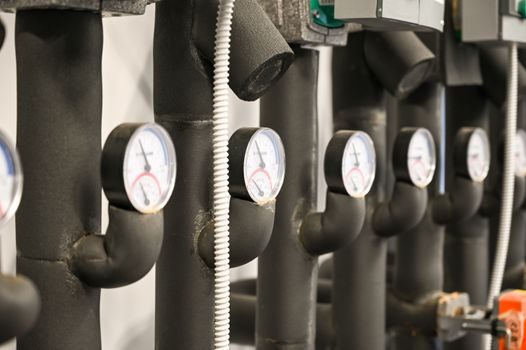
Plug valves are routinely geared (wormgear on the UB6 12" unit [S8]) and can be retrofitted with electric or pneumatic actuators plus a limit switch or limit switch box for open/closed position feedback to a temperature controller or temperature monitor in a SCADA loop. This makes them the default for automated thermal interlocks: a temperature trip closes the plug and the limit switch proves the seat position to the controller.
Pinch valves are usually pneumatically or solenoid actuated; a solenoid-piloted pinch element is the standard architecture in medical / analytical instruments, and the valve either holds open or pinches closed with no intermediate position, so a limit switch is rarely used because there is no throttling feedback to read [S1]. For process skids that need an electrical interlock, an external limit switch box on a pneumatic pinch actuator is feasible but adds dead volume and cycle lag.
Leakage Class, Cycle Life, and Maintenance Burden
Plug valves tested to API 598 hold tight shutoff across both metal and soft seats; PTFE-sleeved units are bubble-tight at low differential pressure but will cold-flow above ~200 °C, so metallics are mandatory for hot steam [S8][S9]. Internal pinch valves are rated by manufacturers to 5 million cycles or more before sleeve replacement, while external pinch valves allow in-place tubing change-out — the exact trade-off is "replace the cheap consumable vs replace the whole valve head" [S1].
Carryover volume is a pinch-valve-specific metric: a 3-way external pinch valve leaves the entire Y-connector volume trapped between the pinch point and the junction, mixing with the next fluid stream, whereas an internal-pinch architecture moves that junction inside the valve body and minimises cross-contamination [S1]. Plug valves have no equivalent carryover problem because the plug rotation is a metal-on-metal or metal-on-PTFE wipe with no dead leg in the flow path.
Cost Bands, MOQ, and Sourcing Reality (2026 Listings)
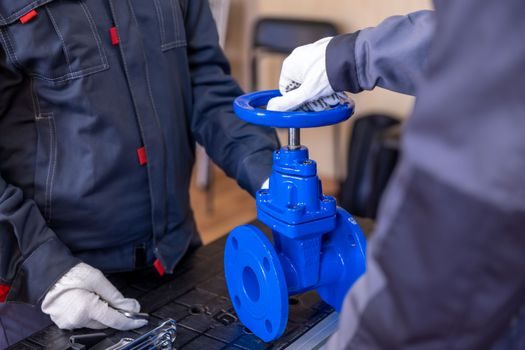
Plug-valve spot pricing from Chinese OEM channels in 2026 ranges roughly US$ 14–15 / piece for entry sleeve-lined units, US$ 20–200 for general industrial plug valves, and US$ 2,400+ for engineered UB6 / large-bore specials — with MOQs from 1 piece on specialty lines to 50 pieces on commodity SKUs [S5][S6]. Lubricated plug valves are listed at 1/2"–8" (DN15–DN200), Class 150–600, in flanged / buttweld / socket-weld / NPT, with body materials in carbon steel and stainless per API 599 / API 598 [S9].
Pinch valves are typically quoted project-by-project because the sleeve compound (NR, EPDM, NBR, FKM, PTFE) is the cost driver, not the body; commercial pinch-valve MOQs in 2026 cluster around 1–10 pieces for replacement sleeves and skid-mounted assemblies, with industrial full-bore units rarely crossing US$ 10,000 unless exotic alloys or large diameters are specified. For procurement, the decision rule is: plug valves are a stocked SKU with a published price band, pinch valves are a configured BOM with sleeve chemistry dominating the quote.
Decision Matrix: When to Pick Which
Use a plug valve when the process runs above 80 °C, requires bubble-tight shutoff to API 598, carries clean steam, hydrocarbons, or corrosive chemicals, and needs actuator-mounted limit switch feedback into a temperature controller [S8][S9]. Use a pinch valve when the media is an abrasive slurry, mining tailings, fibre-laden pulp, or granular solid below 80 °C, at low differential pressure, and where metal seats would be destroyed in days [S1]. Do not use a pinch valve for steam tracing, superheated condensate, or any service above the sleeve's polymer ceiling; do not use a standard plug valve for slurries above 3–5 % solids by weight, because the plug will score and the seat will leak within a few cycles.
Standards, Compliance, and Audit Trail

Plug valves for process service should be specified to API 599 (design), API 598 (inspection and test), and ASME B16.10 / B16.34 (face-to-face and pressure-temperature), with NACE MR0175 added for sour service [S8][S9]. Pinch valves carry fewer mandatory standards because the elastomer sleeve is application-specific; FDA, USP Class VI, or 3-A sanitary compliance is added for food, pharma, and biotech skids rather than for mining or mineral processing [S1].
For thermal-loop interlocks, the auditable chain is: field temperature sensor → controller → actuator → limit switch proof → valve position; plugging a pinch valve into that chain breaks the position-proof step because most pinch valves are open/closed only with no intermediate feedback, so a plug valve with geared actuator and limit switch remains the safer automated choice.
Trackable signals for the next buying cycle: 2026 H2 Chinese OEM price revisions for 12" DN300 PTFE-sleeved 904L plug valves [S8], and any new FKM or PTFE sleeve compounds that push pinch-valve ceilings past 200 °C continuous — both would shift the matrix above. Engineers specifying steam or chemical service should lock the API 599 / API 598 + ASME B16.34 envelope today and revisit pinch-valve use only when an abrasive-slurry line taps in below 80 °C.
Related analysis: Line-Frequency Induction Furnace Types: Coreless vs Channel, Selection Map.