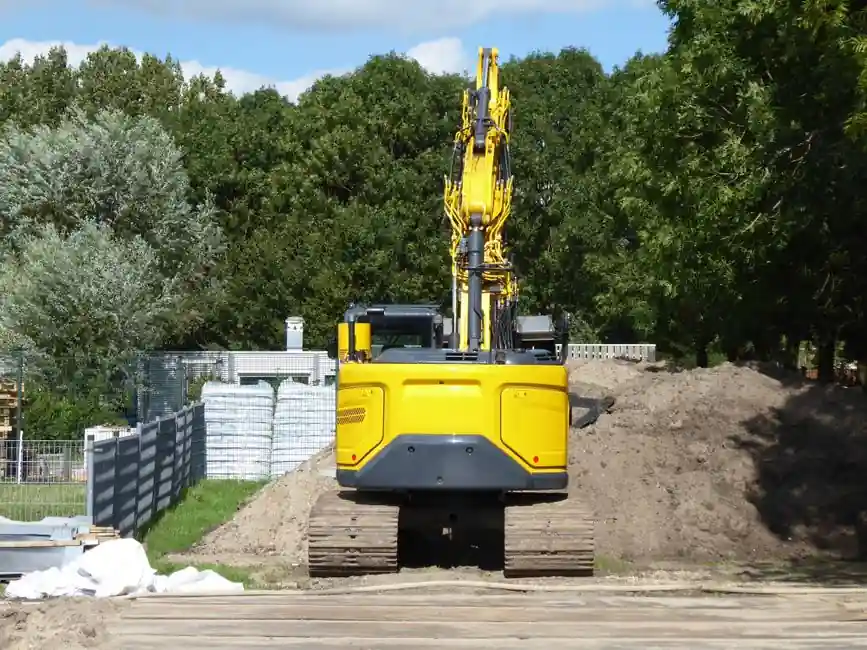
Eight 2026-dated market reports put the global electric construction equipment market between USD 3.81 billion (MarketsandMarkets, narrow off-highway scope) [S1] and USD 69.49 billion (Mordor Intelligence, compact equipment scope) [S4] for the 2026 reference year, with global CAGRs clustered in the 15.12% to 20.80% band through 2031 to 2035 [S1][S2][S4].
Scope drives the gap. MarketsandMarkets counts off-highway electric vehicles at USD 3.81 billion in 2026 rising to USD 13.81 billion by 2033 [S1], while SNS Insider and GMInsights place the broader electric construction equipment market at USD 15.80 billion in 2025 and USD 17.10 billion in 2026 [S2][S8], and Fortune Business Insights projects USD 17.23 billion in 2026 climbing to USD 90.68 billion by 2034 [S3]. The Mordor figure (USD 60.37 billion in 2025, USD 69.49 billion in 2026) reflects a compact-machinery basket that includes telehandlers, mini-excavators, and skid steers as a distinct category [S4].
Regional share: Asia Pacific leads volume, North America leads compact revenue
Asia Pacific is the largest regional market in 2026 across the off-highway and full-scope reports, on the strength of Chinese OEM activity, large-scale electric loader and excavator deployment, and a battery supply chain anchored by CATL and BYD [S1][S2]. North America, however, is the largest regional market in the compact-equipment basket at 31.70% of 2025 revenue, supported by the USD 1 billion EPA Clean Heavy-Duty Vehicles Program that subsidizes zero-emission machinery [S4]. The U.S. electric construction equipment market was valued at USD 4.24 billion in 2025 with a 22.86% CAGR projected for 2026 to 2034 [S5], while the SNS Insider U.S. figure reads USD 2.80 billion in 2025 with a 20.80% CAGR through 2035 [S2].
Europe accelerates adoption through zero-emission procurement requirements on public infrastructure projects [S1], and January 2026 U.S. public construction spending rose 0.6% month over month, supporting equipment demand across infrastructure categories [S6]. Public construction spending data feeds fleet-replacement planning for contractors bidding on federal-aid highway, transit, and water projects.
Equipment type share: excavators, loaders, and compact track loaders dominate
By equipment type in 2025, excavators led the broader electric construction equipment market with 34.60% share, while cranes are projected to grow fastest at 25.20% CAGR from 2026 to 2035 [S2]. In the compact basket, compact track loaders held 34.60% of 2025 share, with compact wheel loaders forecast at 20.44% CAGR through 2031 [S4]. MarketsandMarkets notes that electric loaders are expected to dominate the off-highway electric vehicle market in 2026 [S1], aligning the two scopes on the same dominant machine class. For a side-by-side view of two on-site lifting options that contractors commonly evaluate alongside electrified excavators, see Tower Crane vs Construction Hoist: What's Actually Different on Site.
Volvo Construction Equipment used Bauma 2025 to launch a zero-emissions-only line that included the EC230 Electric Excavator and the serially produced A30 Electric and A40 Electric articulated haulers at 29 and 39 tonnes respectively [S2]. Volvo also committed USD 260 million globally to electric construction equipment production in 2025, with USD 40 million directed to its Shippensburg, Pennsylvania facility [S2], a concrete signal of OEM capacity reallocation rather than pilot-scale intent.
Battery, propulsion, and power-output segmentation

Battery-electric systems commanded 74.20% share of the compact electric construction equipment market in 2025, with hybrid-electric systems delivering the fastest CAGR of 17.95% through 2031 [S4]. By battery capacity, the >50 kWh segment is estimated to hold more than 50% share of the off-highway electric vehicle market in 2026 [S1], reflecting the shift toward higher-utilization machines where larger packs are needed for full-shift operation. By operating weight, the 2 to 5-ton class captured 41.30% of the 2025 electric compact market, with sub-2-ton machines projected to expand at 19.81% CAGR to 2031 [S4].
Operating weight and battery capacity are coupled variables. A 2 to 5-ton compact excavator typically pairs a 20 to 50 kWh LFP pack for 4 to 6 hours of intermittent duty, while machines above 5 tons step into the >50 kWh band that the report flags as the 2026 majority [S1][S4]. The broader equipment range also includes dump trucks, graders, LHDs, self-propelled sprayers, and tractors [S1], with mining trucks and articulated haulers representing the high-power end of the electrification roadmap. Operator experience with electrified compact machines is documented in adjacent spec references such as Scaffold Tower Castor Load Ratings and Total-Lock Brake Selection: 2026 Spec Map, where battery-powered site equipment is already standard.
End-use verticals: infrastructure leads, utilities fastest
Infrastructure projects led end-user verticals in the compact electric market with 27.50% revenue share in 2025, while utilities and energy are forecast to accelerate at 22.05% CAGR through 2031, driven by grid upgrades and renewable-energy installations [S4]. Urban construction, tunneling, and indoor demolition projects favor battery-powered excavators and wheel loaders because zero local emissions deliver regulatory and community-relations benefits beyond simple compliance [S2]. Smart-city development in the U.S. is described as a structural pull on electric excavator, crane, and loader adoption [S5].
Total cost of ownership economics now drive adoption more than emission compliance in high-utilization fleets. Fuel savings and lower maintenance offset higher purchase prices within three to four years in high-utilization fleets [S4], a payback window that contractors benchmark against diesel-block replacement intervals of 12,000 to 15,000 hours. The Mordor driver-impact analysis quantifies three of the four growth levers: stringent zero-emission regulations add about +4.2% to CAGR, battery-density and fast-charge breakthroughs contribute +3.8%, and total-cost-of-ownership savings add +3.1% [S4].
Standards, regulation, and the diesel-to-electric comparison
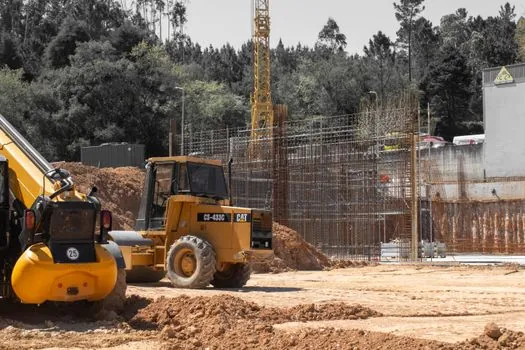
Stringent zero-emission regulations, including Tier V in the EU, China VI, and California CARB rules, are the leading structural driver and apply with early impact in California, the EU, and China [S4]. The Polaris comparison table frames electric versus diesel on six decision axes: emissions (zero local versus high carbon), operating cost (lower energy and operating costs versus higher fuel costs), maintenance (fewer moving parts versus engine and fuel system service), performance (quiet operation versus heavy-duty strength), noise level (low for urban and indoor sites versus high), and work environment (ideal for residential, tunnel, and indoor sites versus remote heavy-duty sites) [S5].
The Electric Construction Equipment category is also reflected in the construction machinery and equipment reference family, which links machine classes to the safety, hydraulic, and electrical subsystems that specifiers must qualify. Adjacent on-site tooling categories, including manual and powered construction tools, are increasingly battery-cordless and share the same lithium-cell supply economics that drive off-highway equipment pricing. For projects comparing electrified machines against mixed-fleet sites, the AI impact summary in Polaris lists battery efficiency and charging management, AI-based fleet tracking, predictive failure modelling, and autonomous operation as the four highest-value software overlays [S5].
Forecast dispersion and the selection criteria contractors should weight
The 2026 market sizing divergence between USD 3.81 billion [S1] and USD 69.49 billion [S4] is mostly a scope artifact, not a data conflict. The compact-machinery basket aggregates telehandlers, mini-excavators, skid steers, and compact track loaders with a USD 140.49 billion 2031 endpoint at 15.12% CAGR [S4], while the off-highway electric vehicle basket covers excavator, loader, grader, dump truck, LHD, self-propelled sprayer, and tractor categories to a USD 13.81 billion 2033 endpoint at 20.2% CAGR [S1]. The full-scope SNS Insider, Fortune Business Insights, Research and Markets, and GMInsights forecasts land between those bounds at USD 16.48 billion to USD 17.23 billion for 2026, with endpoints of USD 34.72 billion by 2030 [S7], USD 90.68 billion by 2034 [S3], and USD 93.20 billion by 2035 [S2].
Specifiers should weight four criteria when reading these reports: scope (compact only versus full off-highway versus all electric construction), region (Asia Pacific volume versus North America compact revenue), propulsion (battery-electric 74.20% share versus hybrid 17.95% CAGR [S4]), and end-user vertical (infrastructure 27.50% versus utilities 22.05% CAGR [S4]). Compact track loaders and compact excavators dominate unit share, mining and articulated haulers dominate the high-power growth lane, and the 2 to 5-ton operating-weight class remains the volume anchor through 2031. Battery capacity above 50 kWh is the dominant pack size for 2026 off-highway shipments [S1], and swappable battery systems are flagged as the leading response to charging-infrastructure limits at remote or temporary sites [S2]. Trackable signals through Q1 2027 include Volvo Shippensburg production ramp, EPA Clean Heavy-Duty Vehicles Program award disbursement, and any CARB Tier V-equivalent rulemaking that pulls U.S. adoption forward.
Component reference pages worth checking: ndt equipment.