
The specified electro-mechanical unit delivers 100 kW peak power, 50 kW continuous power, and a rotational speed range of 400–2400 rpm [S1].
The electro-mechanical PTO is powered from a 350–850 VDC source and can feed a hydraulic truck body, including a truck-mounted crane, through a mounted hydraulic pump [S1].
Power Paths and Operating Principle
A conventional PTO takes mechanical power from the engine or transmission. In a crane installation, that shaft power drives the hydraulic pump, so the engine must remain operational while the boom, winch and other hydraulic functions work [S2][S4][S7].
An electric PTO replaces the engine-to-pump mechanical path with an electric motor and inverter powered by the vehicle battery. The cited electro-mechanical design uses a DIN 5462 pump connection, an 8-tooth spline holder and an ISO 4H flange; it also includes its own water-glycol cooling circuit, so truck cooling-system integration is not required [S1].
The electric drive produces useful hydraulic power at low rotational speed because of motor torque. That low-speed capability supports low-noise crane operation, while 400–2400 rpm covers the stated operating range of the specified unit [S1].
Decision Criteria for Crane Hydraulics
Choose an ePTO when the duty cycle includes frequent engine idling, short lift cycles, urban or residential operation, or a fleet target for lower fuel consumption, emissions and noise.
Power availability must be checked against crane demand, battery state of charge and thermal conditions. The reference ePTO is rated at 100 kW peak and 50 kW continuous, so a crane requiring sustained power near the continuous rating needs a duty-cycle calculation rather than a nameplate comparison [S1].
The electro-mechanical PTO is mounted on the truck as a single unit behind the cab or on the chassis and has its own water-glycol cooling system, so integration with the truck’s cooling system is not necessary [S1].
Electrical compatibility also matters: the specified unit accepts 350–850 VDC, uses a 9–36 VDC control system and communicates with the truck through CAN J1939. An ePTO should not be selected merely because its power source is called a battery [S1].
Energy, Emissions and Noise Comparison

The emissions benefit follows the operating mode. An ePTO enables engine-off crane work, eliminating the operating emissions associated with unnecessary engine idling; an engine PTO creates those operating emissions whenever the engine is kept running for the hydraulic circuit [S2].
Noise is also lower during electric crane operation. The low-speed motor capability and engine-off operation are the relevant design features, not a claim that an ePTO is silent under every load condition [S1][S2].
Electric, Hybrid and Engine-Only Configurations
Three chassis architectures should be separated. A hybrid crane truck combines an internal-combustion engine, an onboard battery and an electrically powered PTO. Its engine can recharge a low battery automatically, which removes the operational concern of becoming stranded by depleted battery energy [S5].
Hybrid bucket trucks use an onboard battery pack to power electric PTO equipment, while the engine can automatically recharge the battery when its charge is low [S5].
A conventional engine PTO crane uses the engine and transmission to drive its hydraulic pump. This arrangement remains technically direct for continuous heavy-duty operation, but it retains fuel consumption, emissions, noise and engine-wear exposure during crane-only duty [S2][S4][S7].
Electric drivelines also change operating feel. Operators of electric boom systems report performance comparable to diesel-powered booms but describe a different control response; training should cover that response and the system’s power-management strategy [S5].
Where Electric PTO Fits Best
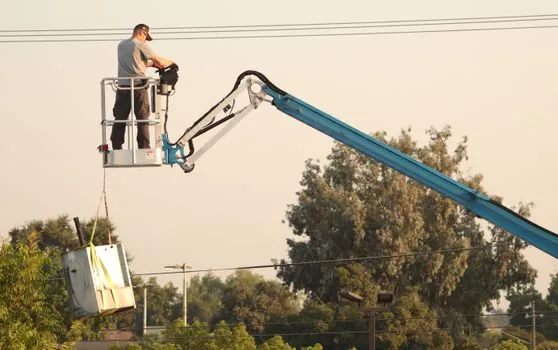
Electric PTOs are strongest for a truck-mounted crane with repeated engine-on periods but limited continuous pump demand. Engine-off lifting, winching and boom positioning reduce avoidable idle time without replacing the truck’s primary propulsion system [S2].
Residential work, noise-sensitive sites and fleets with measurable idling reductions gain directly from the operating strategy. The electric motor can sustain low-speed hydraulic operation, while an ePTO allows flexible mounting behind the cab or on the chassis [S1][S2].
An electric hydraulic pump is also a feasible path for a truck without a PTO or hydraulic motor, but its suitability still depends on available electrical power, pump flow and pressure requirements, and thermal capacity. Those values were not provided in the accessible material, so they must be established during engineering rather than inferred from the presence of a battery [S3].
Limits, Failure Modes and Procurement Checks
Battery energy is the central limitation in all-electric crane operation. A 210 kWh battery demonstrates a substantial energy buffer, but the cited material does not establish a universal crane-runtime figure; usable duration depends on crane flow, pressure, duty cycle and reserve strategy [S5].
Battery mass can raise gross vehicle weight and reduce payload margin. The reference ePTO also adds approximately 250 kg, before accounting for the crane, pump, foundation, cables and battery equipment, so axle loading and stability calculations must include the complete installed system [S1][S5].
Continuous power is another boundary. A 100 kW peak label does not justify continuous 100 kW operation; the stated continuous rating is 50 kW [S1]. Thermal limits, low-battery behaviour and recovery strategy must be included in the duty-cycle model.
For procurement, require the certified input voltage, peak and continuous output, rated speed range, pump flange and spline, cooling arrangement, control voltage, communications protocol, mass, mounting envelope, environmental certification and available service support. The reference unit is listed to UN ECE R10, while hydraulic-system and crane safety work must follow the applicable vehicle, machinery and local statutory requirements [S1].
Compare the full operating case rather than engine-idle emissions alone. Record expected crane cycles per shift, average and peak hydraulic demand, idle minutes, charger or regeneration availability, payload penalty and maintenance exposure. The defensible choice is the architecture that meets the duty cycle with adequate power and thermal margin at the lowest lifecycle cost and emissions burden.