
CMAA Specification 74-2025 defines the design basis for top-running and under-running single-girder electric traveling cranes using under-running trolley hoists [S2].
A European FEM-classified trolley can fit a single-girder crane, but the decisive checks are capacity, operating time, load spectrum, starting frequency, girder interface, and jurisdictional compliance.
Where FEM and CMAA Classifications Diverge
FEM classifies crane duty by load spectrum and operating time, while CMAA classes A through F cover standby through continuous severe service [S1]. They are not interchangeable labels, so selecting a trolley by its European model name alone leaves the crane duty undefined.
The alignment is useful for commercial comparison, but it does not transfer structural design calculations or replace the governing crane specification.
The duty decision should follow the load history.
Choose the Trolley Architecture by Girder Type
The trolley arrangement must match the crane structure, not simply the national classification. EMH identifies its E monorail trolley type for monorail and single-girder cranes up to 10 tons capacity; D and Z trolleys serve top-running double-girder cranes up to 50 tons, while H-type trolleys address special CMAA Class D and E service [S4].
For an under-running trolley, the trolley rides beneath the girder and transfers its wheel loads into the lower flange. CMAA Specification 74-2025 is a definitive design reference for top-running and under-running single-girder electric traveling cranes using under-running trolley hoists, with updates reflecting advances in materials, controls, and load-handling technologies [S2]. These are the items to resolve before accepting a nominally equivalent European trolley.
A top-running crane with a trolley riding above the girder requires a different wheel, rail, buffer, and load-path review than an under-running arrangement. CMAA 74-2025 covers both configurations, but the applicable calculation sections and details are not interchangeable [S2].
CMAA 74-2025 Gives U.S. Buyers a Clearer Design Basis

CMAA Specification 74-2025 is the definitive design reference for top-running and under-running single-girder electric traveling cranes using under-running trolley hoists [S2]. CMAA Specification 74-2025 provides a roadmap for designing, manufacturing, and maintaining top-running and under-running single-girder electric traveling cranes using under-running trolley hoists [S2].
The 2025 revision incorporates lessons from the field, aligns design guidance with automated systems, digital controls, and improved safety margins, and brings the specification into closer alignment with related ANSI and ASME publications [S2]. That gives a U.S. buyer a defined basis for comparing girder reaction, trolley loading, component fatigue, and runway interface rather than relying on a general equipment brochure.
The European trolley must therefore be assessed electrically as well as mechanically, including drive voltage, control interfaces, brakes, limit devices, and the proposed power-supply concept.
Side-by-Side Decision Criteria
On documentation, CMAA 74-2025 has the advantage for a U.S. single-girder crane because it directly covers both top-running and under-running configurations with under-running trolley hoists [S2]. A FEM-classified product may have the advantage when the crane is built to a recognized European framework, but the supplier must demonstrate the applicable load combination and service-life basis rather than showing only an FEM class number.
On mechanical interface, a European trolley is acceptable only if its wheel dimensions, wheel spacing, rail profile, travel clearance, buffer arrangement, and resultant girder load have been checked against the actual crane. CMAA 74-2025 explicitly addresses wheel-load distribution and trolley-hoist load distribution, while EMH's architecture examples show that trolley type changes with girder arrangement and capacity [S2][S4].
On operating duty, FEM and CMAA should be translated from actual cycles rather than selected by preference. The manufacturer must still verify that the proposed trolley achieves the required mechanical and thermal capacity.
On integration effort, a CMAA 74-2025 package can reduce specification work when the crane, end trucks, trolley, runway, and controls are designed as one system. A European package may fit an existing European crane or a replacement trolley with a proven rail and suspension arrangement, but mixed-system procurement transfers interface verification and warranty responsibility to the buyer.
Applications, Owners, and Procurement Boundaries
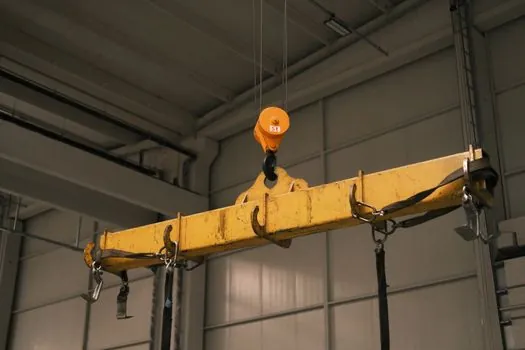
European trolley selection fits a single-girder crane where the operating profile, girder arrangement, and supply chain are already aligned with FEM-based European practice. The approach is particularly defensible for a replacement trolley whose geometry, wheel loads, and controls have been matched to an existing crane rather than selected from a generic capacity chart. [S1]
CMAA-based procurement is the stronger choice for a new U.S. crane intended for moderate, heavy, or severe service. CMAA classes run from A for standby or infrequent use to F for continuous severe service [S1], and Class B permits up to five lifts per hour at maximum rated capacity [S1]. CMAA Specification 74-2025 supplies the single-girder system reference, while the associated duty-class calculation needs to be documented for the quotation [S2].
A low-duty monorail or single-girder application does not automatically require the largest trolley. EMH's E type is specified for monorail and single-girder applications up to 10 tons, whereas H-type units are intended for special CMAA Class D and E service and are offered up to 300 tons [S4]. Capacity, configuration, and duty must be selected together.
Limits and Failure Modes to Close Before Purchase
Mixing a European trolley with an American crane can fail through load-path mismatch rather than rope or motor failure. The critical checks are trolley wheel-load distribution, girder stress and deflection, torsion, end-truck bearing stress, rail compatibility, and fatigue [S2]. A trolley that fits physically may still overload the girder or shorten fatigue life.
Duty mismatch has a second layer. Higher crane classes require greater thermal capability and service margin from the motor and mechanical train; the published CMAA Class E or ISO M6 explanation identifies higher motor thermal tolerance, a larger service factor, and, in most cases, a more capable drive arrangement [S7]. This is why an ISO M6 or FEM 3 class cannot be fulfilled by merely fitting the same low-duty motor used for Class C service.
The procurement document should therefore state the governing standard, crane class, load spectrum, operating hours per shift, starts per hour, rated capacity, hook travel, lift height, trolley travel, rail dimensions, control voltage, and required control functions. CMAA 74-2025 also expands guidance on inspection intervals, maintenance records, labeling, and guarding, so the inspection regime should be written into handover documentation [S2].
Purchase Recommendation by Project Type
For a new U.S. single-girder crane, specify a CMAA 74-2025 crane system and require the trolley, end trucks, girder, controls, and runway to be submitted as a coordinated package. Use CMAA Classes C, D, and E to distinguish single-shift light-to-medium work, regular medium-to-heavy work, and very heavy multi-shift service; the selection must follow the calculated duty, not the desired capital cost [S5].
For a replacement under-running trolley on an existing European crane, use the original FEM or manufacturer design basis if it remains valid and the replacement is mechanically identical. If the trolley, controls, duty, or girder load distribution changes, perform a fresh crane-system review against the applicable governing specification rather than accepting a class-name equivalence.
The trackable procurement signals are the signed duty calculation and the final structural and electrical interface drawings. Require the supplier to identify the FEM, CMAA, or other governing classification, state every assumption used to assign it, and show that trolley wheel loads, girder reactions, motor thermal margins, brakes, and control functions match the specified operating profile.