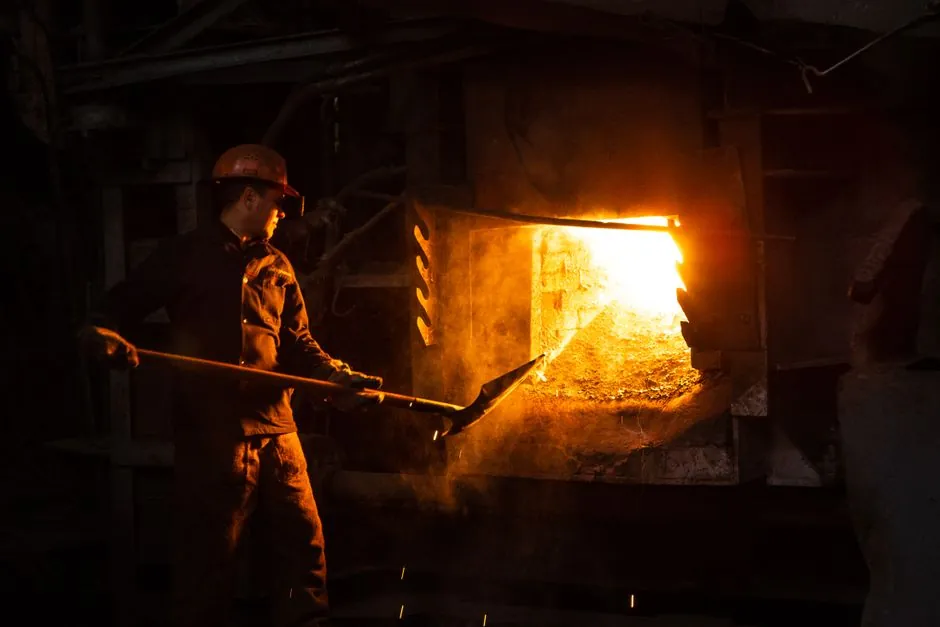
Converting a gas-fired cold-hearth aluminum melting furnace to a tower design can trade higher capital cost for on-demand melting, smaller holding capacity and potentially lower energy use.
A shaft or tower furnace handles about 5,000 kg/h, or 11,000 lb/h, while reverberatory systems can hold 3,000 to 300,000 lb, making the conversion an operating-model decision rather than a simple equipment swap [S4].
What the Conversion Actually Changes
A reverberatory furnace performs bulk melting and holding, while a tower furnace is presented as a melting-furnace option with a melt rate of approximately 5,000 kg/h [S4].
This distinction changes the plant layout. A reverberatory furnace offers capacities from 3,000 to 300,000 lb and is generally fuel-fired, whereas a shaft furnace is limited to approximately 5,000 kg/h, or 11,000 lb/h [S4]. The gas-aluminum-melting furnace therefore suits a production line organized around scheduled melt delivery rather than large-batch holding.
Conversion scope can include a new tower shell, combustion system, charging equipment, refractory, molten-metal transfer arrangement, controls and foundations. It can also require replacing the existing furnace rather than reusing its shell, burners or holding capacity. A supplier reference shipment combining melting and holding equipment included a 10,000 lb/h melt rate, demonstrating that tower melting may be integrated with a separate holding function [S3].
Capital Cost Drivers
No source provides a fixed conversion price, so any vendor quotation should be broken into furnace equipment, refractory, burners, foundations, electrical service, controls, handling systems and installation rather than treated as one lump sum [S1][S4].
Refractory selection is a material cost driver. Modern central melters described in furnace ROI guidance use 80–90% alumina non-wetting hot-face linings, while 70–85% alumina phosphate-bonded plastic refractory is identified as a lower-cost alternative for melters [S5]. Premium hot-face material can prevent oxide penetration in the belly-band area, the molten-metal contact zone, and reduce premature relining [S5].
Insulation also affects both capital cost and operating cost. Microporous silica insulation adds about $18 per square foot to furnace-lining cost, with a stated 16–20 month return on investment [S5]. Furnace access is another cost item: double-end doors and hearth slopes no greater than 35 inches improve cleaning, while large furnaces above 50,000–60,000 lb holding capacity are difficult to clean manually [S5].
Volume and delivery terms remain commercial variables because the research provides no validated price band. A tower project should be priced against the installed melting system, not described only as a furnace-shell conversion. The tower melter option carries greater mechanical and process complexity than a conventional dry-hearth melter, and that complexity must be represented in the installation estimate [S4].
Operating Savings and Energy Exposure
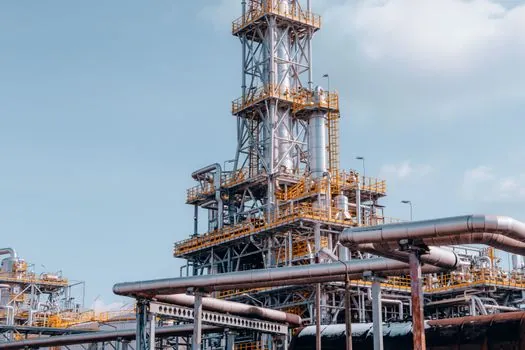
For a foundry melting a 50% new-metal and 50% scrap charge, preheating metal on a sow preheat hearth for about 30 minutes can save 12–15% of the energy required compared with cold-charging all metal into the bath [S5]. A preheat-hearth furnace design has also been supplied with a 10,000 lb/h aluminum melt rate [S3].
Combustion controls remain a separate savings lever: improving the air-fuel ratio can reduce energy use by 5–25%, while improved charging or loading and heat transfer can cut energy use by 5–20% [S1].
Heat recovery can materially alter the business case. Preheated combustion air in a typical aluminum melting furnace can save more than $350,000 per year, while stopping furnace-opening air leakage can save as much as $225,000 per year in a furnace without pressure control [S1]. These values are operating-improvement benchmarks, not guaranteed savings from a tower conversion.
Cold-Hearth and Tower Options Compared
The main decision criteria are melt rate, holding flexibility, capital complexity and energy exposure, and the available data shows a clear split between reverberatory and shaft arrangements [S4].
These figures make the tower option strongest for high-throughput, scheduled production with tighter molten-metal delivery. It is less suitable for foundries needing frequent alloy changes, small batch quantities or large reserves of molten metal. Crucible furnaces are simpler and flexible for smaller operations, with aluminum melting rates up to 2,000 lb/h, or about 900 kg/h, and they can be installed near the point of use [S4].
Refractory, Controls and Maintenance
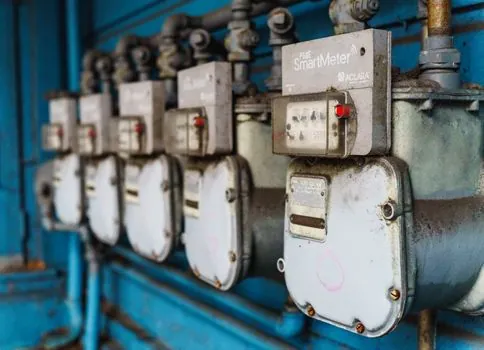
Conversion savings can be erased by rapid refractory wear and poor burner control, because hot-face cracking, flame instability, air-gas valve misalignment and excessive flue oxygen indicate a deteriorating combustion system [S1].
The optimum flue-gas oxygen content cited for most fuels is below 2%, with complete combustion achieved using the minimum practical excess air [S1]. A conversion project should therefore include burner commissioning, air-fuel ratio control, refractory inspection, door sealing and access for cleaning rather than treating these as optional extras.
Mechanical design must also account for clean-out access, alloy flexibility and transfer safety. Full-width double-end doors, slopes no greater than 35 inches and 80–90% alumina non-wetting hot-face linings are identified as durability measures for central melting equipment [S5]. Transfer pumps can move metal to ladles faster and reduce handler exposure, with overflow pumps designed to limit turbulence during transfer [S5].
The meling furnace selection should therefore be checked against charge composition, working hours, transfer rate, ladle size, required holding temperature and whether the plant is central or point-of-use melting [S4]. For mixed operations, a holding furnace can absorb the capacity separation that the tower creates.
Total Cost and Decision Test
The tower conversion is justified when the avoided cost of holding capacity, improved melt delivery and recoverable energy savings exceed the added equipment, refractory, installation and maintenance costs over the planned operating life. [S1]
Purchase price is only one component. Installation includes foundations, gas and electrical connections, charging equipment, controls, training and commissioning, while operating costs include fuel, refractory replacement, burner service, cleaning, insulation losses and transfer-system maintenance [S1][S4][S5]. A tower furnace’s reported advantage is “best capital payback rates” among the compared fuel-fired systems, but that statement depends on high utilization and does not establish a universal payback period [S4].
Financial evaluation should therefore compare five measurable cases: cold-charged reverberatory operation, improved reverberatory combustion, reverberatory operation with a preheat hearth, tower melting with separate holding, and tower melting with regenerative combustion. The tower case should include the 900–1,050 BTU/lb regenerative energy benchmark where applicable and the $18 per square foot insulation premium with its stated 16–20 month payback [S5].
Before ordering a conversion, require a measured melt-rate schedule, charge analysis, current fuel and oxygen readings, refractory condition, foundation review and a quotation that separates equipment from installation. Track monthly melt rate, BTU/lb, oxygen concentration, refractory condition, furnace availability and clean-out time after commissioning, because those five measures determine whether the tower design delivers its engineering advantage.