
On a hot-chamber die-casting machine, the nozzle can be heated using gas, electricity, or induction to help prevent the metal from freezing in it.
The choice affects the gooseneck, nozzle, furnace, temperature-control package, maintenance plan, and site services; a hot chamber die casting machine should be evaluated as an integrated shot and melting system, not as an isolated nozzle purchase.
Where Nozzle Heating Sits in the Shot System
The gooseneck is immersed in the holding-pot melt, and its shot cylinder receives molten metal when the plunger retracts. During injection, the plunger closes the fill port and pushes metal through the gooseneck channel and nozzle.
The nozzle is the heated connection to the die sprue bushing, and molten metal must not freeze in it between shots.
Hot chamber machines are primarily associated with low-melting-point alloys such as zinc and magnesium, whereas cold chamber machines transfer molten metal from a separate furnace into the shot sleeve [S8]. The relevant comparison with a cold chamber die casting machine is therefore not merely burner versus heater, but whether the machine holds melt and heats the shot passage continuously as part of the furnace.
Gas-Fired and Electric Heating Compared
Gas burners and electric heaters can both heat a hot chamber nozzle because the design requirement is to keep the nozzle and adjacent flow passage above the metal-freezing condition [S3][S7]. Furnace technology itself can also be electric, gas-fired, or thermally recirculated, confirming that combustion and electrical resistance are established heat-source options for industrial furnaces [S1].
Induction is also documented as a nozzle-heating method, so a third option exists when the machine design and process economics justify it [S7].
Nozzle geometry, plunger diameter, cylinder bore, and gooseneck length remain coupled to shot volume and metal pressure; replacing one component changes the process rather than creating an independent upgrade [S3]. The heater decision must therefore be made with the complete shot system, holding-pot design, die interface, and control philosophy.
Selection Criteria That Drive the Decision
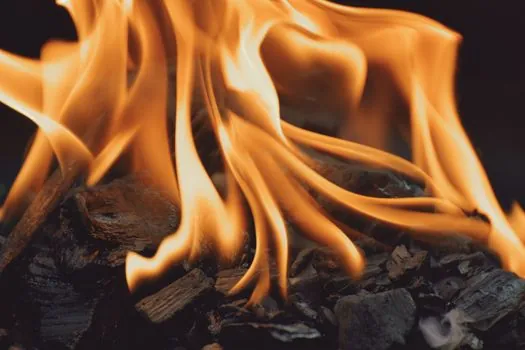
Heat demand is the first selection criterion because the heater must replace losses from the nozzle surface, exposed flow passage, and metal-contact components.
Control response is the second criterion.
Site constraints are the third criterion.
Service exposure is the fourth criterion.
Applications, Constraints, and Failure Modes
These are engineering tendencies, not universal capacity claims, because the research does not establish a universal kW range or gas-to-electric conversion ratio for hot chamber nozzles. [S1]
The nozzle must be kept hot so that the metal does not freeze in it. Resulting symptoms include a slow fill, shot-weight fluctuation, or leakage at the nozzle interface [S3]. Diagnostic work should compare measured nozzle or heater-zone temperature with the metal condition, then check heater power, burner operation, control setpoint, and the physical condition of the heater and nozzle-to-sprue-bushing interface.
Heater output must be matched to the nozzle mass and the thermal path into the die. Oversizing can create control overshoot, surface overheating, or accelerated heater and refractory degradation; undersizing can force continuous maximum output with no reserve for recovery. Electric coil-heater designs emphasize power distribution and uniform heating of the mass, while gas systems must prevent local burner impingement and verify heat spread along the heated section [S5].
Procurement and Qualification Checklist
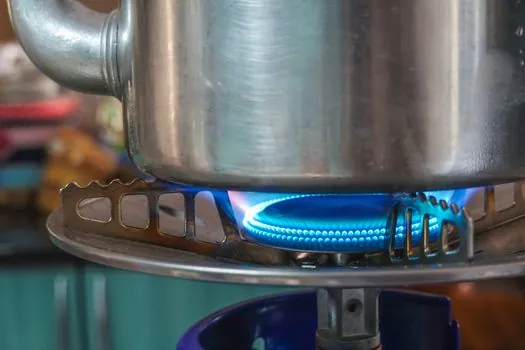
A hot chamber quotation should identify the furnace, gooseneck, nozzle, heater, temperature control, and metal-level provisions as one scope [S6]. For nozzle heating, specify the energy source, heated length, heater or burner arrangement, control mode, thermocouple location, power or fuel rating, protection concept, and required maintenance access.
For electric systems, request heater construction, sheath material, rated voltage, power distribution, temperature limit, control components, and wiring termination details. A documented electric nozzle design uses a cylindrical die-body core, axially tapered flow passage, heating coil, tubular heater, and thermocouple in the patented arrangement DE102006041514B4 [S2]. Its classification under B22D17/2038 covers heating of the injection unit, while B22D17/2023 covers hot-chamber nozzles and shot sleeves [S2].
For gas systems, request burner capacity, fuel type, burner arrangement, flame supervision, gas train components, exhaust arrangement, and purge provisions. If the nozzle operates in a classified area, specify the applicable hazardous-area equipment requirements separately rather than assuming that a heater certificate alone covers the complete installation.
Commissioning acceptance should include a coordinated warm-up, steady-state temperature verification, control stability checks, and a production trial with the installed die. Nozzle temperature should be evaluated under actual shot cycling because a static hot condition does not prove that the passage remains uniform through injection and return cycles [S3][S7].
Choose electric heating for electrical-only sites, smaller systems, and tight local control; choose gas firing for sustained duty, high heat-capacity recovery, and established gas infrastructure. For the broader furnace-energy comparison, see Electric Resistance vs Gas-Fired Furnaces for LPDC, while confirming the hot-chamber nozzle and shot-system interaction during final equipment review.