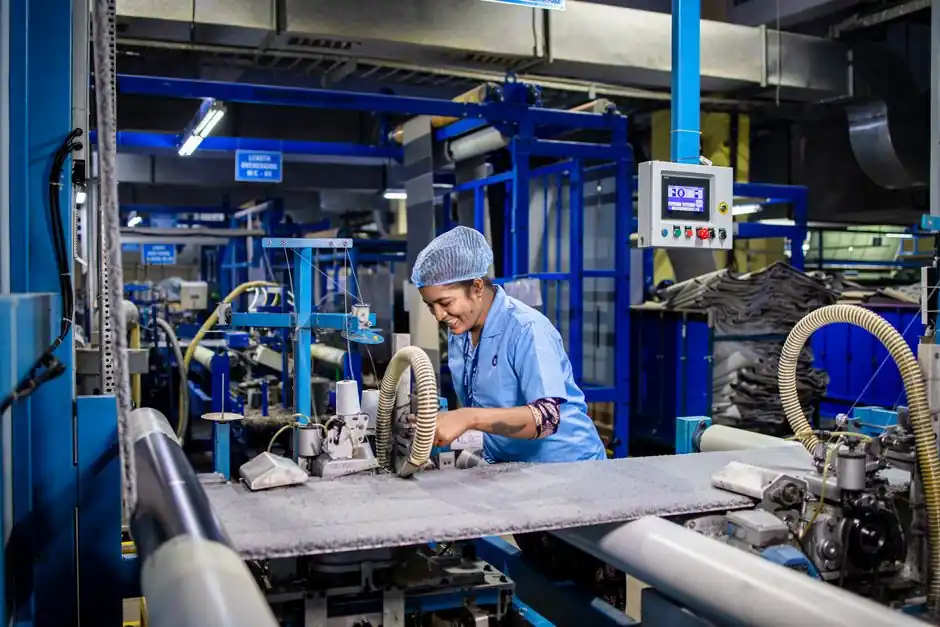
Capital cost for water electrolysis hardware is set by three blocks: the cell stack (bipolar plates, membrane/diaphragm, electrodes, catalyst coating), the power supply (transformer, rectifier, thyristor or IGBT topology), and the balance of plant (gas-liquid separators, purification, deionized water loop, cooling, hydrogen drying, compression) [S1][S3].
Global annual electrolyzer manufacturing capacity reached 61 GW with an additional 16 GW under construction as of 2026-03, an indicator that learning-curve price compression is being chased through volume rather than chemistry alone [S2].
Stack cost: bipolar plates, membranes, and catalyst load
Stack CAPEX scales with active area, current density, and the PGM (platinum-group metal) or non-PGM catalyst load on the membrane electrode assembly. Accelera's HyLYZER 1000 PEM platform runs 52 kWh/kg system-specific consumption at 5 MW nominal, with two cell stacks producing 90 kg/h of H2 at 30 barg delivery without a compressor [S3]. That pressure figure matters for cost: eliminating post-electrolysis compression removes a mechanical BoP train that typically accounts for 8-12% of installed CAPEX on atmospheric-pressure stacks.
Alkaline stacks trade the PGM catalyst spend for nickel- and iron-based coatings on expanded-mesh electrodes, with current density sitting lower (GH2 Solar / AHES specifies 3,400 A/m2 at 85±5°C, DC power consumption ≤4.2 kWh/Nm3) but stack lifetime rated at 25 years system design life [S1]. The trade-off is volume: alkaline needs more active area per kilogram of H2, so plates, frames, and diaphragm material run higher in absolute mass, but the per-kilogram bill-of-materials is dominated by commodity steel, nickel, and PPS/Zirfon-type diaphragms rather than iridium and platinum.
Power electronics: rectifier topology and the AC-DC penalty
The transformer-rectifier assembly converts grid AC to the low-voltage, high-current DC the cells need, and it is a non-trivial CAPEX line. Thyristor-controlled rectifiers remain common in alkaline multi-MW clusters because they handle 15-25 kA at a lower unit cost; IGBT-based active rectifiers are specified for PEM units that must run a 15-100% dynamic range to track renewables [S3].
For the HyLYZER 1000, the rectifier is a 13.5 m × 5.1 m (68.9 m2) skid separate from the 8.4 m × 2.3 m (19.3 m2) electrolyzer skid, a physical separation that flags the footprint penalty of running fast dynamic response on a PEM stack [S3]. Selecting the rectifier topology is one of the cleanest spec-gate decisions on an electrolyzer project: overspec it and CAPEX climbs 6-10%; underspec it and dynamic-load response becomes a duty-cycle bottleneck when the upstream pressure transmitter and flow meter loops are already pinned.
Balance of plant: separators, purification, water loop
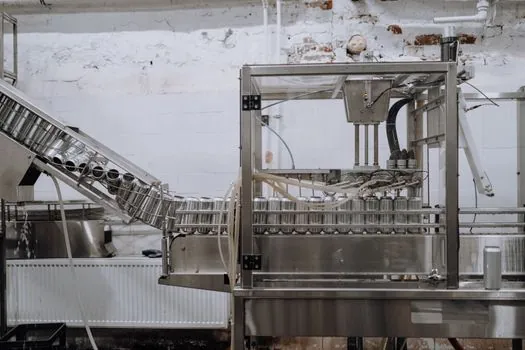
BoP is where the alkaline-PEM cost curves flatten. Both architectures need gas-liquid separators, hydrogen drying (PSA or membrane), deionized water with target resistivity above 1 MΩ·cm, and a cooling loop sized to dump roughly 25-35% of input electrical energy as heat at typical operating temperatures [S1].
The differentiator is gas purity at the stack outlet. HyLYZER 1000 specifies 99.9% H2 with O2 < 100 ppm and N2 < 12 ppm, gas fully saturated with water, so the downstream dryer and deoxidizer are sized for a specific load [S3]. The GH2 Solar / AHES alkaline spec lists 99.999% H2 and 98.5±0.1% O2 at 8-16 bar(g) stack delivery pressure, with the higher O2 purity reflecting alkaline's inherent cross-cell gas separation [S1]. In both cases the industrial valve and instrumentation share on the BoP skid is where instrument-air, hydrogen vent, and oxygen-vent headers converge.
Localization and standardisation as cost multipliers
Localization is the single largest non-chemistry CAPEX lever. GH2 Solar reports above 85% indigenous supply content in its Indian alkaline line, with ISO/IEC compliance and ASME/PED pressure-vessel certification, in a stack range spanning 20 kW to 7.5 MW per module [S1].
Standardization is the second lever. Multi-MW cluster architectures that share gas-liquid separators, hydrogen purification, and common BoP across multiple stacks lower per-kW CAPEX by reducing equipment redundancy, an approach GH2 Solar uses to compress plant footprint and simplify installation [S1]. On a project of 50-100 MW, that consolidation is what moves CAPEX from "demonstration" to "project-financeable."
Total cost of ownership: efficiency, water, and stack life
Purchase price is the misleading line item. LCOH (levelized cost of hydrogen) is driven by three TCO inputs: system-specific consumption in kWh/kg, capacity factor, and stack-replacement cadence. HyLYZER 1000's 52 kWh/kg at 15-100% dynamic range is a useful PEM benchmark for high-renewables grids, where dynamic capability translates directly into effective operating hours [S3]. GH2 Solar's alkaline line, with 25-year design life and 30-110% operational range, targets baseload industrial demand with longer amortization [S1].
Stack replacement is the deferred cost that flips the alkaline-PEM economics. PEM stacks need replacement on roughly a 40,000-80,000 hour cycle depending on current density and dynamic-load exposure; alkaline stacks, with no PGM catalyst to lose, can stretch further at the cost of lower per-area output. A useful sanity check on any quotation: divide the stack replacement cost by the rated kg/h and the expected operating hours, and add it to the electricity line weighted by capacity factor. If that number is missing from the supplier's offer, the headline CAPEX is incomplete.
Selection criteria: alkaline vs PEM by use case
For baseload industrial hydrogen at 50-100+ MW, pressurized alkaline in a multi-MW cluster configuration is the cost-default, with the GH2 Solar / AHES spec band of 4-1500 Nm3/h per module and 99.999% H2 purity covering most refinery, ammonia, and methanol use cases without a compressor on the front end [S1]. For 1-10 MW units paired with intermittent renewable input, PEM's 15-100% dynamic range and 30 barg delivery without a mechanical compressor is the cleaner spec, with the HyLYZER 1000 at 5 MW, 90 kg/h, 52 kWh/kg, and ISO 22734 plus ATEX compliance as the documented reference [S3].
For mixed industrial sites that need both flexibility and long life, the procurement question is not "alkaline or PEM" but "what is the capacity factor the renewable supply can actually deliver," because that number, more than the chemistry choice, decides whether stack replacement lands inside the financing window. Projects that treat this as a chemistry-debate question instead of a capacity-factor question tend to overpay on both axes.
Where cost reductions are still being chased
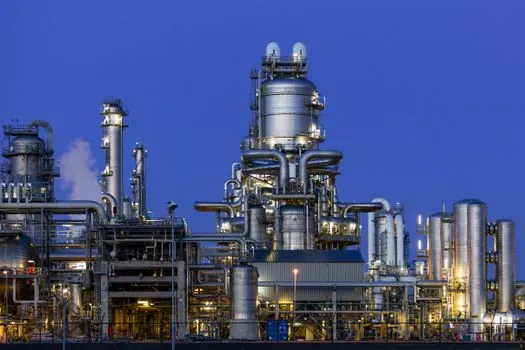
Three signals worth watching through 2026: further drops in PEM PGM loading (iridium on the anode side remains the binding constraint, and substitution work has not yet produced a drop-in), alkaline stack current-density gains above 4,000 A/m2 without lifetime penalty, and the build-out of the additional 16 GW of manufacturing capacity that will, on past learning-curve evidence, compress PEM unit cost by 15-25% before the next capacity refresh [S2]. The supplier landscape, from Cummins-backed Accelera to India-localized AHES-derived alkaline lines, gives buyers a real second-source path on both chemistries, which is itself a CAPEX lever most RFPs do not price in [S1][S3].
For related coverage, see Electrolyzer Capacity Planning: Module Specs, Stack Math, and Skid Sizing.