
Electrolyzer capacity planning in 2026 is set by two contrasting product architectures: a 500 NL/h single-core AEM module from Enapter scaling to the megawatt range, and skid-mounted chlor-alkali cells in nine sizes from 50 g/h to 2000 g/h of effective chlorine [S2][S3].
Planning starts from a per-module hydrogen output of 500 NL/h (1.0785 kg/24 h) at 99.9% purity, with optional drying lifting purity past 99.999%, an outlet pressure cap of 35 barg, a 42 kg empty weight, and a 482 x 635 x 266 mm enclosure that fits a 19" rack [S3]. The same Enapter datasheet that defines the original EL 4.0 also lists a maximum power draw of 3 kW and roughly 0.4 L/h of feed water per unit [S1].
Module Spec Sheet: AEM EL 4 Reference Numbers
Enapter's AEM Electrolyzer EL 4 datasheet fixes the planning constants: 500 NL/h production rate, 1.0785 kg/24 h, 35 barg outlet pressure, 42 kg module mass empty, 482 x 635 x 266 mm footprint, and 99.9% H2 purity rising above 99.999% with the optional dryer [S3].
Power input starts at 2.4 kW for a single module and stacks upward, with the company advertising the architecture for "electricity storage needs (<70 kW)" and "regular supply of green hydrogen (<50 kg)" use cases [S3]. The Enapter Campus in Saerbeck, currently under construction, is planned to enable mass production of more than 10,000 EL 4.0 electrolyzer units per month gradually in 2023 [S1]. For the same AEM architecture applied to instrumentation, see how process engineers calibrate and read differential pressure transmitters on similar 4-20 mA analog loops when commissioning electrolyzer skids.
Chlor-Alkali Reference Cell: Nine-Size Capacity Curve
Shaanxi Tianyi's chlor-alkali cell family (TY-WL50B through TY-WL2000B) defines a planning curve from 50 g/h to 2000 g/h of effective chlorine, with current ratings of 60 A, 84 A, 120 A, 144 A, 156 A, and 460 A at cell voltages ranging from under 5 V up to 40 V [S2]. Cell pressure is held under 0.2 MPa across the entire family, while saline feed concentration is fixed at 2%-5% and inlet water temperature at 5-15 deg C [S2].
Tank material is PMMA or PVC across all nine sizes, the ruthenium-iridium oxide nano-coating is rated for a five-year service life, and flange outer diameters step from 135 mm at 50 g/h up to 360 mm at 1500-2000 g/h [S2]. These constant pressure and feed conditions are what let planners scale chlorine output linearly with cell count rather than re-piping each skid. Where the hydrogen stream leaves the cell, shop-floor flow meters sized for low-Reynolds gas service give the cleanest mass-balance read at 50-4000 g/h chlorine throughputs.
Scaling Math: From One Core to One Megawatt

Enapter markets a modular path in which projects start with a single core and add modules into cabinets or 19" racks, an architecture explicitly aimed at the megawatt range with hundreds of units wired in parallel [S1][S3].
At 500 NL/h per module, a 1 MW (input) cluster of roughly 333 EL 4 cores at 3 kW each would yield on the order of 167,000 NL/h of hydrogen, a useful first-pass number for stack sizing [S1][S3]. The contrast with chlor-alkali is sharp: 200 chlor-alkali cells at the 2 kg/h TY-WL2000B rating would deliver 400 kg/h of chlorine, a fundamentally different commodity throughput, so capacity planners must decide which axis (hydrogen volume or chlorine mass) drives the BoP layout. The same scale-up logic is visible in the EPC chlor-alkali plant path described in the BSH-H ion-membrane skid, where "small and medium capacity units are pre-assembled on skids" so only power, salt, and water hookups remain on site [S4].
Selection Criteria: AEM vs Ion-Membrane Chlor-Alkali
Four decision axes separate the two architectures: target molecule, capacity range, footprint, and lead time. The AEM EL 4 is sized for green hydrogen pilots at 1.0785 kg/24 h per core, while chlor-alkali cells are sized for chlorine production at 50-2000 g/h per cell, and the lead-time difference is weeks for EL 4 versus a multi-month skid build for chlor-alkali [S3][S4].
Operationally, AEM modules need filtered water and DC bus power, while chlor-alkali cells need 2%-5% brine at 5-15 deg C, a regulated 60-460 A DC rectifier, and 15-18% HCl for pickling [S2]. Outlet pressure differs by orders of magnitude: 35 barg hydrogen for EL 4 versus less than 0.2 MPa wet chlorine gas for the chlor-alkali cell, which is why the downstream industrial valve train looks completely different between the two plants. For buyers comparing the two, the decision is rarely technical: it is whether the off-taker buys H2 or buys Cl2/NaOH.
Use Cases and Failure Modes
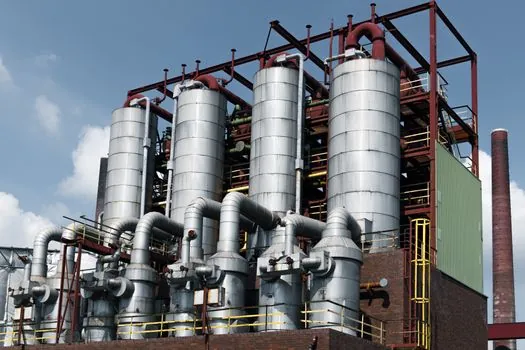
EL 4 is positioned for four concrete jobs: H2 business model pilots (refueling stations, fossil-gas displacement), sub-70 kW storage, university fuel-cell and combustion test rigs, and sub-50 kg/day regular supply for labs and SMEs [S3].
Chlor-alkali cells from the Tianyi catalogue target cooling-water chlorination, marine and cruise water disinfection, rural and urban water treatment, wastewater treatment, food and beverage safety, and pool-water disinfection [S2]. The known failure mode is anode coating wear: the ruthenium-iridium oxide layer is rated for five years in the Tianyi datasheet, after which the MMO-coated titanium anode must be recoated or replaced, a maintenance cost planners should amortize into the BoP [S2]. For AEM stacks the dominant lifetime risk is membrane dry-out and anion-exchange membrane pinholing under intermittent renewable input, which is why the EL 4 ships in both liquid- and air-cooled variants for site-specific thermal headroom [S3].
Standards, Sourcing, and What to Track Next
Procurement should anchor on three verifiable inputs: the Enapter datasheet's 500 NL/h, 35 barg, 99.9% purity numbers, the Tianyi TY-WL family curve from 50 g/h to 2000 g/h, and a confirmed rectifier rating between 60 A and 460 A for the chlor-alkali cell at hand [S2][S3].
For 2026 capacity planning, the next node is the Saerbeck ramp: 10,000+ units/month capacity on an 82,000 m^2 site, a 2.3 MW rooftop PV offset, and a Seattle EMS Toolkit development center that opened 1 March 2022 to support remote monitoring of mixed renewable-hydrogen systems [S1]. The companion article on Green Hydrogen Production Line Design extends the BoP spec map, while Green Hydrogen Quality Standards covers the GH2 purity and threshold rules that EL 4 must meet once it crosses the meter.