
An electromagnetic brake TCO must include acquisition, installation, energy, inspection, maintenance, failure, and residual value, because purchase price alone does not represent the cost of holding a machine.
This analysis applies to industrial drives, hoists, elevators, conveyors, winding equipment, and other applications where braking force, release reliability, and stop performance affect production continuity.
What Electromagnetic Brake TCO Includes
A defensible electromagnetic brake TCO separates one-time capital costs from recurring operating costs and end-of-life consequences. Argonne’s ownership framework includes vehicle cost, depreciation, financing, fuel, insurance, maintenance and repair, taxes, and other operating costs, demonstrating the breadth expected from a comprehensive ownership analysis [S1].
For an electromagnetic brake, acquisition includes the brake, actuator, mounting hardware, electrical leads, control interface, and any required power supply. Installation includes fabrication, alignment, commissioning, cable routing, protection, and engineering labor. A 5-year analysis should also state the evaluation period, discount rate, duty profile, replacement assumptions, and estimated residual value.
General TCO guidance defines ownership as acquisition cost plus operating costs and costs associated with replacement or upgrades at the end of the life cycle [S6]. The ICCT fleet calculator makes the same logic explicit through inputs for purchase, fuel or power, maintenance, infrastructure, and residual value [S4].
Cost Drivers That Change the Purchase-Price Comparison
The acquisition price is only one line in the brake’s economic case, and its impact depends on the labor rate, production value, and failure exposure surrounding the machine. A low-price brake can become expensive if it requires frequent adjustment, shortens the gearbox or motor life, or exposes personnel to uncontrolled load movement. [S4]
Energy is usually a secondary cost for a conventional electromagnetic brake because the coil operates intermittently, but it should still be recorded. The calculation needs coil voltage and current, duty cycle, switching frequency, control losses, and cooling conditions. The ICCT calculator exposes power cost, maintenance cost, infrastructure cost, residual value, discount rate, and analysis period as separate variables, providing a defensible model structure for industrial brake economics [S4].
Installation and commissioning frequently outweigh the coil’s operating energy. Separate fabrication and machining, mounting-work hours, control-panel modifications, cable and connector work, air-gap or backlash setting, testing, and production downtime. Labor differences, purchased electricity, and a company-specific discount rate should be expressed in currency per year and converted to present value where the analysis period exceeds one year.
Electromagnetic versus Mechanical Braking Options
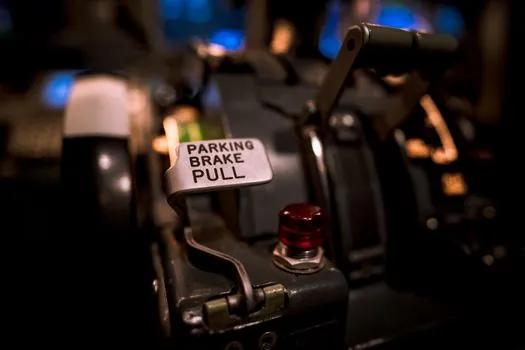
Electromagnetic and mechanical brakes should be compared by stopping function, control requirements, inspection burden, failure mode, and installed lifecycle cost rather than by catalogue price alone. The comparison must also preserve the same machine duty cycle and required protection performance for every candidate. [S2]
For lifting, indexing, and suspended-load applications, the electromagnetic brake is generally chosen for a fail-safe function, so mechanical redundancy, release monitoring, and controlled engagement become essential parts of the TCO. Specifications for an electromagnetic brake should therefore be reviewed as a system rather than as a spring-applied unit with a coil.
A mechanical brake may be economically preferable when the application requires only straightforward service braking, low electrical infrastructure, and minimal routine adjustment. An electromagnetic brake becomes more defensible when its release logic reduces manual intervention, supports controlled stopping, or prevents hazardous load movement after power loss.
Quantifying Downtime, Reliability, and Maintenance
Downtime is usually the decisive economic variable for an electromagnetic brake, and it must be calculated from the machine’s interruption cost rather than assigned an arbitrary penalty. A defensible model records failures per year, average repair duration, internal labor rate, contractor cost, lost contribution margin, restart time, and the probability that a brake-related event affects safety, quality, or upstream production. [S4]
The 2024 Vincentric vehicle analysis includes an appendix on ownership cost savings for 41 EVs versus internal-combustion-engine vehicles. The transferable point is methodological, not automotive. Separate energy, maintenance, acquisition, and residual-value effects, because one favorable category should not conceal a failure in another.
For brake maintenance, count inspection hours, consumables, technician travel, calibration labor, coil or rectifier replacement, sensor replacement, and planned production access. Include unplanned work as expected annual cost: failure probability multiplied by repair cost plus lost output and safety consequences. A brake that saves 15 minutes per inspection can still lose money if the inspection requires a full line stoppage and a specialist technician.
The comparison should also account for compatibility with the motor protector, because upstream protection decisions affect the probability of a brake-related fault. A correctly coordinated drive and stopping system reduces repeat callouts, while a mismatched brake, control relay, or overload relay can create avoidable trips and inspection work.
Control Architecture Changes the Installed Cost

Fail-safe operation requires more than a coil, and the control architecture can add several cost layers. A basic installation may use a spring-applied, electrically released brake with a simple power supply, while a monitored system adds a brake-status switch, relay or contactor, PLC logic, overload coordination, cable protection, and commissioning tests. [S1]
Three implementation levels are practical. Level 1 uses a local contactor and manual release, with low hardware cost but limited diagnostics. Level 2 adds a controlled release sequence, brake feedback, and permissive logic for safer maintenance access. Level 3 provides continuous status monitoring, event logging, and integration with plant control or condition-monitoring systems. The comparison must price each added function against the specific downtime or safety exposure it controls.
A thermal relay may be part of motor protection, but it does not establish brake release integrity. Brake feedback proves the commanded state to a limited extent, while actual release verification requires an application-appropriate method and a deliberately engineered test procedure.
Electrical losses should be measured or estimated from the nameplate, not treated as zero. Where regenerative or frequent cycling raises switching frequency, document the control losses, coil heating, and the effect on component life. The 2025 South Korean freight study found that operating scenarios, mileage, and subsidies materially altered which powertrain had the lowest TCO, reinforcing the need for duty-specific rather than generic cost assumptions [S5].
Working and Non-Working Use Cases
An electromagnetic brake is well suited to applications where power loss must produce a safe holding state, including hoists, cranes, elevators, and suspended or balanced industrial machinery. It is also used for repetitive stopping duties where controlled release and remote operation can reduce manual intervention. [S5]
The technology is less compelling when the machine requires continuous friction braking with no useful electrical-release function. It may also be a poor economic fit where electrical infrastructure is unreliable, installation access is restricted, or the duty cycle produces excessive heat without a corresponding safety benefit.
For hoists and cranes, include two credible interruption cases in the TCO: a minor brake-control fault and a major load-control failure. The minor case represents inspection, adjustment, and electrical repair. The major case represents lost production, component damage, certification or inspection work, and the selected risk-management measures. This prevents a single generic downtime number from hiding the cost difference between the two events.
For conveyors and production machinery, include restart time, lost product, and line balance disruption. For elevators and winding machinery, include controlled stop verification and mechanical inspection. For indexing systems, include repeat positioning accuracy and adjustment labor.
Standards, Evidence, and Model Boundaries
The final TCO model should preserve the standards and evidence used for each safety claim, separating verified product performance from general lifecycle assumptions. The research supports the cost model structure, but it does not provide electromagnetic-brake prices, failure rates, coil life, service intervals, or installation hours. Those values must come from the selected manufacturer, supplier quotation, site records, or approved vendor documentation. [S2]
For every candidate brake, record the model, rated holding or braking torque, supply voltage, coil current and power, duty cycle, operating temperature limits, adjustment range, mounting dimensions, ingress-protection designation, brake-release time, feedback options, available friction materials, permitted ambient conditions, mass, warranty, spare-part lead time, and lifecycle maintenance instructions.
The model boundary should cover the drive train and interfaces that can create a brake-related failure. Where regenerative drives are involved, coordinate the drive, motor, brake resistor, and brake controls so energy handling and release sequencing are defined rather than assumed.
The 2026 ICCT TCO calculator is an auditable template because it separates purchase, fuel, maintenance, charging infrastructure, and residual value, while allowing mileage, incentives, and analysis period to change [S4]. An industrial electromagnetic-brake model needs the same discipline, replacing vehicle inputs with machine duty, brake price, installation hours, energy use, service costs, failure costs, and residual value.
Procurement Decision and Model Audit
A defensible electromagnetic-brake purchase compares at least 3 candidates across 5 decision categories: installed price, braking performance, control integration, maintenance exposure, and downtime consequence. The selected option is not automatically the lowest-TCO option, but it must be the option whose quantified lifecycle benefit justifies its acquisition, integration, and residual-risk costs. [S2]
For each candidate, calculate purchase price, installation, controls, energy, inspection, scheduled maintenance, spare parts, expected failures, downtime, and residual value over the same 5-year analysis period. Apply the company discount rate to future costs and document it separately from inflation assumptions. Then test the result against conservative duty, higher failure probability, longer repair time, and higher labor rates.
Track 4 signals after installation: brake-related callouts per operating hour, actual release time against the engineering basis, corrective-maintenance hours, and production minutes lost per event. A related framework for motor control center TCO can support the same cash-flow discipline, but it does not replace the brake-specific duty test.