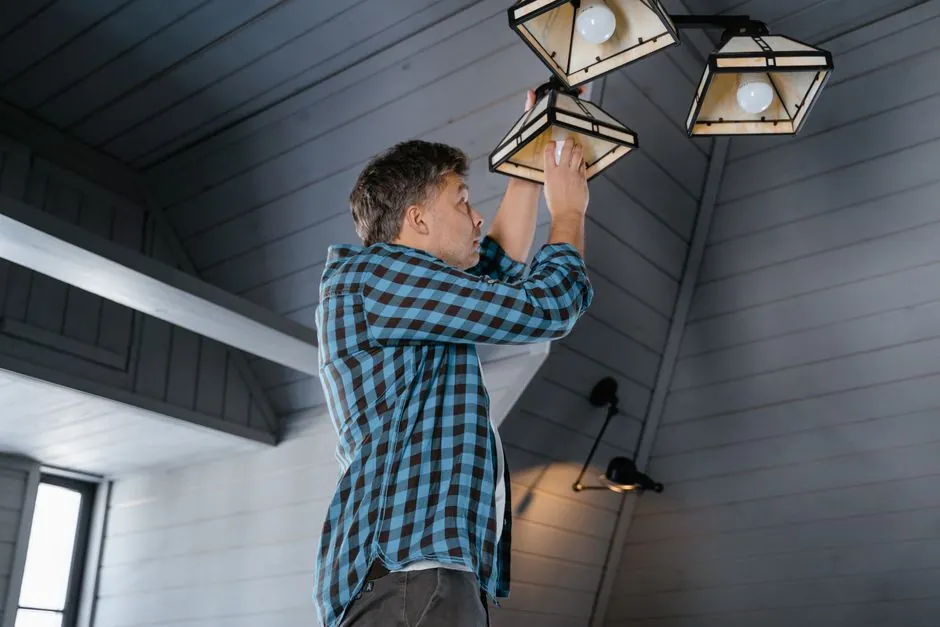
Electrical work sites split into two spec lanes: UL 924-governed commercial egress (90-minute minimum runtime, less than 1 s transfer time) and UL 844 / ATEX 2014/34/EU hazardous-location lighting, with battery chemistry, voltage range, and zone rating driving the part number [S1][S3][S4][S5].
Specifying the wrong lane is the most common procurement failure: an office-grade exit sign with NiCd 3.6V 1.0Ah packs does not survive a refinery, and an explosion-proof C1D2 fixture at 25 lb is overkill above a switchgear room. The sections below separate these lanes and pin the decision criteria to the standards that govern them.
Two Spec Lanes: UL 924 Egress vs UL 844 / ATEX Hazardous
UL 924 is the mandatory North American standard for emergency lighting equipment and mandates a minimum 90-minute battery runtime, a transfer time below 10 s (typical self-test units hit less than 1 s), and a recharge time under 24 hours after a full discharge, per Kingseng 2026 commercial datasheet [S4]. For hazardous locations, UL 844 (and its Canadian parallel CSA C22.2 No.137) governs luminaires in Class I/II/III Division 1 and 2 environments, while ATEX 2014/34/EU (Equipment for use in potentially explosive atmospheres) does the same job in the EU via equipment categories 1, 2, and 3 matched to Zones 0, 1, and 2 [S5].
The fixture format differs sharply. Commercial egress units in the Kingseng 2026 line cover 1.5–5 W exit signs, 3–25 W emergency units, 5–25 W combo units, and 1.2–3.6 W remote heads, with NiCd 3.6V to 7.2V packs or LiFePO4 3.2V to 6.4V packs, all rated IP20 indoor or IP65 wet [S4]. Hazardous-location units are heavier: a C1D2 wall-mount LED floodlight at 8 W or 15 W delivers 1,280 lm or 2,400 lm on 100–277 V AC, with integral battery backup, IP67, IK09, 5G vibration, and UL 1598A marine-outside-type salt-water rating [S1].
For full code context on emergency-stop and machine-status hardware that sits upstream of the lighting decision, see the emergency stop button and aerial work platform references. Standard emergency luminaires cover ~90 minutes of egress; sites with rolling blackouts should specify extended-runtime packs, since NiCd and LiFePO4 cells de-rate differently when run past their 90-minute mark [S2].
Electrical Specs: Voltage, Transfer, Battery Chemistry
Universal input 100–277 V AC at 50/60 Hz is now table stakes for hazardous-location LED units, removing the legacy 120/277 V AC dual-voltage constraint that older HID emergency gear required [S1][S3]. For international projects, 220–240 V AC at 50 Hz regions need a factory transformer/driver swap that preserves the internal DC bus (typically 6 VDC, 12 VDC, or 24 VDC), and 24 VDC buses are preferred when remote-head loads or long wire runs create voltage-drop concerns [S2].
Transfer time is a hard safety metric. UL 924 caps it at 10 seconds end-to-end; commercial self-diagnostic LED units on the Kingseng 2026 datasheet transfer in less than 1 second, with a recharge cycle under 24 hours after a 90-minute discharge [S4]. For sites where brownouts and sags are routine, a charger with explicit sag tolerance and clean recovery prevents nuisance tripping that would otherwise drain the pack [S2].
Battery chemistry is a cost-vs-life trade. Sealed lead-calcium packs in legacy C1D1 emergency units last 5 years within 19–30 °C mean ambient, with a 4-year prorated warranty [S3]. NiCd 3.6V to 7.2V packs and LiFePO4 3.2V to 6.4V packs dominate the 2026 commercial egress line, with LiFePO4 offering longer cycle life and wider operating temperature at a higher unit cost [S4]. Sealed lead-calcium battery lifespan is documented at 5 years when kept in a 65–85 °F (19–30 °C) window [S3].
Zone and Classification: Picking the Right Hazardous Rating
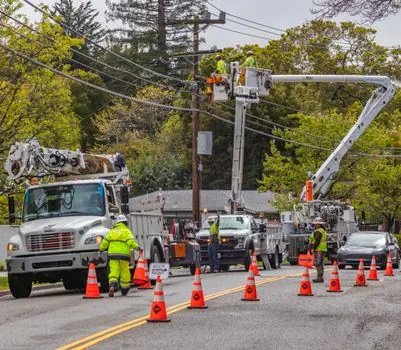
For a typical indoor electrical room, a NEMA 3, 4, 4X, or 12 rated unit is generally sufficient; for refinery, chemical, or fuel-storage areas, the decision matrix tightens to Class I Division 1 (Groups C and D, Zones 0, 1, 2 with IIA, IIB+H2, IIC gas groups) versus Class I Division 2 (Groups C and D, Zone 2) [S3]. The reference HEL-C1 model uses copper-free cast aluminum for Division 1 and fiberglass for Division 2, both hermetically sealed with stainless-steel external hardware [S3].
Lamp-head wattage scales with classification. Division 1 heads run 12 V 20 W halogen MR16 lamps behind an explosion-proof clear polycarbonate shield; Division 2 heads drop to 6 V 9 W halogen PAR lamps, top-mounted and fully directional, with interchangeable heads available from 9 to 25 W [S3]. LED C1D2 floodlights at 8 W (1,280 lm) or 15 W (2,400 lm) now match or exceed those halogen lumen packages at a fraction of the wattage, and the LEDEX BEACON cross-reference table covers direct replacements for Eaton Crouse-Hinds Light-Pak N2LPS, Appleton HEX LED, Appleton N2LED (130–516 lm output class), Dialight SafeSite, Killark EBS, and Holophane HLEMC [S1].
For plant retrofit scope where the lighting decision sits next to overhead rigging decisions, see the aerial work truck spec entry. ATEX equipment category 2 gear (Zone 1) is the typical plant-floor spec, with temperature class T4 to T6 limits dictating maximum surface temperature [S5].
Options Comparison: Commercial Egress vs C1D2 LED vs ATEX Zone 1
Decision criteria line up cleanly across the three main options for electrical-work emergency lighting. Use the table below to frame a procurement comparison; the values are drawn from the 2026 commercial datasheets and the C1D2 LEDEX part-number builder [S1][S4][S5].
Option A, UL 924 commercial egress: 1.5–25 W load, NiCd 3.6V to 7.2V or LiFePO4 3.2V to 6.4V, IP20 to IP65, 90+ min runtime, less than 1 s transfer, $ entry-level pricing, suited to offices, hotels, hospitals, and indoor electrical rooms [S4]. Option B, UL 844 C1D2 LED floodlight: 8 W (1,280 lm) or 15 W (2,400 lm) on 100–277 V AC, IP67, IK09, 5G vibration, UL 1598A marine, 5-year standard warranty (10-year optional), suited to refinery, chemical, and outdoor process areas [S1]. Option C, ATEX 2014/34/EU Zone 1 emergency luminaire: equipment category 2, T4 to T6 temperature class, certified for explosive gas and dust environments, suited to EU chemical, pharmaceutical, and fuel-storage facilities [S5].
On cost, UL 924 egress units are the lowest cost per fixture; C1D2 LED units sit 5–10× higher due to certification and IP67 housing; ATEX Zone 1 units are typically the highest, with selection gated to certified protection method (Ex d, Ex e, Ex tb) and gas/dust group [S4][S5]. On lead time, commercial egress ships in days, while C1D2 LEDEX BEACON parts quote 1–5 business days from stock and ATEX Zone 1 lead time varies by certification body [S1][S4].
Use Cases on Real Electrical-Work Sites
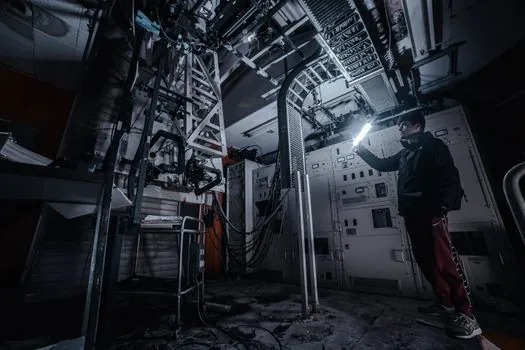
Three concrete scenarios cover the bulk of plant-floor emergency-light specs. Scenario 1, indoor switchgear room: a UL 924 combo unit with NiCd 6V 4.0Ah or LiFePO4 6.4V 3.0Ah battery, IP20 indoor rating, 3 W to 5 W exit sign plus 2× 3.6 W heads, 90 min runtime minimum, self-diagnostic testing, fits the bill at the lowest cost [S4]. Scenario 2, refinery process area or outdoor chemical storage: the BEACON C1D2 LED floodlight at 8 W (1,280 lm) on 100–277 V AC, IP67, pendant or wall mount, with the optional 10 kV or 20 kV surge protector for exposed outdoor runs [S1].
Scenario 3, EU chemical plant with rolling-blackout risk: an ATEX 2014/34/EU Zone 1 emergency luminaire, equipment category 2, with extended runtime beyond 90 minutes, installed per the IEA lighting efficiency guidance and EU ATEX directive framework [S5]. For sites where work crews operate at height during emergency repairs, the aerial work platform reference covers the lift spec, while the emergency rescue entry covers downstream rescue hardware.
Distribution-room retrofits in 2025–2026 increasingly specify LED tri-proof emergency luminaires with IP65 or higher ratings, replacing legacy fluorescent fittings, and these typically deliver stable 2-hour backup, 600 lm coverage for evacuation routes, and PC flame-retardant housings [S8][S9].
Failure Modes and Constraints to Engineer Out
The four failure modes that show up in service are predictable. Voltage mismatch (120 V only charger on 230 V grid) destroys the charger within hours; the fix is a factory transformer/driver swap to the local grid [S2]. Battery over-discharge below the low-voltage disconnect threshold permanently damages lead-calcium cells; the fix is solid-state circuitry with explicit low-voltage disconnect and AC lockout with brownout protection [S3].
Ingress failure in wet or wash-down environments is the third mode; the fix is a NEMA 4X or IP65+ enclosure rather than an IP20 indoor housing [S2][S3]. Classification mismatch (installing a Division 2 housing in a Division 1 area) is the most dangerous mode and the most common audit finding; the fix is to match the gas group, temperature class, and zone before mounting [S3][S5]. Surge on outdoor runs is the fifth mode: 10 kV or 20 kV surge protector options are available for the C1D2 LEDEX BEACON line, and should be specified on exposed conduit runs [S1].
For sites with documented unstable grids, runtime planning should oversize the battery pack beyond the 90-minute UL 924 minimum, since standard emergency lighting provides ~90 minutes and extended-runtime systems are required for rolling-blackout regions [S2]. NiCd packs tolerate deeper discharge than LiFePO4 in practice, which matters when sizing for multi-hour outages.
Standards, Sourcing, and Submittal Checklist
The governing standards for emergency lighting in electrical work are UL 924 (commercial egress in North America), NFPA 101 Life Safety Code (egress runtime and testing), IBC and IFC (building and fire code adoption), UL 844 (hazardous-location luminaires in North America), CSA C22.2 No. 137 (Canadian parallel), and ATEX 2014/34/EU (EU explosive atmospheres), with IEC 60079-x governing the underlying protection methods (Ex d, Ex e, Ex tb) referenced in ATEX certification [S4][S5].
The export submittal checklist for international projects is short: confirm input voltage and 50/60 Hz frequency, match the transformer, charger, and DC bus (6, 12, or 24 VDC) to the fixture load, and confirm battery capacity against the remote-head watts and conductor run length for voltage drop [S2]. For hazardous-location units, the submittal must include equipment category, protection method, temperature class, gas/dust group, and the ATEX or UL 844 certificate number [S5].
Trackable signals for the next 6 months include UL 924 self-test/diagnostic adoption rate on commercial sites, ATEX Zone 1 LED retrofit programs at EU chemical plants, and the rollout of LiFePO4 packs replacing legacy NiCd in the 3.6V to 7.2V range. Procurement teams should also watch IEC 60079-0 general-experience updates and any EU ATEX guideline revisions affecting Zone 1 emergency luminaire categories.
Background reading: Signal Tower Light Sizing and Selection Guide for Machine Status Duty.