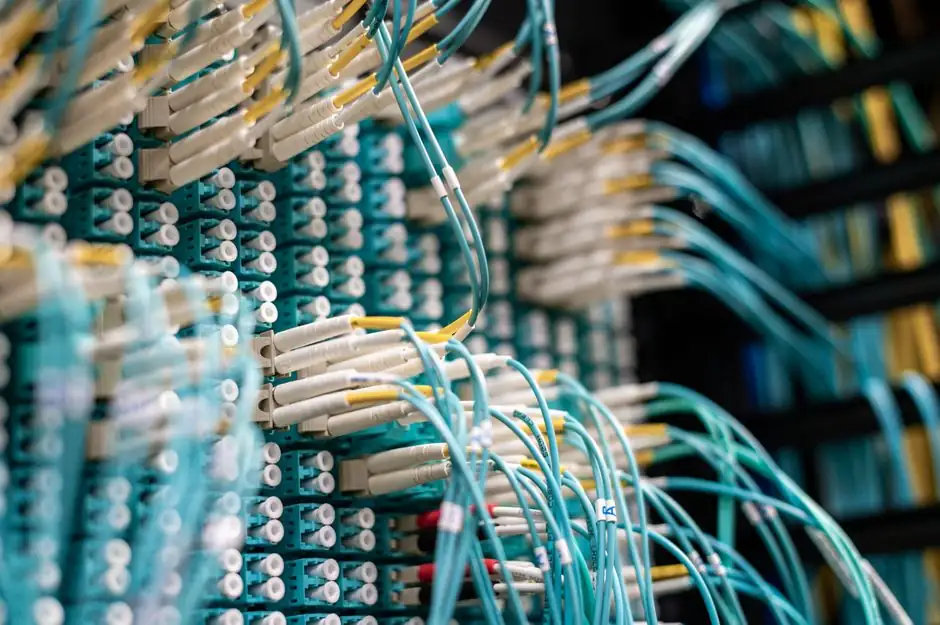
EN 50288-7:2005 is the CENELEC sectional specification for multi-element metallic cables used in analogue and digital communication and control, published on 2005-04-01 with national implementation due by 2006-04-01 [S4]. The standard is used in conjunction with EN 50288-1 and is harmonized under the EU Low Voltage Directive, which makes it the default reference for CE marking of shielded instrumentation cable on European plant builds [S2][S4].
European EPCs, refinery contractors, and chemical-plant engineering firms routinely call out EN 50288-7 compliance in instrument-data sheets because the standard fixes quantified electrical parameters rather than just construction, separating it from generic "instrumentation cable" descriptions [S2]. Global cable suppliers carry both EN 50288-7 and US PLTC (Power-Limited Tray Cable) lines as parallel offerings for cross-border projects [S1][S3].
Scope and what EN 50288-7 does, and does not, cover
EN 50288-7 applies to multi-element metallic cables connecting instruments and control systems for analogue or digital signal transmission, covering conductor sizing, insulation, screening of cabling elements, cable make-up, and filling compound construction [S4]. The standard specifies electrical parameters (impedance, capacitance, attenuation, resistance), shielding effectiveness, mechanical properties, flame retardancy, temperature rating, and CE marking compliance, but it does not fix insulation recipes, conductor material, voltage rating, or hazardous-area certification pathways [S2].
For hazardous-area installs, EN 50288-7 is paired with EN 60079-14 for installation and EN 60079-11 for intrinsic safety, because the sectional specification does not by itself authorize Ex use [S2]. Common European project packages therefore spec a three-document chain: EN 50288-7 for the cable, EN 60332-1 or EN 60332-3 for flame retardancy, and the EN 60079 series for zone classification, mirroring how a typical control cable is paired with installation codes for power and signal runs. CENELEC member states were required to withdraw conflicting national standards by 2008-04-01, which is why EN 50288-7 now governs European procurement of instrumentation cable on most refinery, chemical, power, and pharmaceutical tenders [S2][S4].
Mandatory electrical parameters: impedance, capacitance, attenuation
EN 50288-7 requires characteristic impedance (Z₀) of 100Ω, 120Ω, or 150Ω, with a tight ±5Ω tolerance, and the standard commonly references 120Ω for RS-485 data links while 100Ω and 150Ω are reserved for other bus and analog applications [S2]. Mismatch outside ±5Ω pushes reflection coefficient above ~2%, which is enough to cause data errors or analog distortion on long runs; cables delivered at ±10Ω or ±15Ω do not meet the standard even if construction looks correct [S2].
Capacitance unbalance pair-to-pair is capped at ≤200 pF/100m, while typical cable designs stay well under that ceiling because high unbalance capacitance distorts analog 4-20 mA loops and limits usable cable length [S2]. Attenuation at 1 MHz is bounded at roughly ≤20 dB/km for typical constructions, with conductor resistance scaled to gauge, for example ≤73 Ω/km for 24 AWG copper [S2]. Insulation resistance is mandated at ≥5,000 MΩ·km, with most manufacturers quoting ≥10,000 MΩ·km in production data, and typical inductance staying at or below 0.8 mH/km as implied by the impedance formula [S2].
The practical upshot: 100% factory electrical testing of Z₀, capacitance, attenuation, and IR is the only reliable way to verify a shipment matches the data sheet, because the ±5Ω impedance window in particular will fail silently on cables that have the right jacket, conductor, and shield but the wrong twist lay [S2]. The same test discipline is what lets EPC inspectors accept a control cable reel against EN 50288-7 without destructive sampling.
Flame retardancy, temperature, and mechanical robustness

Flame retardancy under EN 50288-7 is satisfied by compliance with EN 60332-1 for single-cable vertical flame propagation, with EN 60332-3 available as an option for bunched-cable scenarios typical in cable trays [S2]. Common sheathing choices for EN 50288-7 include LSZH (Low Smoke Zero Halogen) compounds and PVC, with XLPE (cross-linked polyethylene) and PE used as the dominant insulation materials for the screened constructions shown in major supplier catalogues [S5].
Temperature rating is set as a performance requirement rather than a fixed number, so the standard allows XLPE-insulated LSZH-sheathed constructions to be rated for higher continuous conductor temperatures than PE-insulated variants, and armoured versions (typically SWA or steel-wire braid) add mechanical protection for direct-buried or tray runs subject to impact [S5]. Conductor size, bend radius, and tensile limits are likewise called out as performance, leaving the manufacturer to document them in the type-test report attached to the DoP (Declaration of Performance) under the CPR (Construction Products Regulation) [S2][S5].
For multi-pair installations in noisy plant environments, individual-and-overall screened (IOS) constructions pair a foil or braid screen on each element with a second overall screen, which is the configuration most often used for fieldbus and analog 4-20 mA runs on a control cable tray. CWB (Concentric Wire Braid) and overall foil (Al/PET) screen options are the standard offerings, with armoured variants adding steel-wire armour for outdoor or buried runs [S5].
EN 50288-7 vs PLTC vs generic instrumentation cable
Three cable families dominate cross-border procurement, and they differ in regime, scope, and verification depth. The table below lines them up against four decision criteria a process engineer typically weighs when writing an instrument specification. [S2]
On regime and acceptance, EN 50288-7 is a CENELEC harmonized standard for the European market with CE marking under the LVD; PLTC is a US NEC Article 725 listing for power-limited tray circuits, and a generic "instrumentation cable" is usually a manufacturer's internal part number with no third-party regime behind it [S1][S2][S3]. On electrical parameters, EN 50288-7 mandates Z₀ = 100/120/150Ω ±5Ω, capacitance unbalance ≤200 pF/100m, and attenuation ≤20 dB/km at 1 MHz, while PLTC leaves the electrical envelope to UL 13 and the manufacturer's data sheet, and generic cable often has no published tolerance window at all [S1][S2].
On construction, EN 50288-7 specifies conductor, insulation, screening, make-up, and filling compound as a coordinated set under EN 50288-1, while PLTC governs tray-rated jacket and voltage (typically 300 V) under UL 13, and generic cable has no enforced consistency between lots [S4][S1]. On verification, EN 50288-7 buyers should expect a DoP, EN 60332-1 or -3 flame report, and 100% electrical test data on Z₀ and IR, whereas PLTC relies on UL follow-up service, and generic cable typically has only a factory batch certificate [S2]. For a project that will live in both regions, dual-listed reels are common but expensive, which is why many EPCs simply pick the regime of the country where the cable is permanently installed [S3].
Selection criteria: who should specify EN 50288-7, and who should not
EN 50288-7 is the right call for European greenfield projects in oil and gas, chemical, power, pharmaceutical, and water-treatment plants where EPC specs already call for harmonized CE-marked cable with documented impedance and flame performance [S2]. It is also the right call for retrofit work in European refineries and chemical sites where the existing instrument-index documentation assumes EN 50288-7 type-test data for instrument loop records.
It is the wrong call for US-only projects where the AHJ (Authority Having Jurisdiction) enforces NEC Article 725 and accepts PLTC listings, because EN 50288-7 is not a US listing and will not satisfy inspectors on its own [S1]. It is also the wrong call for hazardous-area cable runs that need ATEX or IECEx certification, because EN 50288-7 does not by itself authorize Ex use, and the project must instead reference EN 60079-14 for installation and the relevant IEC 60079 part for equipment approval [S2]. In a process plant, EN 50288-7 governs the cable; ATEX 2014/34/EU and the IEC 60079 series govern the system it lands in, and the two have to be reconciled on the loop sheet, similar to how a control cable datasheet has to be reconciled with the cabinet's ingress protection rating.
Procurement and sourcing signals for EN 50288-7 cable
Current supplier offerings for EN 50288-7 cable cluster around three product shapes: XLPE-insulated LSZH-sheathed overall-screened, XLPE-insulated LSZH-sheathed individually-and-overall-screened, and armoured variants of both, available as multicore, multi-trio, multipair, and single-pair constructions [S5]. PE-insulated LSZH-sheathed equivalents cover similar geometries for buyers who prefer PE over XLPE for cost or chemical-resistance reasons [S5]. A typical shielded cable under EN 50288-7 in 2026 ships with a CPR Euroclass rating on the DoP, EN 60332-1 or -3 flame data, and per-reel electrical test results for Z₀ and IR [S2][S5].
For 2026 procurement, two trackable signals matter more than catalogue refreshes: first, the CENELEC work programme around EN 50288-1 and the sectional sub-parts, which can move tolerance and test-method requirements for new lots; second, CPR Euroclass reassessments for LSZH compounds, which directly affect the DoP shipped with each reel. Engineers writing new instrument indexes should pin the EN 50288-7 issue date and the Euroclass on the datasheet, and they should request 100% electrical test reports per reel rather than relying on type-test summaries, because lot-to-lot variation in capacitance unbalance is the single most common cause of analog-loop commissioning headaches on long runs.
This topic is covered further in PV module line automation: throughput, operators per GW, and what actually changes.