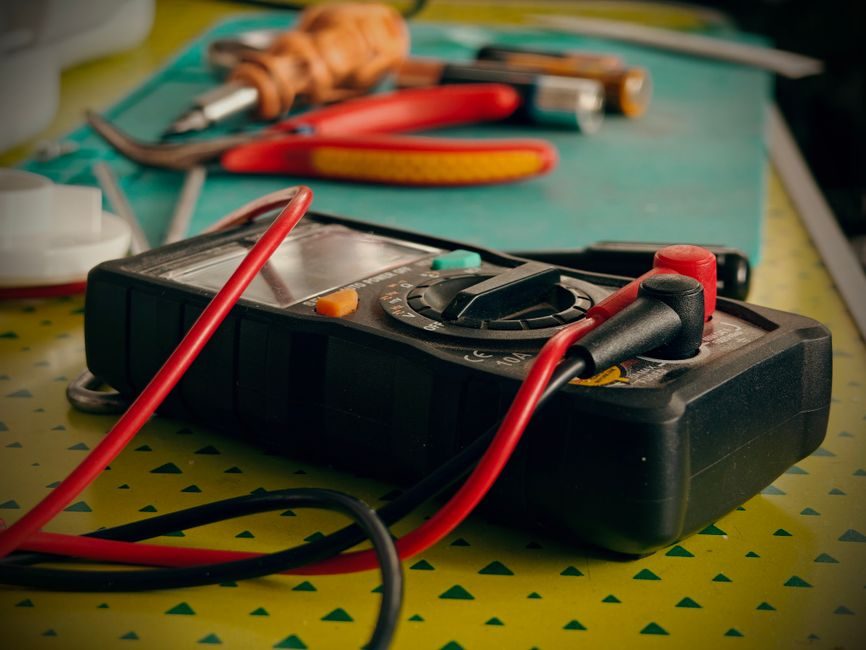
Entry-level non-contact AC probes such as the Klein Tools HVCT-1 list around US$335 after a 50% promotional cut from US$670, with >10 units in dealer stock and 99.6% positive feedback as of 2025-12-23 [S2].
Industrial oil-immersed dielectric test transformers cluster between US$500 and US$6,800 per piece at 1-piece MOQ, the 50 kVA tier occupying the US$1,140-6,800 band on Made-in-China as of 2026-06-08, while electronic BDV oil testers start near US$500 [S3]. Specialised cable fault locators with step-voltage/current methods run US$2,727-3,182 per piece at 1-piece MOQ per the 2026-07-25 OEM catalogue [S1].
Price bands by kV class and topology
High voltage test equipment splits cleanly into four price tiers on 2026 sourcing data, and a buyer should match tier to the asset class being tested, not to the marketing brochure. The first tier — handheld non-contact proximity probes and clip-style voltage detectors — sits below US$500, with the Klein HVCT-1 at US$335 as a clean reference point [S2]. These are field-safety tools, not measurement instruments: they confirm the presence of voltage, they do not characterise insulation.
The second tier covers bench AC/DC hipot sets in the 5-30 kV range used for QA on cable harnesses, motors, and small transformers. Pricing here is dominated by the test current limit (5 mA versus 20-100 mA) and by automated ramp/timeout features. The third tier — 30-100 kV resonant and impulse systems for cable and rotating machinery — moves into the US$2,700+ range, evidenced by the Xhhd523L sheath-fault locator at US$2,727-3,182 [S1]. The fourth tier is oil-immersed test transformers, where a 50 kVA, 0.05 Hz-300 Hz VLF-capable unit from a CE-certified factory sells for US$1,140-6,800 at 1-piece MOQ [S3]. For the underlying insulation class logic behind these test voltages, the high voltage tester reference page lays out the standard step-voltage sequences.
What actually moves the price
Four line items account for most of the variance between a US$500 instrument and a US$6,800 system. Test voltage and VA rating are the dominant cost driver: each step up in kV class demands larger, heavier, more carefully insulated windings and bushings, and on oil-immersed designs, more dielectric oil and a bigger tank. The 50 kVA VLF transformer band at US$1,140-6,800 versus the sub-10 kVA electronic BDV set at US$500-1,650 shows the ratio at roughly 4-13× for a 5-10× jump in VA [S3].
Waveform and switching topology form the second driver. Pure DC hipot is cheapest; AC 50/60 Hz adds iron and copper; 0.1 Hz VLF and resonant inductor-capacitor chains add a tuned reactor and switching network that materially raise both BOM and engineering hours [S3]. The third driver is certification scope: a CE-marked hipot with valid certification since 2023-09-05 carries a premium over an unbranded equivalent, and buyers exporting to the EU or North America treat the certificate as a non-negotiable line item [S3]. The fourth driver is volume tier — the quotes above are 1-piece MOQ, and the same Chinese OEM factories typically discount 20-40% at 5-10 piece orders, which is why flexible drag chain cable sourcing guides warn against reading single-piece list prices as procurement reality.
Buyer-fit matrix: who needs which tier
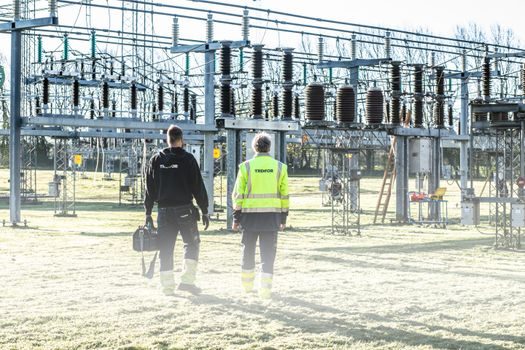
Field service electricians and utility line crews belong in tier 1: a US$335-500 proximity tester is the right tool for "is this conductor live?" decisions, and the Klein HVCT-1's dealer stock and 99.6% positive feedback signal a mature accessory market [S2]. These tools are NOT measurement instruments and should not appear in a type-test report.
QA labs and motor-repair shops belong in tier 2: a 5 kV AC/DC bench hipot with 5-20 mA trip covers winding hipot and ground-bond tests to common shop practice. Cable jointers and HV cable installers belong in tier 3 — the Xhhd523L step-voltage sheath fault locator at US$2,727-3,182 is purpose-built for that workflow and is the cost ceiling for most routine fault-locating jobs [S1]. Power utilities, transformer manufacturers, and HV equipment type-testing labs belong in tier 4: the 50 kVA oil test transformer at US$1,140-6,800 is the minimum credible platform for substation equipment, and price usually gets outranked by waveform fidelity and oil-handling infrastructure [S3]. For related instrumentation decisions in a plant build, the power meter buying guide walks through the bench-tier selection logic.
Total cost of ownership: not just the unit price
Three ownership costs routinely catch first-time buyers. Installation and shielding: tier 3 and tier 4 systems need a faraday-style test bay, interlocked grounding, and a safety observer, and a poor install can double the effective project cost. Calibration and consumables: oil-immersed transformers require periodic oil dielectric testing, often performed with a separate BDV set in the US$500-1,650 range — so the practical procurement is a paired system, not a single line item [S3].
Energy: a 50 kVA oil test transformer does not draw 50 kVA continuously, but the no-load losses on a poorly specified reactor add up over a 10-year service life, and VLF/0.1 Hz operation is specifically chosen to cut that energy bill versus 50 Hz testing. For plants already running motor and pump fleets, the diaphragm pump selection map shows the same logic — total cost is dominated by energy and diaphragm replacement, not pump purchase. Specifying on headline price without budgeting these three buckets is the single most common reason a "cheap" hipot ends up costing more than a mid-range one over its first decade.
Verification checklist before signing a PO
Five checks separate a defensible purchase from a returns-row write-off. First, the kV and VA ratings must be continuous-duty, not peak — many Chinese catalogue sheets quote open-circuit voltage that collapses under load. Second, request the type-test certificate and the calibration report; the CE certificate valid since 2023-09-05 quoted on the US$1,140-6,800 oil test transformer is a working template [S3]. Third, confirm the waveform package: DC-only versus AC 50/60 Hz versus 0.1 Hz VLF versus resonant changes both the test object stress and the price. Fourth, the supplier-side service tier: high voltage test equipment factories offering 15+ years of technical experience, online and offline training, and pre-ship test videos provide direct-from-factory pricing without middlemen, as their supplier profile describes [S6]. Fifth, verify mechanical specs like the dual-sensor auto-recognition used in HV switch mechanical characteristic testers, which trips up buyers who assume a single displacement sensor covers all breaker types [S7].
Trackable signal: a 2026-09 OEM catalogue refresh on the Made-in-China HV oil testing transformer category will likely tighten the US$1,140-6,800 band as new CE recertification cycles land, and the same window should reveal whether the 50 kVA entry point moves below US$1,000 at 5-piece MOQ. Watch the dealer stock count on the Klein HVCT-1 listing — a sustained drop below 10 units on a 99.6%-rated accessory is the cleanest early signal of a price reset on tier 1.
Spec-level background on the components involved: linear guide, and crossed roller guide.