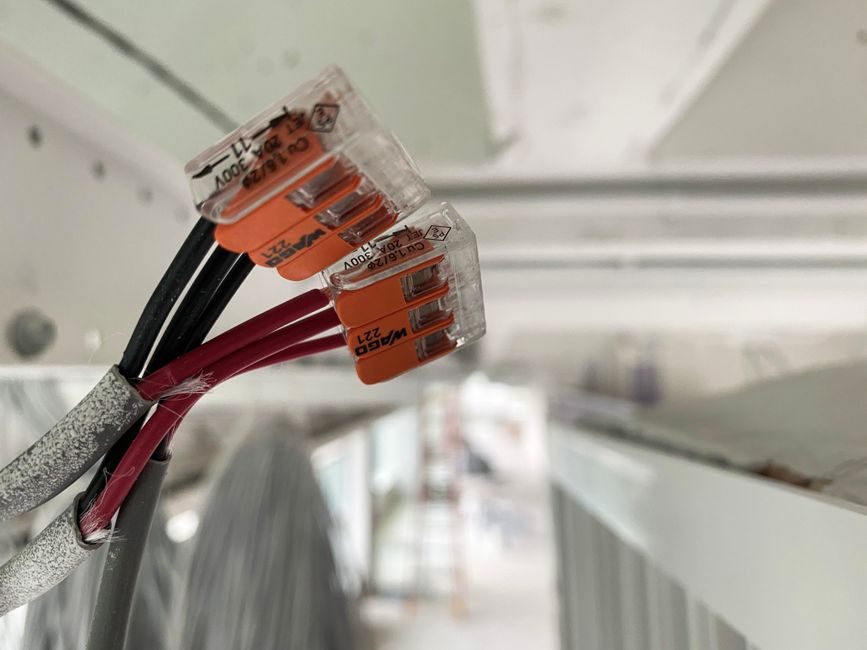
An energy meter is a permanently installed revenue or submetering device that integrates voltage, current, and power over time to output kWh, often via pulsed outputs or Modbus/IEC 62053-21 protocols; a portable insulation resistance tester, commonly called a megohmmeter, applies a selectable DC test voltage (50/250/500/1000/2500 V) and reads back resistance from 0.1 MΩ up to 200 GΩ on de-energised assets [S2][S3].
The two instrument families share almost no measurement overlap: one runs across live AC busbars and accumulates consumption, the other runs across isolated windings and detects moisture, contamination, or dielectric breakdown before failure. Conflating the two on a single work order is one of the most common procurement mistakes in plant commissioning, because the leads, voltage class, and safety category differ completely [S1][S2].
Measurement Principle and Test Voltage Class
Insulation resistance testers inject a regulated DC test voltage and measure the tiny leakage current flowing through the dielectric, converting it via Ohm's law to a resistance reading in MΩ or GΩ; a typical 2026-spec handheld unit offers 50 V, 250 V, 500 V, 1000 V, and 2500 V steps with a 0.1 MΩ to 200 GΩ measurement window and PI/DAR automatic index calculation [S2][S3]. Energy meters take the opposite approach: they sample AC voltage and current on a live, loaded circuit (typically 220-240 V single-phase or 380-415 V three-phase four-wire at 50/60 Hz) and integrate instantaneous power over time, with class 1.0 or class 0.5 accuracy per IEC 62053-21 commonly cited in 2026 commercial offerings [S1].
The voltage class dictates the application: a 250 V step is the historical default for 24 V control wiring and telecom pairs, 500 V covers 440 V motor windings, 1000 V covers 690 V distribution, and 2500 V is reserved for MV motor windings, transformer windings, and HV cable jackets [S2]. A 2026 Chinese supplier catalog on Made-in-China.com still groups "Energy Meter, Power Meter, Resistance Tester, Insulation Resistance Tester, Electricity Meter, Smart Three-Phase Four-Wire Prepaid Electric Meter" in a single meter-for-electricity category with MOQ 1000 pieces at US$32-35, confirming that procurement systems still treat the two as adjacent line items even though the instruments are not interchangeable [S1].
Output, Protocol, and Data Integration
Modern energy meters ship with pulsed LED/S0 outputs, RS-485 Modbus-RTU, M-bus, and increasingly LoRaWAN or NB-IoT for AMI rollouts; three-phase four-wire prepaid smart meters from 2026 OEM catalogs advertise bundled software for tariff scheduling and remote disconnect [S1]. Insulation testers, in contrast, output to local display, internal memory (typical 255-record buffer on legacy ZC-70 style instruments), or USB/Bluetooth upload to PC software for trending PI and DAR over time [S5][S6].
For the energy meter side, buyers should match the protocol to the existing SCADA/BMS stack: Modbus-RTU is the safe default for PLC integration, M-bus for European heat-meter and electricity-meter AMR backbones, and DLT-645 for China-domestic AMI rollouts. For the insulation tester side, the relevant spec is whether the unit auto-runs a Polarisation Index (PI = R10min/R1min, must exceed 1.0 for healthy motor windings and ideally 2.0+) and Dielectric Absorption Ratio (DAR = R60s/R30s) sequence, and whether it can drive a guard terminal to eliminate surface-leakage error on HV bushings [S2][S5].
Selection Criteria and Decision Matrix
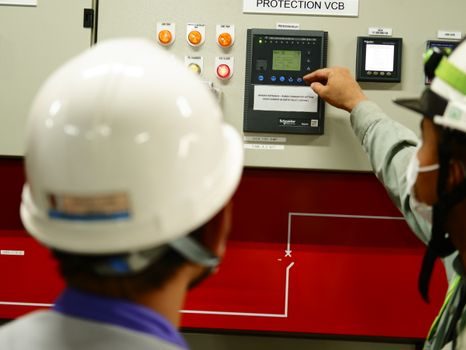
For each criterion, the two families score in opposite directions because they serve different stages of the asset lifecycle. The matrix below lines the decision factors up against the two instrument types using only verifiable numbers and ranges pulled from the research.
Selection criteria breakdown: (1) Operating state: energy meter requires live, loaded AC circuit; insulation tester requires de-energised, isolated asset with no residual charge (mandatory discharge before lead connection per Fluke guidance [S2]). (2) Test voltage class: 220-415 V AC for the meter; 50-2500 V DC selectable for the tester [S3]. (3) Measurement range: 0.1 MΩ-200 GΩ and PI/DAR indices on the tester; class 0.5/1.0 kWh integration and demand registers on the meter [S1][S3]. (4) Output protocol: pulsed S0 + Modbus/M-bus on the meter; local display + USB/Bluetooth on the tester [S1][S5]. (5) Price band in 2026 wholesale: US$32-35 per piece at 1000-piece MOQ for a three-phase four-wire smart meter [S1]; US$251.90 retail for a 50-2500 V handheld megohmmeter [S3]. (6) Installation form: DIN-rail or panel-mount permanent for the meter; handheld portable for the tester [S1][S3].
Real Use Cases and Limitations
An energy meter is the right tool for tenant sub-billing, machine-level kWh tracking on injection-moulding or CNC cells, genset fuel-to-kWh cross-checking, and PV self-consumption logging; it is the wrong tool for any question about winding condition, cable-jacket integrity, or motor stator dryness. An insulation resistance tester is the right tool for commissioning new motors and transformers, periodic predictive-maintenance checks on wind-turbine generators, post-fault re-energisation checks, and verifying that a repaired winding has dried out after moisture ingress; it is the wrong tool for any live-circuit reading because applying 500-2500 V DC across a powered busbar will damage the meter and the connected electronics [S2][S5].
Limitations on the tester side include: short lead compensation range (typically up to 5 kΩ of lead resistance before accuracy degrades), temperature sensitivity (insulation resistance roughly halves for every 10 °C rise, so readings must be temperature-corrected to a reference of 20 °C or 40 °C), and guard-terminal requirement on HV equipment where surface leakage can swamp the bulk reading. Limitations on the meter side include: accuracy class drift with harmonic distortion (a class 1.0 meter may read 2-3% high on a heavily distorted VFD load unless it is a true-RMS wideband design), and the fact that prepaid/smart meters require firmware support for the specific billing tariff and AMI head-end in the deployment country [S1][S2].
Standards, Sourcing, and 2026 Pricing Signals
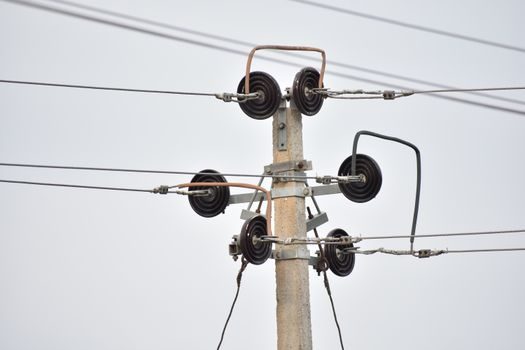
The relevant standard family for energy meters is IEC 62053-21/22/23 for AC static active/active-reactive meters, with class 1.0 and class 0.5 accuracy limits and IEC 62056 for data exchange; for insulation testers the relevant family is IEC 61557-2 (insulation resistance measuring equipment up to 1000 V) and IEC 61010-1/031 for safety on low-voltage test equipment, with Megger/Fluke-style 5 kV models covered by IEC 61010-031. Buyers specifying both should pin accuracy class, protocol stack, and test-voltage class in the RFQ, not brand names, because OEM rebadging is common in both segments [S1][S2].
2026 sourcing signals: Made-in-China.com still lists the energy meter / power meter / insulation resistance tester / electricity meter / smart three-phase four-wire prepaid meter cluster as a single "meter for electricity" category with US$32-35 price band at 1000-piece MOQ as of 2026-07-23 [S1]. A specialist oil-and-HV tester manufacturer (oil-tester.com) markets transformer-oil breakdown voltage testers alongside insulation resistance testers, acid testers, Karl Fischer titrators, and circuit-breaker testers as a bundled high-voltage test portfolio, indicating that the 2026 sourcing pattern groups megohmmeters with dielectric-oil diagnostics rather than with revenue metering [S4]. eBay retail listings of 50-2500 V megohmmeters at US$251.90 with free shipping show the handheld tester price floor in 2026 [S3]. Canadian ITM.com still markets the category under "Insulation Resistance Testers / Megohmmeters" with multi-range software-equipped units, confirming the megohmmeter naming convention remains industry-standard in 2026 [S5].
Trackable signals for the next procurement cycle: confirm whether the spec calls for IEC 62053-21 class 0.5 or 1.0, whether the meter head-end speaks DLT-645, IEC 62056 DLMS/COSEM, or Modbus, and whether the megohmmeter offers guard terminal + PI/DAR auto-sequence; cross-check both items against the plant SCADA protocol stack before issuing any single RFQ that bundles them. For adjacent reading on the pricing side, the 2026 power meter price and cost guide tracks 2026 kWh-meter benchmarks, while the high-voltage tester selection map and the HV tester price map from handheld to 50 kVA oil hipot cover the dielectric-testing end that megohmmeters feed into.
Component reference pages worth checking: insulation board.