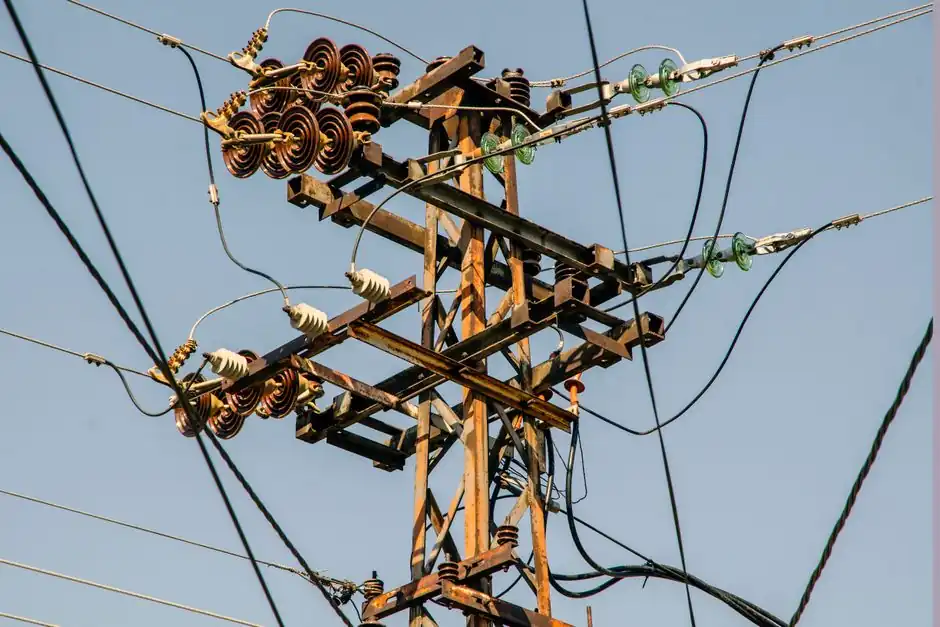
Plastics are widely used as insulation materials in automotive wiring, EV battery systems, industrial switchgear, and aerospace electronics because they offer high dielectric strength, low weight, corrosion resistance, and compatibility with injection moulding, while ceramics are used in power transmission, electronic devices, and heavy industrial equipment where reliable insulation is required [S2][S5].
The decision must balance voltage, temperature, humidity, contamination, mechanical impact, moulding capability, and service life rather than unit price alone [S1][S2].
Material scope and switchgear duties
An insulator must support and separate conductors while preventing current from flowing through the component; no perfect insulator exists because sufficiently high electric fields cause electrical breakdown [S3]. Ceramic and plastic both meet that basic function, but they fail through different mechanisms: ceramics are brittle and can fracture, whereas plastics can creep, distort, track, or age under electrical and thermal stress [S1][S5].
Clay-based ceramic and porcelain remain standard materials for high-voltage and radio-frequency insulators, while PVC and nylon are established wire-insulation materials [S4]. For switchgear, the relevant parts include busbar supports, terminal barriers, mounting plates, arc-chute pieces, fuse carriers, and insulating shells. The required properties differ: a live support needs creepage and dielectric strength, while an arc-chute material also needs resistance to tracking, heat, and mechanical erosion.
At 1.0 mm, polyethylene has a quoted dielectric strength of about 20–30 kV/mm, and polycarbonate about 15–20 kV/mm [S1]. These short-term material values are not a substitute for creepage, clearance, pollution, altitude, and assembly rules, because surface contamination and humidity can govern failure before bulk breakdown [S1][S3].
Comparison by critical selection criteria
Engineering plastic has the stronger manufacturing case: low weight, excellent mouldability, high design flexibility, low-to-medium cost, and strong corrosion resistance, while ceramic offers high temperature resistance, long-term weather resistance, and greater mechanical strength [S2][S5].
No single material wins every specification, so insulation-material selection depends on voltage, thermal, and mechanical requirements [S2]. For switchgear below the manufacturer-rated temperature envelope of a suitable engineering thermoplastic, the component volume, moulding economics, and controlled geometry usually favour plastic [S1][S2].
Electrical performance under voltage and humidity
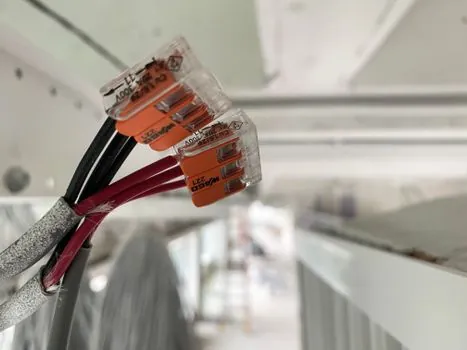
Good electrical-insulation plastics generally exceed 10^14 ohm-cm volume resistivity, while PTFE reaches 10^18 ohm-cm; dry PA6 is approximately 10^12–10^13 ohm-cm [S1]. Bulk resistivity alone is not enough because moisture can reduce it sharply and surface tracking can create conductive carbon paths [S1].
That example shows why the grade, conditioning state, working voltage, and test duration must be checked together rather than extrapolating from a dry-room datasheet value.
Ceramic maintains high electrical resistance and can withstand high voltage, elevated temperature, moisture, chemicals, and outdoor weather exposure, but its brittle fracture mode makes handling and mounting important [S1][S5]. Porcelain and other clay ceramics also require controlled surface design: a ridged profile increases surface distance and can improve leakage resistance in wet or polluted conditions [S3].
Thermal, mechanical, and environmental limits
Ceramic is the default answer for heat stability, dimensional stability, mechanical strength, and long service exposure, while plastic is the default answer for toughness, low mass, and moulded complexity [S1][S2][S5]. Ceramic may shatter when dropped or struck; plastic housings can absorb impact energy without cracking [S1]. That difference can control the failure consequence: a cracked ceramic support may shed fragments or lose alignment, whereas a plastic support can deform or creep under sustained load.
Polycarbonate has a quoted dielectric strength of 15–20 kV/mm, but the cited failure case involved a polycarbonate terminal block with CTI 175 V exposed to 250 V under humid factory conditions; tracking erosion formed conductive carbon paths and local arcing damaged three adjacent connectors [S1]. The example is not a universal rating, but it demonstrates that voltage, humidity, CTI, geometry, and adjacent-material damage must be reviewed together.
For outdoor or contaminated equipment, ceramic normally offers better weather and pollution endurance, while plastic requires a suitable UV-stable, moisture-resistant grade and adequate creepage [S3][S5]. Porcelain is particularly suited to high-voltage and RF supports, but the insulator class must still be matched to voltage, pollution, mechanical loading, and geometry [S4].
Application selection and failure modes
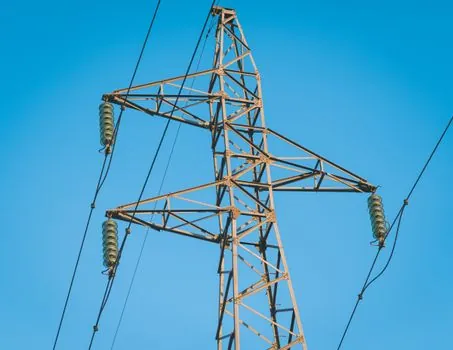
Use an electrical-grade engineering thermoplastic for injection-moulded terminal blocks, barriers, internal shields, low- to medium-voltage actuator housings, and compact instrument parts when continuous temperature, CTI, dielectric strength, flame performance, and humidity exposure are satisfied [S1][S2]. The engineering plastic family includes grades suited to moulded components, but the named polymer or compound datasheet is the controlling document.
Use ceramic for high-voltage busbar supports, outdoor pole or equipment insulators, heated industrial equipment, and locations where long-term weather resistance, thermal stability, or high mechanical rigidity outweigh fracture risk [S2][S4][S5]. Porcelain, alumina, and steatite are named technical-ceramic options, but they are not interchangeable without checking dielectric strength, thermal shock resistance, mechanical strength, and the intended electrical class [S5].
Engineering plastic is not the right choice where impact damage would expose an energized part, where sustained heat exceeds the compound rating, or where moisture-driven property loss is not qualified. Ceramic is not the right choice where shock loading, low weight, high production volume, or complex thin-wall geometry controls the design. Additional selection detail is available in engineering plastic insulation resistance versus temperature.
Procurement and qualification requirements
Specify the exact resin, grade, colour, glass-fibre content, manufacturer, and component drawing rather than ordering a generic insulator by family name. Request volume resistivity, dielectric strength, CTI, continuous-use temperature, moisture conditioning, flame rating, creepage, and comparative tracking data for the finished geometry. The research identifies dielectric strength, continuous service temperature, UL 94 flame rating, moisture absorption, and injection mouldability as core selection criteria [S2].
Conduct type testing at the intended working voltage and temperature rather than relying only on coupon properties. For a polymer candidate, verify conditioned performance, surface tracking, and the effect of local heating. For ceramic, verify mechanical loading, impact handling, thermal shock, glaze condition, and interface geometry. The requirement to assess voltage, temperature exposure, chemical contact, and mechanical load before unit cost is explicit in the comparative material guide [S2].
Final acceptance should trace to the applicable switchgear product standard, installation rules, and the component supplier’s traceability. UL 94 addresses flammability classification, while IEC 60529 addresses enclosure ingress protection; neither rating alone establishes dielectric performance or electrical clearance. For high-energy equipment, also apply the applicable arc-flash and live-working rules to the complete assembly, because material choice does not remove the need for rated barriers, distances, and enclosure segregation [S2].
Record the selected material, grade, operating voltage, continuous temperature, humidity exposure, pollution level, required creepage, impact exposure, and qualification results in the component specification. That closes the main specification loop: plastic for mouldability and toughness within controlled thermal limits, ceramic for heat and environmental endurance, and qualification evidence for either choice.