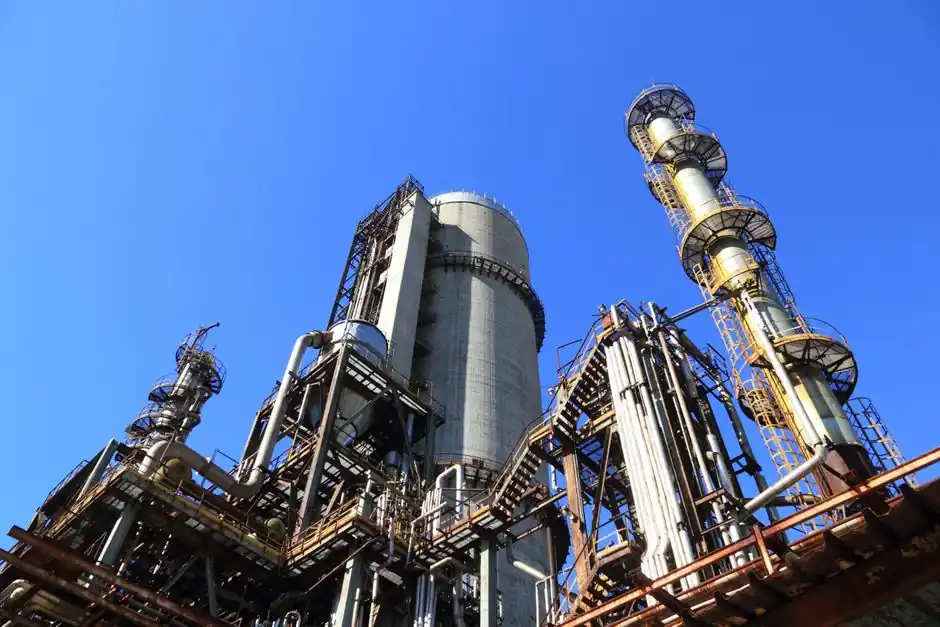
A plant-scale digital twin programme pulls in four distinct disciplines, with the most consistent hiring gap sitting between process engineering and data science rather than at the OT layer [S7].
Programmes that successfully move from a single-asset pilot to a plant-wide digital twin typically stand up a hub-and-spoke team: a central DT platform owner, plus embedded contributors from process, instrumentation, controls, IT/OT, and data science [S1][S4].
Role taxonomy: who actually staffs a plant DT
A plant digital twin team resolves into four named role clusters, each with a non-overlapping primary deliverable [S2][S7].
1) Process and simulation engineer. Owns the thermodynamic, kinetic, or discrete-event model that mirrors the unit operation. Background: chemical, mechanical, or industrial engineering with a process simulation tool (Aspen Plus, AspenTech DMC3, AVEVA PI, Siemens gPROMS, Bentley OpenUtilities).
2) Data and integration engineer. Owns the historian, asset model, and tag-to-3D mapping. Background: industrial data engineering, OPC UA, MQTT, REST, SQL/TimeScaleDB. Cited as the single most cited skill gap in 2025 digital-twin hiring surveys [S7].
3) 3D, visualisation, and XR specialist. Owns the geometry, the level-of-detail strategy, and any VR/AR overlay. Tools: Unity, Unreal Engine, NVIDIA Omniverse, Bentley iTwin, PTC Creo View, Hexagon HxGN SDx. Cited as essential for the operator-facing twin layer [S4].
4) AI/ML and analytics engineer. Owns the prescriptive layer, anomaly detection, and remaining-useful-life models. Pairing a digital twin with AI agents is what turns a descriptive model into a prescriptive one, per AspenTech guidance [S2].
A fifth role, DT programme owner or product manager, sits above the four and is typically a senior process or reliability engineer with P&L exposure, not a software manager [S5].
Skill stack: the five layers every plant DT engineer must touch
DT skills map onto the ISA-95 levels 0-3 plus an analytics layer on top [S1][S4].
Level 0 (field): instrument reading, calibration, signal conditioning. The DT is only as good as the underlying 4-20 mA, HART, or IO-Link signal, so the team must include at least one technician who can read a loop drawing and a P&ID [S1].
Level 1 (control): PLC/DCS familiarity, ladder and structured text literacy, knowledge of control narratives. The DT must mirror the control logic, not just the steady-state [S2].
Level 2 (supervisory): historian tags, alarm rationalisation, ISA-18.2 alarm management, recipe management. The historian is the source of truth for the DT's online calibration [S4].
Level 3 (operations): MES, OEE, scheduling, and the link from ERP to plant. This is where the DT's value is felt in scheduling, design, and planning rather than just uptime [S2].
Analytics layer: Python, Jupyter, scikit-learn, PyTorch, plus time-series feature stores. AI inside a DT is what allows a plant to reconfigure in real time with fact-driven choices, per the AspenTech interview [S2].
Team structure: hub-and-spoke beats matrix

The hub-and-spoke model outperforms a pure matrix because the four roles above do not share a single reporting line in any normal plant organisation chart [S1][S5].
Hub: a small (3-7 person) core team that owns the platform, the reference architecture, the security model, and the asset information model (AIM). This team is usually funded out of CapEx or a digital transformation office, not the plant's opex budget [S5].
Spokes: embedded contributors from each plant area (e.g. a utilities DT, a reactor DT, a packaging line DT). Each spoke is staffed at roughly 0.5-1.5 FTE during build and 0.2-0.5 FTE during steady-state operation [S4].
Governance: a monthly DT steering committee with the plant manager, the reliability lead, the IT/OT lead, and the platform owner. Without this, the programme drifts into a research project and fails to scale [S1].
For companies looking to compare this with the alternative of buying the digital twin layer from a single vendor, see the Digital Twin Licensing comparison for cost-structure implications.
Competency gap and where to hire from
Three of the four roles are easier to hire than the data-integration role, and that asymmetry drives the build-vs-buy decision for most plants [S7].
Process and simulation engineers are typically converted from existing plant engineers after 6-12 months of tool-specific training. The bottleneck is not headcount, it is release time from operations [S2].
3D and visualisation specialists are commonly hired from gaming, AEC, or plant-design firms (Bentley, Aveva, EPCs). Cross-pollination with the construction machinery and equipment domain helps when the twin needs to model material-handling equipment rather than just process units.
AI/ML engineers are hired from software or data-science backgrounds, then upskilled in industrial context. Hiring a generic data scientist and expecting them to read a P&ID in week one is the most common cause of stalled DT programmes [S7].
Data and integration engineers are the hardest hire, because they must speak both OT (OPC UA, Modbus, ISA-95) and IT (REST, GraphQL, cloud IAM). Most programmes fill this seat by retraining a controls engineer or by partnering with a system integrator [S1][S7].
For whom this team structure works, and for whom it does not
The hub-and-spoke DT team is a fit for sites with 200+ I/O points, an existing historian, and a CapEx budget north of roughly USD 1M for the platform layer [S2][S4].
It is the wrong fit for single-line packaging operations where a digital panel meter and a SCADA tag are already giving 80% of the visibility. In that case, the gap is not a DT, it is operator training and alarm hygiene [S4].
It is also the wrong fit for greenfield builds where the EPC has not yet delivered an asset information model. Trying to staff a DT team before the as-built P&IDs, loop drawings, and equipment data sheets are settled in a single source of truth is a known failure mode [S1].
For a site already running a warehouse or AMR fleet, the same hub-and-spoke logic applies and the warehouse digital twin reference is the closest analogue on the logistics side.
Limits, failure modes, and the skills to mitigate them
The most-cited DT failure modes in 2025-2026 literature are not technical, they are organisational [S2][S7].
Model drift between the physical asset and the virtual model. The DT must be continuously calibrated, not just commissioned. This is why the data-integration role exists full time, and why historians are the source of truth, not the engineering model [S2][S4].
Skill gaps in IoT, 3D modelling, and data analytics.
Security and OT-IT boundary issues. The DT team must include at least one person who can read an IEC 62443 zone-and-conduit diagram; otherwise the cloud twin becomes an attack path into the DCS [S1].
Instrument and signal quality. A twin fed by uncalibrated 4-20 mA loops is a mirror that lies. Pair the twin rollout with a loop-check campaign and basic checking and testing apparatus discipline.
Sourcing the team: internal, partner, or vendor
The four roles break differently across the build-vs-buy line [S1][S5].
Build internally: process and simulation engineer, DT programme owner. These roles hold institutional context that is hard to outsource.
Partner with a system integrator: data and integration engineer, 3D and visualisation. A 12-24 month SI engagement is the standard path for the platform layer.
Buy as managed service: AI/ML layer, anomaly detection, RUL models. The vendor's pretrained models are good enough to start, and the in-house team takes over model governance once the data pipeline is stable [S1][S2].
For a company rolling out a twin to a concrete batching plant, the same staffing logic applies at smaller scale: one process engineer, one controls/integration engineer, and a 3D specialist on contract.
Trackable signals for 2026-2027: (a) hiring of data-integration engineers as a discrete job family rather than as a controls-engineer sub-role, (b) publication of an ISA- or IEC-aligned DT competency map, and (c) the first vendor to bundle a digital multimeter-grade signal-quality layer into its DT platform.