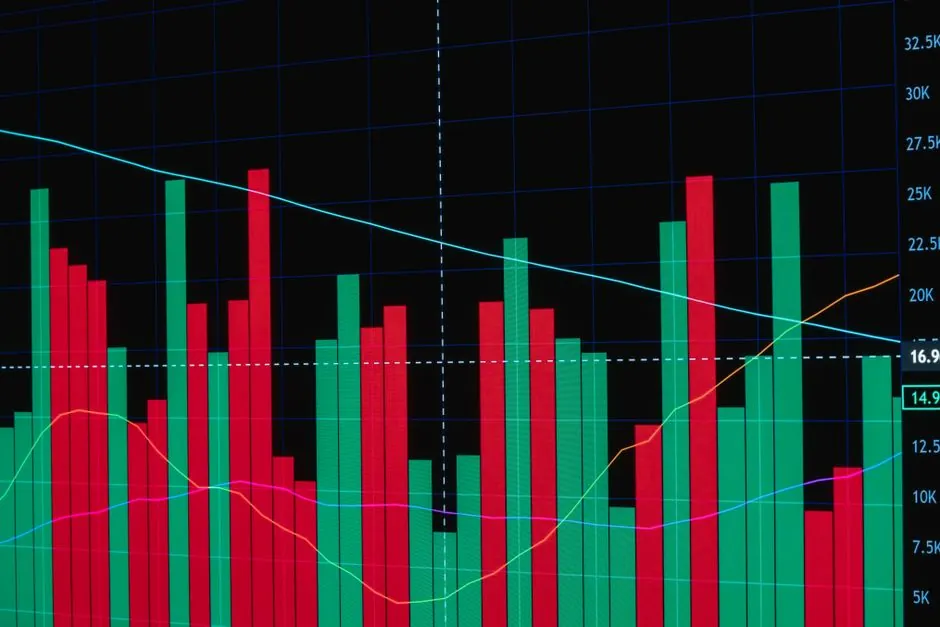
Update frequency in a Digital Twin is a control-loop parameter, not a vendor toggle, and a June 2026 MDPI review of 58 primary studies formalizes latency into four layers (network, compute, data, end-to-end) ranging from 0.1 ms for local propagation to P99 tail latencies above 500 ms in production deployments [S5].
For the engineer specifying the architecture, the choice of cadence and acceptable latency is dictated by whether the twin is used for monitoring, what-if simulation, or closed-loop control, with each regime carrying distinct data-rate, jitter, and freshness constraints. These constraints, in turn, drive instrumentation choices for the physical layer, including the data loggers and digital panel meters feeding the twin, and the digital multimeters used to verify signal integrity at the asset boundary.
The 0.1 ms to 500 ms Reality: Where Latency Actually Comes From
The MDPI 2026 review covers 58 primary studies published between 2020 and 2026 and codifies 28 distinct latency types under four layers: L1 network, L2 compute, L3 data, and L4 end-to-end. The lower bound, 0.1 ms, corresponds to local network propagation in wired industrial segments, while the upper bound, P99 tail latencies above 500 ms, reflects what real production deployments observe when cloud round-trips, buffering, and aggregation stack up [S5].
The IETF draft on Digital Twin Network data collection (draft-zcz-nmrg-digitaltwin-data-collection-03, July 2023) frames the requirement as: "the construction and state update of a Digital Twin Network require obtaining real-time information of the physical network it represents (i.e., telemetry data)," and lists target-driven, on-demand, lightweight, and standardized as the four MUST-class requirements for the collector interface [S2]. This is the language the network-management community has settled on, and it predates most of the OT-side digital-twin tooling now in use.
Within a single closed-loop architecture, the digital twin's request rate to the physical asset is itself a control parameter, per the MDPI review, which means raising it blindly does not always help: doubling the rate doubles the network load and may worsen tail latency through contention [S5]. Engineers should treat update rate the way they treat a PID loop's sample time, as a tuned variable with stability implications.
Higher Frequency Is Not Free: The Bluetooth Mesh Trade-off Curve
Wieme's 2025 IEEE study, presented at the May 2025 Honolulu conference and added to IEEE Xplore on 15 July 2025, ran multiple monitoring-frequency settings across two experiments in a Bluetooth Mesh environment and found a clear trade-off: higher update frequencies improved path-prediction accuracy of the Digital Twin Network, but reduced end-to-end latency-prediction accuracy and overall network reliability [S1]. The result contradicts the naive assumption that "more data equals a better twin."
The same paper's mechanism is informative: at higher monitoring frequencies, the mesh spends more airtime on telemetry, contention rises, and the very metric the twin is trying to predict, end-to-end latency, becomes noisier. The practical takeaway is that frequency tuning must be co-designed with reliability targets, not picked from a datasheet. If the twin's purpose is to forecast path reliability, the monitoring cadence should be lower than the timescale of the failures being predicted, otherwise the measurement perturbs the measurement.
This Bluetooth Mesh finding maps onto broader wireless-IoT digital-twin deployments: the IETF draft's "lightweight and efficient collection" requirement (SHOULD-class) is a direct response to exactly this contention pathology [S2]. For plant-floor wireless twins running on protocols like WirelessHART or ISA100.11a, the same principle applies, only more so, because industrial wireless budgets are tighter than consumer Bluetooth Mesh.
Use-Case-Driven Cadence Tiers: From Sub-Second to Multi-Minute

Vaezi et al. (2022, cited 66 times) formalize the dependency: "time-sensitive applications require higher update frequencies from the PS [physical system] and have stringent latency constraints. These requirements result in larger [twin-to-physical coupling]" [S7]. The implication is that cadence is not free-standing; it is bound to the application's sensitivity function. Three tiers are widely used in practice, and the 2025-2026 literature supports this stratification qualitatively.
Closed-loop motion and process control twins operate in the 1-100 Hz range with end-to-end latency budgets in the low milliseconds. A 2025 study in Computer Communications (Qadir et al.) proposes a digital-twin-assisted multi-layer network architecture specifically to "enable low latency and energy-efficient computation for IoT devices," and cites URLLC targets from 3GPP as the benchmark for industrial automation tiers [S3]. Drone digital-twin implementations reviewed in mid-2025 industry write-ups target worst-case latency cuts of roughly 300 ms via edge offload, with an additional 100 ms improvement when transmit power budgets are raised to 23 dBm in multi-device scenarios [S4]. These are not "real-time" in the closed-loop sense; they are real-time for situational awareness.
Asset-health, energy, and KPI-monitoring twins tolerate seconds to minutes of update interval, and the relevant freshness metric shifts from latency to Age of Information (AoI). The MDPI review highlights AoI-aware synchronization and clock-drift correction as delivering "substantial data layer gains through software updates alone" with no infrastructure capex, yet the same review notes these techniques remain "underutilized" as of mid-2026 [S5]. For brownfield plants instrumented with VFDs and legacy line-frequency furnaces, where the data sources are polled over Modbus or similar, AoI-aware polling is usually the highest-leverage intervention available.
Protocol Migration: Modbus to WebSocket Cuts 32% Telemetry Latency
One of the most concrete findings in the 2026 MDPI review is a 32% reduction in telemetry latency from a protocol migration alone: moving the field-to-twin transport from Modbus (polling, request/response, often over RS-485 or TCP) to WebSocket (full-duplex, persistent) delivers the gain "without infrastructure investment" [S5]. This number is specific enough to use in a justification memo, and it aligns with the IETF draft's SHOULD-class requirement for "efficient multi-destination delivery" [S2].
The catch is that Modbus-to-WebSocket is rarely a drop-in: WebSocket implies an IP-capable edge gateway at every cell, which is a board-level redesign for some checking and testing apparatus clusters that were never networked. For greenfield builds, the WebSocket default is now standard; for brownfield, the trade-off is capex vs the 32% gain, and the answer is usually segment-by-segment.
MQTT and MAVLink, both named in the drone-digital-twin latency write-up as "low-latency protocols," sit in the same family of TCP/IP or UDP-based transports with publish/subscribe semantics [S4]. MQTT with QoS 0 and short keep-alives is the common production choice for plant-floor twins; MAVLink is the drone-domain equivalent. Neither replaces the application-level decision about how often to publish, which is where the twin-side logic lives.
Where the Architectures Diverge: Edge, Cloud, and Hybrid
Edge-compute digital-twin topologies dominate latency-sensitive deployments: the drone-twin write-up cites UAV-based Mobile Edge Computing (MEC) where "optimizing communication and computation parameters, like transmission power and processing rates, meets the URLLC demands of industrial automation" [S4]. The same source documents the worst-case 300 ms improvement vs cloud-only when computation resources are properly sized at the edge, and a further 100 ms when transmit power budgets are tuned to 23 dBm [S4].
Hybrid cloud-edge is the practical default for plants: edge handles time-critical pre-processing (filtering, delta encoding, photogrammetry for drone surveys), cloud handles heavy simulation and historical state. The 2025 Nature Scientific Reports paper on real-time update algorithms for digital-twin models of distribution-network equipment (Shen et al., cited 12 times) frames this as a separate research problem: "a robust real-time update algorithm for the DT model of DNE is of great significance for improving algorithm performance, ensuring real-time [synchronization]" [S9]. The algorithm, not the transport, becomes the bottleneck once latency in the wire is tamed.
Cloud-only remains viable for monitoring-only twins with relaxed freshness requirements, typically tens of seconds. The 2025 Toobler industry write-up on real-time data integration flags exactly this stratification, and notes that integration challenges compound when the cloud path includes third-party historians, where the polling cadence is set by the historian, not the twin [S6]. Engineers specifying a cloud-only twin should explicitly budget for the historian poll interval as the floor on achievable update rate.
Selection Rules and the Engineering Trade-off Table
For the engineer choosing update frequency and latency budget, four criteria dominate: control-loop criticality (closed-loop vs open-loop vs monitoring), data-source capability (polled vs push vs streamed), tolerable infrastructure cost, and acceptable P99 tail. The June 2026 MDPI review, the May 2025 IEEE Bluetooth Mesh study, and the 2022 Vaezi placement study all converge on the same engineering posture: pick the lowest cadence that meets the control objective, then verify the P99 tail, not the mean. [S5]
A useful comparison: a closed-loop motion-control twin typically runs at 100 Hz with 1-10 ms end-to-end latency, requires edge compute, and uses WebSocket or UDP-based transports; an asset-health twin runs at 0.01-0.1 Hz with 1-5 s tolerable latency, can use cloud-only or hybrid, and benefits more from AoI-aware polling than from faster transport; a drone-survey twin sits between, at 1-10 Hz, with edge processing cutting worst-case latency by roughly 300 ms and transmit-power tuning adding another 100 ms at 23 dBm [S4][S5][S7]. Picking across these tiers is the actual decision; the numbers above are the validation targets.
Two non-obvious constraints to flag for spec writers: first, higher monitoring frequency in wireless-mesh digital twins degrades the very latency prediction the twin is meant to deliver, per the Wieme 2025 study, so the monitoring cadence should be set below the timescale of the failure mode of interest [S1]. Second, age-of-information-aware synchronization and clock-drift correction remain "underutilized" as of mid-2026 despite requiring no new hardware, which makes them a defensible low-cost first step on any brownfield retrofit [S5].
The next two signals worth tracking: a finalized IETF RFC out of the draft-zcz-nmrg-digitaltwin-data-collection working group, which would harden the MUST/SHOULD data-collection requirements into standards-track language, and broader adoption of AoI-aware schedulers in commercial OT historians, which the MDPI review flags as the highest-leverage software-only intervention currently under-deployed [S2][S5]. A practical next node is to instrument a single cell with both pre- and post-migration latency capture (Modbus baseline, then WebSocket with AoI-aware polling) and record the P50/P95/P99 across one shift; the 32% telemetry-latency number from the literature is the validation target [S5].
This topic is covered further in UL 3100 AMP Standard: Scope, Tests, and Sourcing Signals.