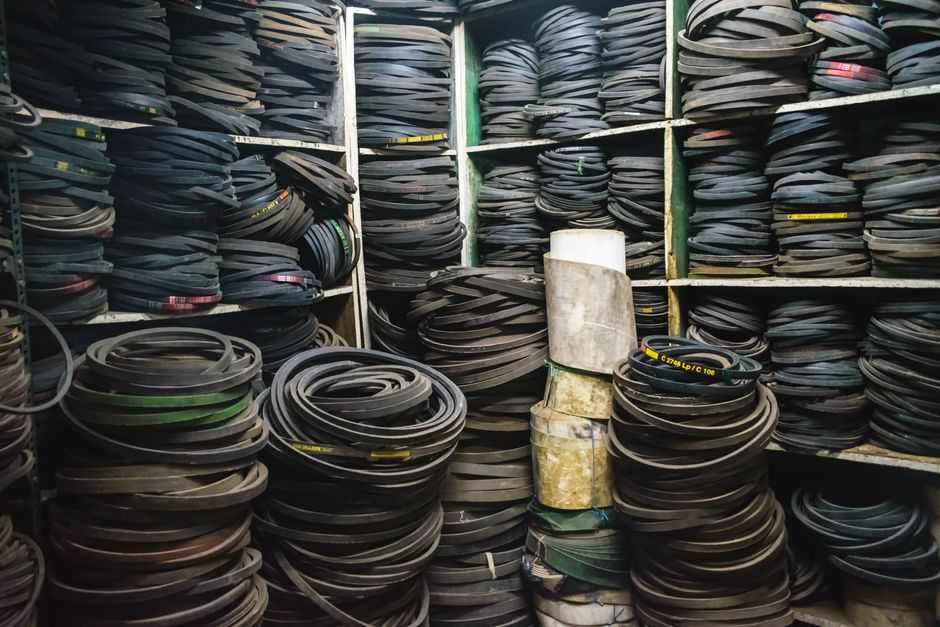
EPDM and NBR are the two workhorse elastomers most spec sheets line up against each other, and the 2026 wholesale price band on Made-in-China confirms NBR compounds running US$1,000-3,000 per ton MOQ, with finished NBR sheet at roughly US$0.42-8.40 per square meter and NBR metal-rubber O-ring compounds at US$0.01-0.03 per piece (MOQ 100 pcs) [S1][S2].
The wrong choice is the most expensive mistake in sealing: EPDM swells and softens in petroleum oil, while NBR ozone-cracks outdoors. KS M ISO 20299-3:2022 groups EPDM, NBR, HNBR, AEM and ACM under one bale-wrap film test method, underlining that these five elastomers share handling logistics but diverge sharply in end-use fluid compatibility [S3].
Polymer Backbone and Polarity
NBR is a polar, unsaturated carbon-chain rubber copolymerised from butadiene and acrylonitrile; EPDM is a near-non-polar saturated polyolefin made from ethylene, propylene and a diene monomer [S4]. That single difference — polar NBR vs non-polar EPDM — drives 90% of the application split, because like-dissolves-like rules fluid compatibility.
NBR's acrylonitrile (ACN) content is graded in five commercial bands — 18-24%, 25-30%, 31-35%, 36-41% and 42-46% — and higher ACN lifts oil resistance while depressing low-temperature flexibility [S5]. EPDM has no equivalent ACN knob; its main variables are ethylene/propylene ratio, diene type (ENB, DCPD, VNB) and Mooney viscosity, none of which meaningfully change fluid resistance.
Temperature and Aging Envelope
NBR continuous service tops out at 120°C in air and 150°C immersed in oil, with the upper ACN grades (42-46%) holding swell control at the cost of a higher glass-transition temperature [S5]. EPDM tolerates continuous hot-air exposure up to roughly 150°C and survives low-temperature flex down near -50°C depending on grade, with no oil envelope to defend.
On aging, EPDM is rated excellent for ozone, weathering and hot-air oxidation among general-purpose rubbers; NBR's main double-bond unsaturation leaves it weak on ozone and UV unless protected by wax or anti-ozonants, and outdoor NBR gaskets routinely fail inside 2-3 years if unshielded [S4]. For a steam line, radiator hose or rooftop expansion joint, EPDM wins on age; for an oil drain gasket or hydraulic seal, NBR wins on fluid compatibility.
Fluid and Chemical Compatibility
NBR resists petroleum-based oils, diesel, kerosene and most non-polar solvents — its defining property — but breaks down in polar solvents, brake fluid (DOT 3/4 glycol-based), ketones, strong acids and chlorinated hydrocarbons [S4][S5]. EPDM resists hot water, steam up to ~200°C saturated, alcohols, glycols, dilute acids and alkalis, detergents, ketones and phosphate esters (the fluid in many fire-resistant hydraulic fluids), but swells badly in mineral oil, gasoline and most hydrocarbon solvents [S4].
Two specific cross-checks for 2026 spec work: EPDM is the default for potable water, food-grade and pharmaceutical water service (per major elastomer guides, including the EPDM rubber reference) because it does not impart taste or support microbial growth the way some NBR formulations can; NBR is the default for hydrocarbon-fuel diaphragms, oil-resistant gaskets and industrial rubber seals on pumps handling lube oil. Mixing them — running an EPDM O-ring on a petroleum line, or an NBR gasket on a steam line — is the single most common sealing failure I see in field audits.
Mechanical and Electrical Properties
EPDM typically delivers higher tensile and tear in filled compounds, better abrasion resistance, and better low-temperature flexibility than NBR; NBR is softer at typical 60-80 Shore A and offers better static friction on metal, which is why NBR is preferred for O-rings and diaphragms where stick-slip matters [S4]. EPDM is a recognised anti-static elastomer with volume resistivity in the 10⁹-10¹² Ω·cm range for conductive grades; NBR's polar backbone gives it inherent (if modest) antistatic behaviour, but neither replaces a true conductive compound for explosion-protected enclosures.
For dynamic applications, NBR's higher polarity gives better adhesion to metal inserts and to polar polymers like PVC, POM and nylon, enabling NBR/PVC and NBR/POM thermoplastic-vulcanisate blends used in cable jacketing and conveyor skirting [S4]. EPDM blends well with polypropylene (EPDM/PP TPV) but poorly with polar plastics — again, a direct consequence of backbone polarity.
Selection Criteria Comparison

Lining the two up against the four most common decision gates for 2026 spec work: [S1]
1) Petroleum-oil resistance: NBR wins across all ACN grades; EPDM loses (will swell 50-150% volume in IRM 903 oil).
2) Hot water / steam service above 100°C: EPDM wins up to ~200°C saturated steam; NBR loses above ~100°C steam.
3) Outdoor / ozone exposure: EPDM wins with no protection; NBR requires wax or anti-ozonant additivation.
4) Low-temperature flexibility below -30°C: EPDM wins down to ~-50°C; NBR loses, especially at 36-46% ACN where Tg climbs above -20°C [S5].
For sourcing levers on the NBR side, the Nitrile Rubber (NBR) Price & Cost Guide breaks down how ACN content, Shore hardness, compound form (slab vs strip vs O-ring pre-form) and MOQ move the per-kg price; the Nitrile Rubber (NBR) Selection Criteria page walks the same gates for spec-writing. If your fluid list contains even one phosphate-ester hydraulic fluid, glycol, or hot water above 100°C, EPDM is the only correct call from these two — and if your fluid list is mineral oil, diesel, or animal/vegetable fat, NBR is. Where the list is mixed (e.g. an outdoor pump that sees both weather and lube-oil splash), move up the elastomer chain to HNBR, FKM or EPDM with a fluoropolymer liner.
Standards, Storage and Traceability
KS M ISO 20299-3:2022 covers wrapping film for rubber bales of EPDM, NBR, HNBR, AEM and ACM, and is the cleanest cross-elastomer handling reference published in the past three years [S3]. Application-side standards (ASTM D2000 line-call-out, ISO 1629 polymer designation, EN 681-1 for elastomeric gaskets in water supply) are the operative references at the part level, not 20299-3, but 20299-3 confirms that the five elastomers share a logistics chain — which matters for MOQ planning and shelf-life budgeting.
Storage rules are polymer-specific and often skipped: EPDM shelf life is typically 5-10 years in cool, dry, dark storage because of its saturated backbone; NBR shelf life is shorter — commonly 3-5 years — and degrades faster in warm, humid warehouses, which is why nitrile rubber lots on a Chinese wholesale portal commonly show 100-piece or 1-ton MOQs tied to fresh production [S1][S2]. For any 2026 procurement cycle, ask the supplier for date-of-manufacture, ACN-content certificate (for NBR), and confirmation that the compound was stored below 25°C.
Common Failure Modes and Misapplications
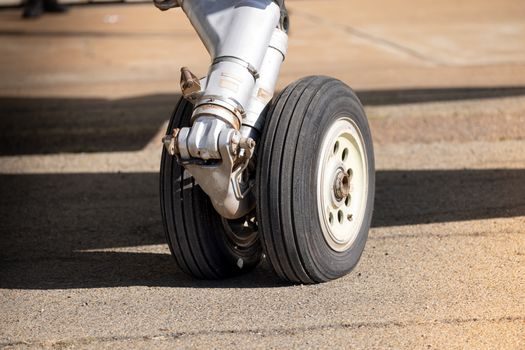
The four EPDM/NBR failure patterns I see repeatedly: (1) EPDM O-ring on a diesel-fuel line swells, loses compression set, leaks; (2) NBR gasket on a steam line hardens, cracks, blows out; (3) NBR outdoor expansion joint ozone-cracks inside 24 months because the spec writer assumed "rubber is rubber"; (4) EPDM diaphragm in a ketone-based solvent pump dissolves within hours. All four are 100% preventable by reading the fluid compatibility chart first, then the temperature chart, then the price. [S2]
A fifth, less obvious failure mode: NBR in food or pharmaceutical water service where extractables and taste taint are unacceptable — EPDM or silicone rubber is the correct call there, not because of mechanical limits, but because of regulatory and sensory limits. The polymer is cheap; the wrong polymer is expensive.
Trackable 2026 signals to watch: the next revision cycle of ASTM D2000 (the SAE line-call-out system that organises NBR and EPDM by type and class) and any update to EN 681-1 for cold-water elastomeric gaskets. Also watch for incremental price moves on Made-in-China NBR compound listings, which historically lead spot-market shifts by 4-8 weeks [S1][S2]. If the per-ton band breaks above US$3,500 sustained, expect downstream NBR sheet and O-ring prices to lift in Q3-Q4 2026 — a planning input, not a forecast.