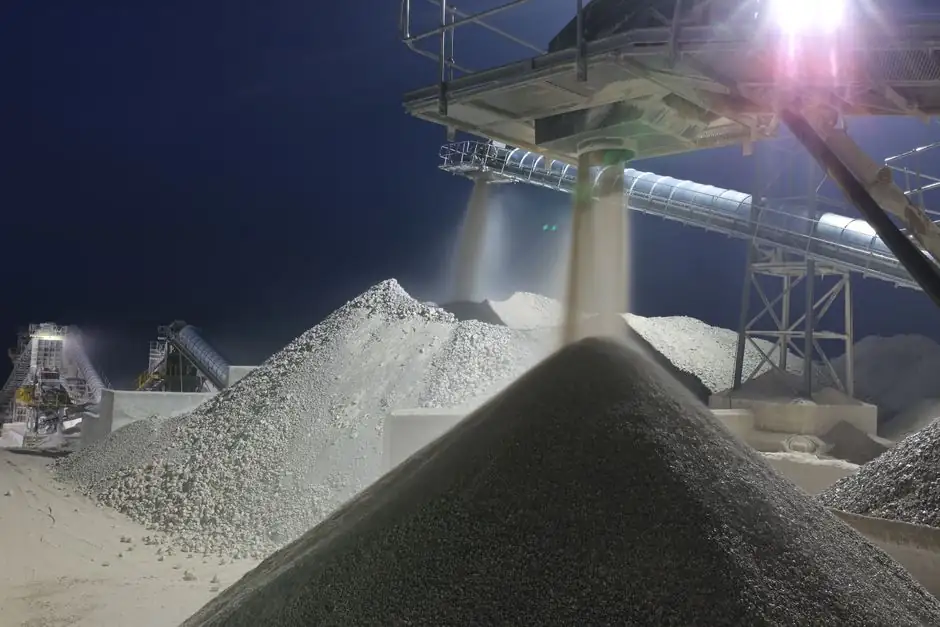
Green sand molding lines can hit roughly 500 molds per hour on vertically parted automated equipment, while no-bake lines typically run 20 to 30 molds per hour, a 15 to 25 times throughput gap that dictates whether batch or continuous shakeout is the right downstream match [S2].
Shakeout, the step where the solidified casting is separated from its mold media, behaves very differently depending on whether the binder is a moist bentonite-and-water system (green sand) or a chemically cured phenolic-urethane or furan resin system (no-bake), and the equipment selected has to follow that chemistry rather than fight it [S1][S9].
Throughput Pull: Molding Line Rate Sets the Shakeout Duty Cycle
Automated green sand lines, particularly vertically parted molding machines, sustain up to 500 molds per hour without flasks, so the shakeout station behind them sees a near-continuous feed of castings and needs a vibrating deck, rotary drum, or in-line punch-plate that can accept that cadence without queueing molds [S2].
No-bake operations sit at the other end of the spectrum at 20 to 30 molds per hour because the sand-resin-catalyst mix needs bench life and cure time before it can be stripped off the pattern, so a single large batch shakeout, often a tumble-belt or vibratory tub that processes a cluster of molds on a long cycle, matches the slower upstream pulse [S2][S9].
For perspective, high-volume automotive green sand foundries quote up to about 20 tons of castings per day on a single line, which is the kind of mass flow that makes a continuous shakeout with integrated sand cooling the only sensible downstream architecture [S1].
Binder Chemistry Drives Reclamation and Shakeout Temperature
Green sand shakeout delivers reusable molding media with minimal conditioning because the bentonite clay and water bond is mechanically broken, no chemical bond has to be thermally or chemically destroyed, so the reclaimed sand can be re-mulled and re-used hundreds of times with relatively low additive make-up [S1][S4].
No-bake shakeout, by contrast, releases sand grains that are still coated with a cured phenolic-urethane or furan resin film, and that bond has to be broken mechanically by attrition plus thermal or calcining reclamation before the sand is usable again, which is why the shakeout station is typically tied into a sand cooler and a separate reclamation loop rather than a direct return to the muller [S3][S9].
The ASM Handbook on no-bake sand molding makes the same point operationally: no-bake plants run two distinct sand handling paths, batch mullers or continuous mixers feeding the mold line, and a reclamation train downstream of the shakeout, so the shakeout itself is sized as a buffer stage between pour and re-use, not as a high-velocity conveyor stage [S9].
Selection Criteria: Cycle, Casting Mass, and Pattern Life

Three decision variables drive the batch-versus-continuous shakeout choice: upstream molding rate in molds per hour, casting mass in pounds, and acceptable pattern wear in cycles. Green sand lines running automated high-pressure molding with metal pattern equipment generate severe jolt and squeeze forces on the pattern, so the shakeout downstream has to deliver a high-impact release of the casting without throwing sand unnecessarily back into the molding loop [S2][S5].
No-bake molds are easier on patterns because there is no high-energy ramming, which a long-running Practical Machinist thread confirms from the user side: patterns returned from no-bake work show less mechanical fatigue than the same patterns run in jolted green sand [S5]. That lower pattern-wear benefit, however, is paid for at shakeout, where the rigid resin-bonded mold has to be broken aggressively enough to release a casting that may weigh over 100,000 lb in heavy no-bake applications, pushing the spec toward heavy-duty vibratory or rotary batch units [S2].
Foundries running mixed production often stage a continuous shakeout for the green sand side and a heavy batch shakeout for the no-bake side, sharing only the sand cooler downstream of both, because reclamation temperature and moisture targets differ even when the metallurgy is similar [S9].
Decision Matrix: Batch vs Continuous Against Four Criteria
Lining the two shakeout architectures against the criteria that actually move a procurement decision makes the trade-off visible at a glance. Below, performance numbers cite the underlying research; qualitative ratings describe general equipment behaviour where the sources do not pin a number. [S1]
Throughput match: continuous shakeout wins decisively for green sand at 500 molds per hour, batch shakeout wins for no-bake at 20 to 30 molds per hour, and the wrong pairing either starves the line (batch on green sand) or leaves the shakeout idle most of the cycle (continuous on no-bake) [S2].
Casting mass: batch shakeout handles heavier pieces, and the no-bake process itself is the method of choice above roughly 100,000 lb, where the rigid mold survives pouring and the shakeout has to break a brick-like structure cleanly off the casting [S2][S3].
Sand reclamation integration: continuous shakeout on green sand ties directly into a return sand loop with hundreds of re-use cycles, while no-bake batch shakeout is normally followed by attrition and thermal reclamation because the cured resin film has to be scrubbed off the grain before re-use [S3][S4][S9].
Pattern wear and finish: no-bake produces a smoother Ra 3 to 6 micrometer surface and roughly twice the dimensional accuracy of green sand, so the shakeout is a gentler step, even though the prior demolding operation is slower, and pattern life is correspondingly longer [S1][S5].
Use Cases: Where Each Shakeout Architecture Fits
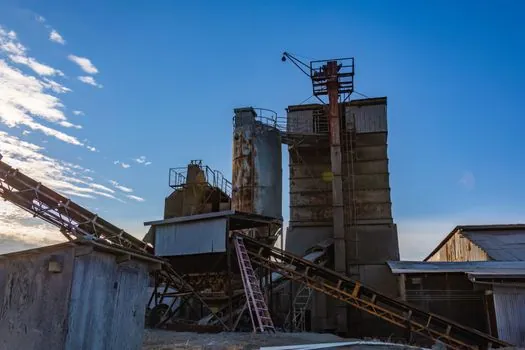
Continuous shakeout on green sand is the default for automotive block, brake drum, transmission housing, and pump housing production, where a single automated molding line feeds castings in the ounces to 500 lb range and occasionally up to 7,000 lb, all on a tight cycle that cannot tolerate a batch stop [S2].
Batch shakeout on no-bake is the default for large iron and steel castings, short-run job-shop work, and any part that needs the smoother surface and tighter tolerance the chemical binder delivers, including the gray iron, ductile iron, stainless steel, and high-alloy steel castings that specialty no-bake foundries serve [S3].
Hybrid shops that run both processes typically dual-shakeout: a vibratory or rotary continuous unit for green sand returning to a high-tonnage muller loop, and a tumble-belt batch unit for no-bake feeding a separate attrition-thermal reclamation train, with the shakeout machine sizing driven by the heavier casting rather than the lighter one [S2][S9].
Limitations, Failure Modes, and Standards to Watch
Green sand shakeout is constrained by moisture-driven gas porosity and by mold strength that drops below roughly 5 mm wall thickness and above about 1,000 lb per casting, so a continuous shakeout downstream of a green sand line cannot rescue a pour that was marginal at molding [S1]. Practical accuracy sits around plus or minus 0.060 in on small parts, which means the shakeout cannot be expected to make up for dimensional drift upstream [S1].
No-bake shakeout is constrained by sand re-use economics: the resin-coated grain needs more refining than green sand, and the binder cost per ton of casting is higher, so batch shakeout cycle time and reclamation yield directly hit the per-part cost model [S3][S4]. Foundries running phenolic-urethane no-bake should also track amine and SO2 exposure at the shakeout station, where cured binder breakdown releases respirable dust and trace organics, and the checking and testing apparatus for that air stream is part of the shakeout cell, not an afterthought [S9].
One pattern to monitor: vertically parted green sand molding at 500 molds per hour is the upper benchmark from the 2017 Modern Casting data still cited in the industry, and no-bake automation has not closed that gap, so any 2026 capital project that assumes a no-bake line can match green sand cycle time will under-build the shakeout and reclamation section [S2].
Specifying engineers should compare this shakeout trade-off against adjacent equipment decisions on the same line, including the construction machinery and equipment used for sand-handling hoppers and the lamps and light fittings needed in the shakeout booth for visual inspection, since lighting placement affects how cleanly operators can spot a casting that needs re-shakeout.
Track two signals over the next planning cycle: whether no-bake binder suppliers push reclaim-friendly resin systems that lower the reclamation penalty enough to justify faster batch shakeout cycles, and whether any 2026 retrofit data confirms continuous shakeout running on lower-volume no-bake lines at rates closer to 50 molds per hour than the 20 to 30 molds per hour 2017 baseline [S2][S9].
See also our earlier report, Sink vs Source Wiring for PNP and NPN Sensors on Remote I/O.