First-fill analysis of battery raw materials identifies mineral extraction as the primary limiting factor for long-term mass production of lithium-ion cells, with nickel, lithium, and cobalt showing the most significant supply-chain risk under full vehicle-electrification scenarios [S3]. Springer Nature's 2023 chapter on the lithium-ion battery supply chain already flagged material-supply tightness as the structural issue once EV demand scales, and the constraint has tightened rather than eased through 2024-2026 [S2].
For a buyer or planner reading the EV build pipeline today, the operative question is not whether cells are available but which chemistries and geographies will clear the gigafactory queue without being throttled by upstream mineral flow, mid-stream refining capacity, or trade-policy frictions. The four segments below cover the most material spec-side levers.
Upstream minerals: lithium, nickel, cobalt extraction risk
Mineral extraction is the binding upstream constraint on lithium-ion cell output, and the first-fill analysis covering long-term mass-production scenarios shows that demand for nickel, lithium, and cobalt outruns currently permitted extraction capacity if EVs and grid storage both scale on stated policy trajectories [S3]. India's 2024 supply-chain assessment ranks raw-material access as the leading barrier to its domestic cell-manufacturing programme, alongside cell technology readiness and capital expenditure for gigafactory build-out [S1].
The implication is that cell makers and OEMs specifying cathode chemistries in 2026 cannot treat lithium carbonate, nickel sulphate, or cobalt sulphate as commodities with elastic supply. Cobalt-free LFP (lithium iron phosphate) cells sidestep cobalt entirely, but still require lithium, and the same first-fill analysis flags lithium as a constrained mineral under high-EV-penetration scenarios [S3]. Nickel-rich NMC chemistries keep energy density high but bind the cell to a refining chain that is geographically concentrated.
Mid-stream refining: where concentrate becomes cell-grade
Mining output alone is not the binding step — converting mine concentrate into battery-grade lithium, nickel sulphate, and cobalt sulphate requires dedicated mid-stream refining capacity, including the switching power supply infrastructure that underpins electrowinning and crystalliser lines, and that capacity is itself capital-intensive and geographically concentrated. India's 2024 analysis explicitly names mid-stream conversion and precursor material production as a layer where domestic capacity has lagged cell-pack assembly, leaving gigafactories import-dependent for the active cathode material they consume [S1].
The Springer 2023 reference work frames the problem the same way: lithium and cobalt are described as the materials most likely to produce supply problems as EV demand rises, and the chapter treats refining and precursor synthesis as a distinct supply-chain tier from mining [S2]. For 2026 spec writers, this is the layer where cathode active material cost is actually set — mine-gate concentrate price is a leading indicator, not the final number.
From a procurement standpoint, the 2026 procurement playbook is shifting toward multi-source precursor supply contracts and on-site toll-refining agreements with class-1 nickel and lithium producers. Cells built on LFP cathode chemistry are less exposed to nickel and cobalt mid-stream risk, but LFP still rides the lithium-refining chain, so lithium carbonate and lithium hydroxide supply contracts remain the dominant single point of exposure for any gigafactory regardless of cell format [S2][S3].
Cell and pack manufacturing: gigafactory throughput, not just nameplate
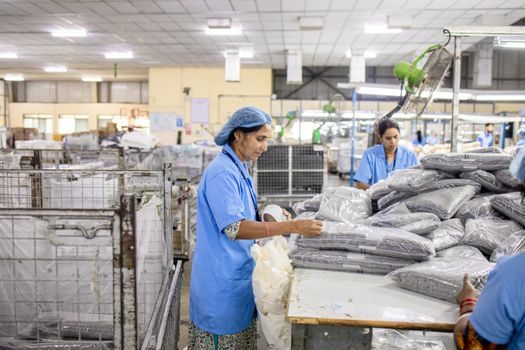
Nameplate gigafactory capacity in 2026 exceeds projected cell demand on paper, but the binding metric is actual ramp throughput — measured in gigawatt-hours of sellable cells per quarter, not in announced capacity, and gated in practice by the conveyor chain line speed on electrode coating and cell-stacking stations. India's 2024 study highlights that cell technology readiness, capital intensity of dry rooms, and electrode coating lines are the practical gating items between announced and produced GWh, with capital expenditure and skilled-labour availability named as the proximate constraints on ramp [S1].
For EV programme managers, the 2026 differentiation is between gigafactories that ship cells at >80% of nameplate utilisation and those still in commissioning. The Springer 2023 reference work notes that supply-chain problems in LIBs intensify as demand for raw materials rises, which means the cell plants most exposed to single-source precursor supply are the most likely to miss throughput targets when upstream contracts are renegotiated mid-year [S2].
Related reading on EV programme dynamics: the EV Industry 2026 battery demand brief cross-references gigafactory announcements against announced US and India model line-ups, and the EV Market 2026 forecast piece covers how charger build-out, plastics, motors, and range-extender choices interact with cell availability when vehicles are scheduled for delivery.
Trade policy and IRA-style local-content gates
India's 2024 assessment treats trade and policy alignment as a top-tier supply-chain variable, including tariffs on imported cells, local-content rules for subsidy eligibility, and the bankability of long-term offtake contracts with miners and refiners [S1]. The structural lesson from the US Inflation Reduction Act framework is that local-content gates — ore extraction, precursor refining, cell production, and pack assembly all in qualifying geographies — now determine which cells qualify for purchase incentives, which in turn redirects gigafactory siting decisions.
For a 2026 cell buyer, this means the country of origin of the cathode active material matters as much as the country of cell assembly. A cell made in India from Chinese precursor does not carry the same subsidy treatment in the US as a cell made with US- or FTA-partner-sourced mineral and precursor, and the India-side study treats qualifying local-content thresholds as a binding design constraint for new plant investment [S1].
Comparison: cathode chemistries against 2026 supply-chain risk
The three dominant cathode chemistries each carry a different exposure profile to the upstream and mid-stream constraints identified in the research. LFP is the most mineral-secure choice: it eliminates cobalt and reduces nickel dependence, leaving only lithium-refining exposure, which is the common bottleneck across all three [S2][S3].
NMC 811 and similar nickel-rich chemistries deliver higher energy density but bind the cell to a class-1 nickel supply chain that the first-fill analysis flags as constrained under full EV-electrification scenarios, and to a cobalt-free but still nickel-intensive mid-stream refining footprint [S3]. NMC 532 / 622 sits between the two: lower energy density than NMC 811, but lower nickel intensity and historically more stable precursor supply, at the cost of meaningful cobalt content and the associated supply-chain risk that the Springer 2023 reference work explicitly names [S2].
For 2026 programme decisions, the qualitative comparison is: LFP wins on supply-chain robustness and cost per kWh, NMC 811 wins on energy density and pack-level range, and mid-nickel NMC sits in a narrow band where the cobalt-nickel trade-off is the deciding factor rather than lithium exposure.
Selection criteria for 2026 cell sourcing
A spec-side framework for cell sourcing in 2026 should weight four criteria, in this order: precursor-supply contract coverage (lithium carbonate or hydroxide plus nickel sulphate or cobalt sulphate as applicable); gigafactory ramp utilisation rate, not nameplate; qualifying local-content status for the destination market's subsidy regime; and chemistry fit to the pack thermal and energy-density target [S1][S2].
These criteria map directly to the failure modes named in the research: precursor supply tightness causing cell-line stoppages [S1], mineral extraction falling behind full-electrification demand [S3], and trade-policy frictions disqualifying cells from incentive programmes [S1]. The 2026 reading of the Springer 2023 reference work is that the underlying material-supply problem has not been solved, only shifted downstream into refining and precursor contracts [S2].
Use cases and failure modes in 2026

The clearest 2026 use case for LFP is mass-market passenger EVs and entry-level two-wheelers in India, where cost-per-kWh and supply-chain robustness dominate range-per-kg. India's 2024 study positions LFP-compatible cell production as a domestic priority precisely because cobalt and nickel exposure would otherwise leak subsidy value to imports [S1]. NMC 811 remains the chemistry of choice for long-range premium EVs where pack-level energy density sets the product spec, with the trade-off accepted that precursor supply must be locked in via long-term offtake rather than spot procurement [S2][S3].
The dominant failure mode for 2026 cell programmes is gigafactory ramp slip — announced nameplate that does not convert to sellable cells because precursor, equipment, or skilled-labour inputs arrive late, with DC power supply capacity for cell formation cycling frequently the underrated downstream bottleneck between electrode coating and pack shipment. The second failure mode is incentive disqualification: cells built with non-qualifying precursor fail the local-content gate in the destination market, eroding the effective price advantage that justified the cell programme in the first place [S1].
Trackable signals for the next 6-12 months
Two signals are worth monitoring as the 2026 supply-chain picture firms up. First, gigafactory ramp utilisation reports — the gap between announced GWh and shipped GWh, reported quarterly by major cell makers — is the most direct read on whether the upstream and mid-stream constraints are easing or binding [S1]. Second, qualifying local-content rule adjustments in the US, EU, and India: changes to the percentage of cathode active material that must originate in qualifying geographies directly reshape the cell-sourcing decision tree, and India's 2024 study flags this as a moving target rather than a fixed rule [S1].
The first-fill analysis conclusion that mineral extraction is the primary limiting factor for long-term mass production of batteries remains the governing constraint through 2026, and any EV programme plan that assumes it has been solved is planning against a 2023 reading of the supply chain rather than a 2026 one [S3].