EV charging station manufacturing quality in 2026 is anchored to a stack of interoperability, electrical-safety, and reliability standards rather than a single document, with GB/T 18487.1-2015, GB/T 27930-2015, GB/T 20234.1-2015, and GB/T 20234.3-2015 governing Chinese DC hardware and SAE J3400, ISO 15118-2, and UL 2522 governing the US light-duty stack [S1][S3].
Procurement-grade specifications now bundle three layers: the power-conversion envelope (efficiency, PF, THD), the connector and protocol layer (Type 2 / GB/T 20234.3 / J3400, OCPP 1.6), and the manufacturer QC envelope (burn-in, IP rating, mating-cycle count). All three layers must clear before a unit ships to a public network [S3][S5].
DC fast-charger electrical envelope: PF, THD, efficiency, and ripple
A spec-compliant 60-200 kW DC fast charger per the GB/T family targets PF (Power Factor) ≥98% at 50-100% full load, THD-I (Total Harmonic Distortion of input current) ≤5%, and peak efficiency ≥96% measured at 750 V across the same load band [S3]. Output voltage stabilised accuracy is held to <0.5%, output current stabilised accuracy to ±1% (with a sub-30 A dead-band of ≤±0.3 A), and ripple factor to ≤±0.5% RMS [S3]. DC output voltage range sits at 200-750 VDC across a 60-200 kW power band, with maximum output current scaling from 150 A at 60 kW to 250 A at 160-200 kW [S3].
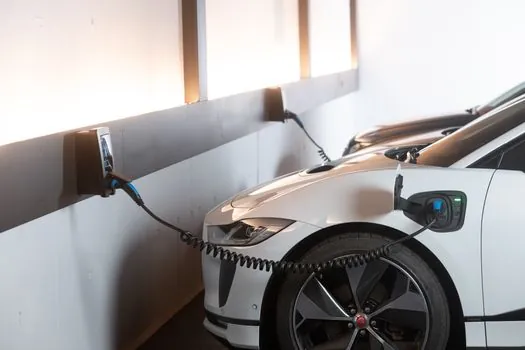
AC-input tolerance is specified at 380 V ±15%, 50/60 Hz, TN-S, 3-phase 5-wire (L1/L2/L3/N/PE), which is the configuration Chinese grid code expects for public DC sites and the same envelope most export-bound units are designed around [S3]. For reference design context, single-phase and three-phase AC charging hardware (Type 2, identifier C) is commonly rated 230 V, 32 A, 7.4 kW on a 1W+N+PE or 3W+N+PE feed at 50/60 Hz [S2].
Connector, protocol, and interoperability layer
J3400, ISO 15118-2, OCPP, OCPI, and UL 2522 form the named interoperability stack the Joint Office of Energy and Transportation identifies as the single source of truth for US public charging, with Plug & Charge and Universal Plug & Charge dependent on the public key infrastructure (PKI) layered on top [S1]. The same stack is increasingly required for NEV (New Energy Vehicle) export builds because Tier-1 buyers want OCPP 1.6 (or higher) backend, OTA (over-the-air) firmware, and the option to swap in ISO 15118 later [S3].
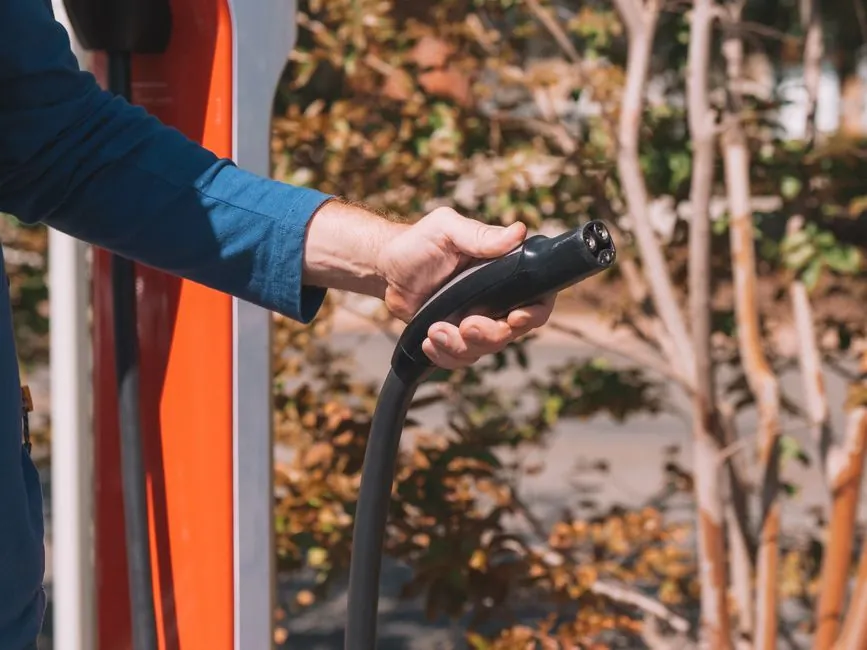
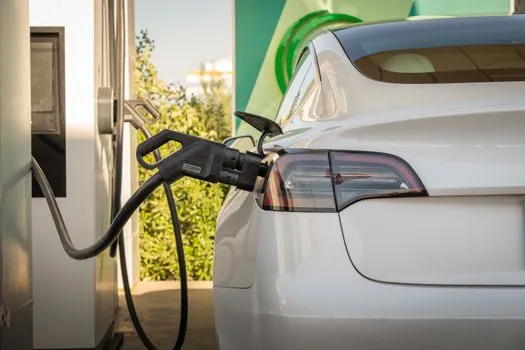
Mechanical life on the charging gun is specified at ≥10,000 mating cycles per the GB/T 20234.3-2015 DC connector clause, with temperature sensing built into the gun head (1/2-gun configurations on 5 m cables are common in the 60-200 kW class) [S3]. A 7-inch LCD touchable HMI (Human-Machine Interface), 4-LED status array (Power/Fault/Charging A/Charging B), and RFID or app-based plug-and-play control are the de-facto user-interface baseline in this class [S3].
QC layer: IQC, IPQC, FQC, and burn-in
Manufacturer-side quality control is a closed-loop, full-lifecycle system split into IQC (Incoming Quality Control), IPQC (In-Process Quality Control), FQC/OQC (Final/Outgoing Quality Control), and design verification, with each gate having its own KCPs (Key Control Points) [S5]. IPQC enforces SMT (Surface-Mount Technology) reflow profile verification, soldering temperatures of 350-400°C, and high-voltage connector torque of 10-15 N·m, with First Article Inspection at every shift or line change and MES (Manufacturing Execution System) logging of 20±2°C and 40-60% RH [S5].
FQC runs 100% inspection on appearance, insulation, leakage current ≤0.5 mA, and output accuracy ±1-2%, then a 72-hour high-temperature full-load burn-in, with sample-based EMC, salt-spray, and short-circuit/over-voltage functional tests [S5]. Reliability indicators in the same spec are hard numbers: insulation resistance ≥50 MΩ (some buyers require 100 MΩ), leakage current ≤0.5 mA, grounding continuity ≤0.1 Ω, IP54 or IP65 for outdoor enclosures, operating temperature -20°C to +50°C, charging efficiency ≥94-95%, response time ≤200 ms, and 100% protocol-handshake success [S5].
Regional cluster comparison: PRD vs YRD vs Jing-Jin-Ji
For a 150 kW DC fast charger on a 1,000-unit FOB (Free On Board) China order, Q3 2026 pricing runs $3,800-$4,500/unit out of Guangdong (Pearl River Delta), $4,200-$5,100/unit out of Zhejiang (Yangtze River Delta), $4,000-$4,800/unit out of Jiangsu (also YRD), and $4,300-$5,300/unit out of Beijing/Tianjin (Jing-Jin-Ji) [S4]. Lead times track inversely with certification depth: 8-12 weeks for PRD, 10-14 weeks for Zhejiang, 9-13 weeks for Jiangsu, and 12-16 weeks for Jing-Jin-Ji [S4].
Quality outcomes diverge by cluster: PRD lots show wide OEM-vs-white-label variance with about 30% failing third-party safety tests, Zhejiang and Jiangsu both rate ★★★★☆ with 95%+ UL 2594 pass rates and industrial-grade components, and Jing-Jin-Ji lots are optimised for Chinese grid specs and less export-tested [S4]. For buyers specifying UL/CE/TÜV-certified volume (>5k units/month), only Shenzhen (PRD) and Hangzhou (YRD) carry proven mass-production capacity; "Tier-3" clusters should be avoided on export orders because of certification gaps [S4]. China itself accounts for an estimated 68% of global EV charging infrastructure output on a 2026 IEA (International Energy Agency) projection cited by industry sourcing reports [S4].
Third-party certifications buyers should require
For export-grade units, the cert bundle covers ETL, FCC, CE, UKCA, TUV, CB, and RCM, with third-party testing routed through Intertek, TUV, or SGS, and root-cause handling via 8D reports for any non-conforming product isolated from the line [S5]. Buyers in mission-critical segments (utilities, government) are routed toward Jiangsu-supplied units for 24/7 uptime guarantees and international certifications, while technology-focused smart-city and OEM (Original Equipment Manufacturer) buyers route to Zhejiang for IoT (Internet of Things)-enabled chargers, OCPP compliance, and cloud-management platforms [S6].
A practical hybrid is to split volume between PRD for cost-driven high-volume AC/DC lots and YRD for premium DC fast-charger builds, balancing cost, innovation, and supply security across regions rather than concentrating spend in a single cluster [S6]. For the broader industrial-supply context on traceability and serialised recall that QC programs lean on, see this spec-driven sourcing guide on industrial adhesives, and for how upstream material flow (silicon for power electronics, copper for cabling) constrains the same factories, see the silicon wafer supply chain choke-point map.
Where this spec map fails
The QC indicators above assume factory-controlled burn-in and an in-house SMT line; contract assemblers that outsource PCBA (Printed Circuit Board Assembly) and skip the 72-hour full-load burn-in routinely hit field-failure rates 2-3× the in-house benchmark, and buyers who accept 30% third-party test-fail rates from PRD white-label lots pay the difference in warranty exposure [S4][S5]. The -20°C to +50°C operating envelope also breaks in extreme climates (Scandinavian winters below -30°C, Middle Eastern summer ambients above 55°C) without a de-rated spec, and the IP54 baseline is not equivalent to IP65 for coastal salt-spray sites [S5]. Procurement teams that treat GB/T 18487.1-2015, SAE J3400, and IEC 61851 (the international AC/DC charging standard) as fully interchangeable will mis-spec connectors; they coexist, but a GB/T 20234.3 DC gun does not physically mate with a J3400 inlet without an adapter, and adapters are themselves a flagged reliability risk per Joint Office guidance [S1][S3].
Trackable signals to watch over the next two quarters: (1) MCS (Megawatt Charging System) standard ratification for medium- and heavy-duty vehicles, which the Joint Office has named as an active innovation workstream, and (2) ChargeX Consortium outputs on adapter-safety recommended actions, both of which will land as spec-line edits in next-generation procurement RFQs (Requests for Quotation) [S1].
For the relevant spec sheets and selection criteria, see additive manufacturing material, air quality monitor, and power quality analyzer.