EV production lines bundle four distinct equipment classes — battery cell and module/pack assembly, EV supply equipment (EVSE) manufacture and test, vehicle final assembly with high-voltage safety, and worker PPE for thermal/electrical hazards — and each class is governed by a different standard stack [S1][S5][S6].
Specifying on cell format and pack architecture (pouch/prismatic/cylindrical) drives roughly 60–70% of upstream equipment choice, because stacking, fixturing, laser-welding optics, and end-of-line EOL testers all key to that format [S5].
Cell-Format-Driven Assembly Equipment Selection
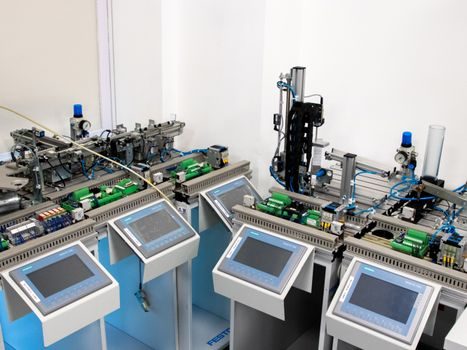
Cylindrical cells (18650/21700/46800) need high-speed cylindrical winding and tab-welding stations; prismatic cells route through laser-welding paths and stacker-press stations; pouch cells need vacuum forming and hot-press lamination [S5]. Picking the wrong format locks a line into a single supplier base for 7–10 years, so the format decision is the dominant gate [S5]. Laser welding with seam tracking and vision-based defect classification has become the dominant joining method because ultrasonic and resistance welding cannot meet the cycle-time or copper-aluminium dissimilar joint requirements of 800 V architectures [S5][S6].
EVSE Build: Connector, Cable, and Control-Module Map
EVSE hardware breaks into AC and DC branches, and the connector standard alone — IEC 62196-2 Type 1/Type 2, IEC 62196-3 CCS1/CCS2, GB/T 20234 AC and DC, CHAdeMO, and the SAE J3400 NACS variant — drives pin count, contact geometry, and cable cross-section [S2]. Liquid-cooled charging terminals (Hyperboloid / Lamella / Crown-Spring contact pins) are now the default above 250 A DC because passive air-cooled pins derate sharply above 200 A continuous [S2]. On the communications side, the ISO 15118-20 plug-and-charge protocol stack — including the AP-0515 four-channel DC charging control module and the EVCISO 15118-20B SECC controller — is what separates a 2026-spec charger from a 2020-vintage one [S2].
EVSE and Battery Test Equipment: Compliance and Acceptance
Third-party EV/EVSE test labs run accelerated stress testing, failure analysis, and certification against FMVSS 108 lighting, UN 38.3 transport, IEC 62133, and regional grid codes, with walk-in environmental chambers handling -40 °C to +85 °C temperature/humidity profiles and vibration tables up to 50 g RMS for pack-level abuse [S5][S6]. Compliance gaps commonly flagged in FMVSS 108 work include photometric tolerance, moisture ingress, and connector cycling wear after 10 000 mating cycles [S6]. On the EVSE side, dedicated EV connector testing equipment covers mating endurance, dielectric withstand (typically 2500 V AC for 1 min between power pins and ground), and interlock timing [S5]. Buyers should match test lab scope to the destination market, because a CB-scheme + IEC 62196 + ISO 15118 trio is required for EU sale, whereas GB/T 27930 + GB/T 18487.1 + NBT 33008 is the China-market minimum [S2][S5].
Worker PPE and High-Voltage Line Safety
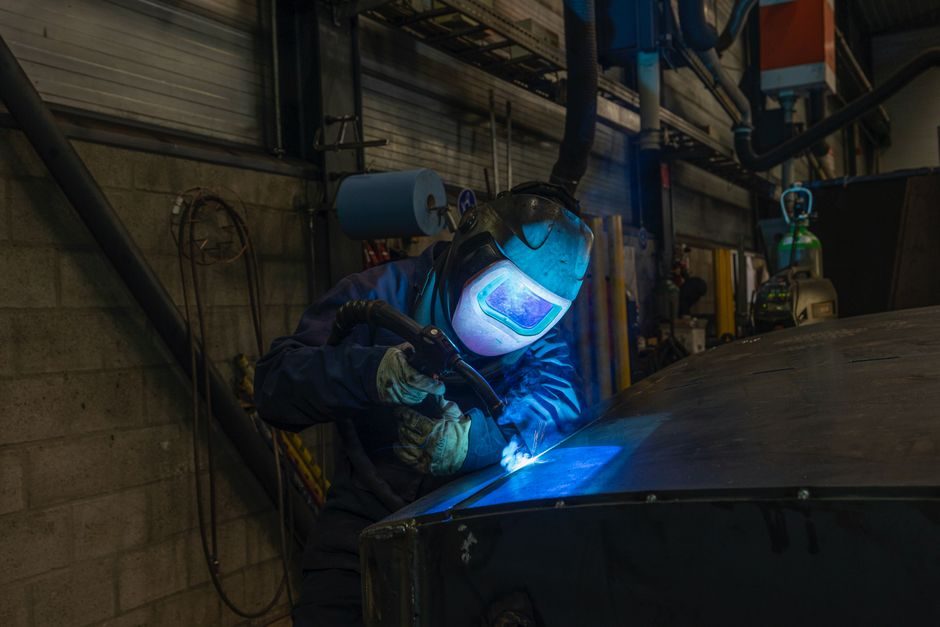
Arc-rated clothing rated to a minimum of 8 cal/cm² (Category 2 PPE per NFPA 70E), Class 0 (1000 V) voltage-rated insulating gloves with leather protectors, dielectric footwear, and arc-flash face shields with the appropriate ATPV window are the baseline on a 400 V or 800 V pack line [S1]. Battery handling additionally requires thermal-runaway barriers, Class D fire extinguishers (or large-capacity water mist for lithium-ion, where applicable), and gas-detection for HF and CO off-gassing during cell venting events [S1]. Vehicle assembly lines and stationary energy storage share most of the same PPE class, so a single vendor SKU set typically covers both [S1].
Decision Comparison: AC Wallbox vs DC Fast Charger vs Battery Tester
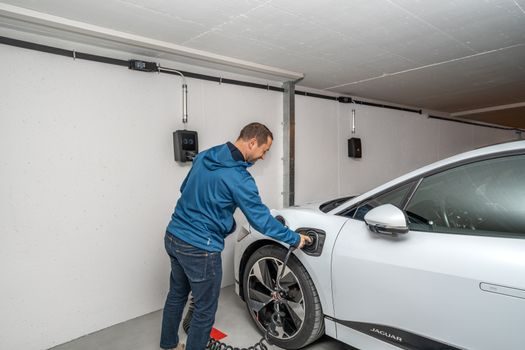
On a 2026 EVSE spec sheet, AC wallboxes (AUPINS C5 / Z-Series class, 7–22 kW) fit site installs where dwell time is 4–12 hours and rely on the vehicle's onboard charger (OBC) at 2 kW / 3.3 kW / 6.6 kW / 20 kW tiers; DC fast chargers (EF040 40 kW, EF160 160 kW, EF400 360–400 kW) bypass the OBC and demand liquid-cooled cables, ISO 15118-20, and dedicated grid service at 400 V AC three-phase or higher [S2]. Battery and EVSE testers in a Sinuo-class lab cover EV battery, EV connector, and EVSE test scopes with the same chamber footprint, but pull from three different chamber sizes (typically 1 m³, 2 m³, 4 m³ walk-in) and three different shaker-table force ratings (10 kN, 20 kN, 50 kN) depending on DUT mass [S5]. Spec the rig to the heaviest DUT you expect in 5 years, not today's lightest [S5].
Supply Chain, Lead Times, and Sourcing Signals
China-domiciled EVSE component makers (AUPINS-class suppliers) are the volume source for IEC 62196 / GB/T connector pins, hyperboloid contacts, and SECC control boards; European and North American OEMs typically buy finished cable assemblies from this base and integrate them in regional assembly cells [S2]. On the assembly-equipment side, the long-lead items remain laser-welding heads, vacuum drying ovens (>200 °C, <50 ppm dew point), and formation cyclers — these routinely sit on 6–12 month lead times and should be ordered ahead of civil-works completion [S5]. For a wider supplier landscape that crosses into stationary storage and UPS, see the 2026 UPS system sourcing map. For the cell-side economics, the EV battery cell cost breakdown and the gigafactory line-sizing article pair directly with the equipment choices above. And because pack lines rely heavily on linear motion for stackers and linear guides for high-cycle welders, plus AGV logistics for module transfer, those two encyclopedia entries round out a full factory bill of materials.
Trackable next signal: the ISO 15118-20 rollout — confirmed by the EVCISO 15118-20B SECC controller shipping as a catalog SKU [S2] — and whether new EVSE bids after 2026-Q3 will require Plug & Charge identity-layer conformance as a hard tender line item rather than an option.
For the relevant spec sheets and selection criteria, see additive manufacturing material.