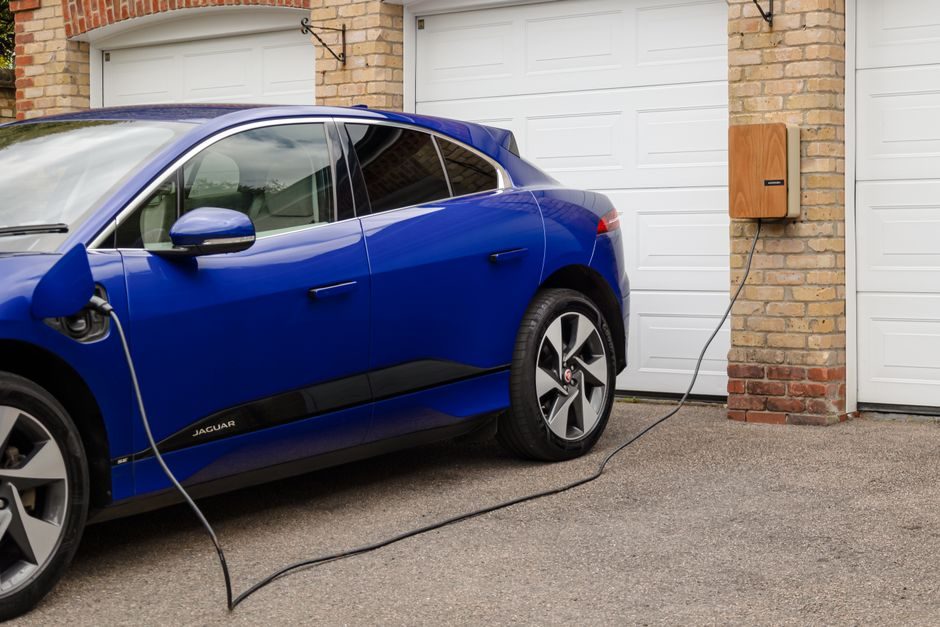
For EV programs entering tooling decisions in 2026, the OEM vs ODM choice is no longer a finance question alone — it is a cell-format and module-pack layout decision, because the supplier that owns the cell-to-pack architecture also owns the iteration speed. Private industry had committed over $86 billion into the EV ecosystem in the year preceding 2023, and the bulk of that spend is now landing on lines that must choose between build-to-print and platform-license models [S2].
The two routes converge on the same deliverable — a pack ready for a flow-meter-instrumented EOL test — but split on who owns the cell-format decision, the module BMU topology, and the line-side data schema. Pick wrong, and the line either over-builds for a spec that drifts, or under-builds for an architecture the OEM cannot accept.
OEM Production: Build-to-Print, Buyer Owns the Architecture
OEM production in the EV battery space means the buyer's engineering team releases a full pack drawing pack — cell chemistry, format (pouch / prismatic / 21700 / 4680), module BMU, contactor map, and the pressure-sensor routing for cell-stack swelling monitoring — and the contract factory replicates it. The Chinese supplier base is dense at this layer: on Made-in-China, factory listings for lithium battery OEM/ODM services cluster in Guangdong, Hubei, Anhui, and Chongqing, with revenue bands running from under 1 M USD through the 10–50 M USD tier [S1][S4][S6]. The buyer keeps IP, accepts longer tooling lead times, and carries the validation cost.
Line-side data integration is the OEM route's hidden tax: every cell's 2D data matrix is read at the scanning station and reconciled against supplier test values for internal resistance and open-circuit voltage, with each cell associated to its box, slot, and recorded reading [S2]. Because the buyer writes that schema, the PLC recipe and the MES bindings are also the buyer's problem.
ODM Service: Factory-Owned Cell-Format Platform, Buyer Skins the Brand
ODM in the EV battery segment flips the ownership: the factory owns the cell-format reference design, the module-pack layout, and the validation data set, and the buyer specifies only pack-level voltage, capacity, and brand artwork. Listings on Made-in-China explicitly tag this model — for example, Shenzhen Outputs Power Co., Ltd. advertises "OEM and ODM services, transforming our clients' concepts" with cell-format coverage across LiFePO4 packs, cylindrical cell packs, and all-in-one ESS [S5]. The trade is lower upfront cost and faster time-to-PPAP in exchange for less differentiation and shared IP.
ODM capacity is concentrated in the same coastal China cluster: Guangdong for cylindrical and LiFePO4 packs, with management certifications skewed to ISO 9001:2015 and ISO 14001:2015 across surveyed listings [S3][S5][S6]. For 2026 programs the practical ODM ceiling is a 100 kWh-class pack built on a factory-proven module — beyond that, the buyer is pushed back toward OEM for thermal-runaway validation and UN 38.3 evidence.
Decision Criteria: Cost, Lead Time, IP, Validation Burden
On lead time, a 2026 ODM program can hit SOP in roughly 9–12 months if the cell format is on the factory's shelf; an OEM program of equivalent scope typically runs 18–24 months because the line must learn a new cell format and a new module-pack layout [S2].
On IP, OEM contracts are bilateral NDAs with the buyer's drawing pack treated as confidential — the cell chemistry, the BMU firmware, and the industrial-valve cooling-loop topology are the buyer's assets. ODM contracts are licensing deals: the factory's reference platform can be resold to other buyers in the same region, which is why most ODM programs are restricted to specific vehicle segments or geographies. On validation burden, the OEM route requires the buyer to fund UN 38.3, IEC 62660, and the OEM-specific durability cycle; the ODM route carries that evidence in the platform data package.
Cell-Format and Module-Pack Layout: The Hidden Tiebreaker
The single largest 2026 tiebreaker is whether the buyer's target cell format matches a format the ODM factory already runs at scale. Cylindrical 21700 and 4680 lines are widely licensed in the China ODM base; large-format prismatic LFP is concentrated in a smaller set of CATL-/BYD-aligned ODMs and is harder to access without volume commitments [S4][S5]. Pouch cell ODM capacity exists but is fragmented, with supplier revenue bands skewed under 10 M USD on the surveyed Made-in-China listings [S3][S6].
Module-pack layout is the second-order constraint: a 2026 ODM platform typically fixes the module count, the busbar topology, and the cooling plate interface, which then constrains the buyer's vehicle-pack envelope. A buyer targeting a flat skateboard architecture with a structural pack will find OEM more practical; a buyer integrating a drop-in module into an existing ICE-derived platform will find ODM faster. Cognex notes that machine-vision inspection of electrode coating and cell stacking is now a baseline quality gate for both routes, with AI-assisted imaging used to cut scrap on the high-speed lines common to both OEM and ODM [S7].
Use Cases: Who OEM Is For, Who ODM Is For
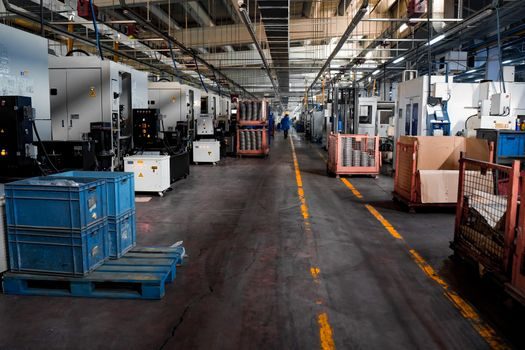
OEM production is the right call for established OEMs and Tier-1 suppliers with in-house cell-engineering teams, a locked cell chemistry, and a BoM that must stay proprietary — typical examples are performance EV programs and commercial-vehicle packs where duty-cycle and warranty terms are negotiated separately. ODM is the right call for new entrants, low-volume specialty vehicles (last-mile delivery, two-/three-wheelers in some markets, light commercial), and ESS-adjacent packs where the buyer's differentiation is in software and telematics, not in the cell. [S1]
A useful rule of thumb: if the program's annual volume is below roughly 20,000 packs and the buyer cannot fund a 12-month cell-format validation internally, ODM typically wins on NPV. Above that volume, OEM wins because per-pack savings dominate the platform premium within the first two model years. For programs straddling the line, a hybrid model is common — the buyer licenses an ODM module for the launch year and migrates to a build-to-print OEM line for the volume ramp.
Failure Modes and Constraints to Plan For
The three failure modes that show up repeatedly in 2025–2026 sourcing: (1) ODM platform drift, where the factory upgrades the reference design mid-program and the buyer's validation data no longer matches the as-built pack; (2) OEM BoM lock, where the buyer's specified cell supplier has a force majeure event and the contract factory has no qualified second source; (3) shared-capacity contention, where the ODM factory's cell-format line is also feeding two other buyers, and SOP slips on a queue basis. Quality drift on both routes is now caught earlier because AI-assisted machine vision inspects electrode coating and weld integrity at line speed, but the inspection data only helps if the buyer's pressure-transmitter and BMU data are correlated into the same MES. [S1]
Regulatory evidence is the second hard constraint: UN 38.3 transport testing, IEC 62660-2/-3 performance and abuse testing, and the GB 38031 China national standard for EV battery safety are the minimum pack; OEM buyers must hold the test reports, ODM buyers must audit that the factory's reports are current and traceable to the as-shipped configuration.
Sourcing and Standards Reference
Buyers evaluating 2026 EV battery contracts should cross-reference the supplier's management certifications (ISO 9001:2015 and ISO 14001:2015 dominate the China ODM base, with ISO 9001:2008 still present on legacy factory pages), the R&D capacity tag (explicit "OEM" or "ODM" or "Own Brand" in supplier metadata), and the annual revenue band as a proxy for line capacity [S1][S3][S5][S6]. The OEM vs ODM definitional split — OEM is build-to-print under the buyer's brand, ODM is the factory's own design sold under the buyer's brand — is consistent across marketplace listings and the Alibaba Seller explainer [S8].
For broader 2026 context on how the OEM vs ODM choice fits into line-level decisions, see the EV Battery Production Line Design: 2026 Cell Format and Module-Pack Layout Map and the EV Battery Production Capacity: Line Sizing, Cell Format Mix, and Gigafactory Planning pieces, and for the cost side of the same decision, the EV Battery Cell Cost Breakdown: Cathode-Led Stack, 2026 Pricing Drivers reference. Trackable signals over the next two quarters: ODM factory disclosures of 2026 cell-format additions (especially 46xx and large-format prismatic LFP), and OEM RFP language that explicitly contracts second-source cell qualification.