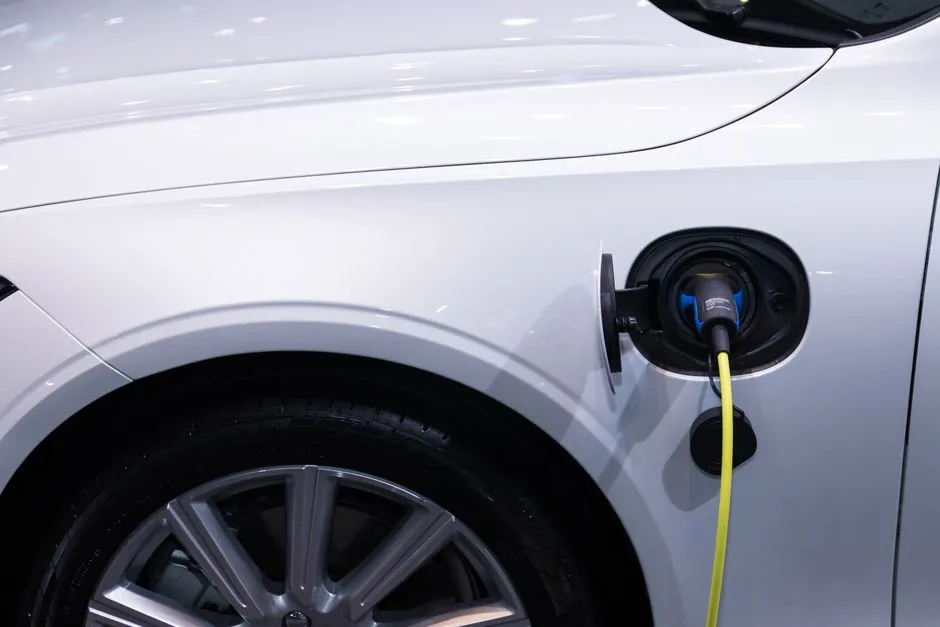
An EV traction motor typically contains only about 20 moving parts versus 200+ in an internal combustion engine, and that part-count reduction is the single biggest reason automated lines for rotors, stators, and body assembly are scaling quickly across OEM and Tier-1 plants [S3].
Production capacity is being rebuilt around the four canonical sub-assemblies, rotor, stator, body, and battery control module, with winding technology, hairpin insertion, rotor magnetisation, and end-of-line (EOL) dynamometer testing as the four equipment-purchasing decisions that drive capex [S3][S2]. The market context: the global electric traction motor market is projected to reach USD 183.29 billion by 2034, expanding at a 30.58% CAGR from 2026 [S7].
Four Sub-Assemblies Define the Equipment List
Every traction motor, regardless of whether it is DC, brushless DC, three-phase AC induction, or permanent-magnet synchronous, breaks down into the same four functional sub-assemblies: rotor, stator, body (housing + bearings + shaft), and the inverter/control module [S3][S5].
This is a deliberate simplification: an e-motor's roughly 20 moving parts are heavily concentrated in the rotor-shaft-bearing stack, while the stator is essentially a laminated steel core wrapped in copper, the body is a sealed housing, and the control module is power electronics. OEMs including GM, Ford, BMW, and Volvo have publicly committed to in-house assembly of at least the rotor, stator, and final body line, citing intellectual property and the need for shared, flexible lines that can swing between motor variants on the same physical asset [S3].
Stator Winding: The Beating Heart, and the Hardest Automation Problem
Stator winding converts electrical energy into the magnetic field that drives torque across the air gap, and the winding process chosen dictates the bulk of a stator line's capex, footprint, and cycle time [S2].
Four winding methods dominate the equipment market, and selection is driven by slot geometry, copper cross-section, and volume rather than by motor topology alone [S2]:
1. Insertion type winding. Pre-formed coils are pushed into stator slots. Suited to high-volume induction and universal motor stators with rectangular wire.
2. Needle winding. A needle lays wire directly into the slot. Common in servo and multi-pole stators where a double-station needle setup handles multi-pole windings without manual intervention [S2].
3. Segmented winding (hairpin). Flat rectangular copper hairpins are inserted, welded (typically laser), and formed. This is the dominant process for OEM-grade EV traction motor stators because it offers high slot fill, good thermal performance, and repeatable quality at high volume.
4. Flyer winding. A flyer arm rotates at high speed to wind armatures with medium-to-large round wire. Used for BLDC out-runner armatures, power tool motors, and similar applications [S2].
The trade-off is straightforward: insertion and flyer are mature, lower-cost, and well-suited to round wire in home appliance and power tool volumes, while needle and segmented winding solve the high fill-factor, high-torque-density requirement that defines a traction motor stator. Plants running mixed portfolios (EV plus appliance plus power tool on shared lines) typically specify modular winding stations with quick-change tooling so a single physical line can switch between needle and flyer set-ups without major retooling [S2].
Rotor Assembly: Where Tolerances and Magnets Drive the Line
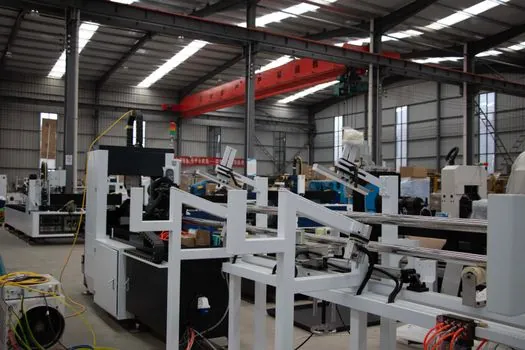
Rotor assembly is consistently flagged as the most tolerance-sensitive part of the motor build and the most automation-friendly zone, because pick-and-place, magnet insertion, and shaft pressing are all repeatable robotic tasks once fixturing is solved [S3].
For permanent-magnet rotors, the equipment chain runs from magnet insertion (often via vision-guided pick-and-place of pre-magnetised or unmagnetised blocks) through rotor stacking, shaft press-fitting, and a magnetisation station (either in-line post-assembly or pre-magnetised magnet handling). For squirrel-cage induction rotors, the line shifts toward die-casting of the cage (or copper/bar insertion) and dynamic balancing. Across both, robotic welding, gluing, and bolted body-closure steps are routine, and a 6-axis robot cell typically handles rotor shaft pressing, end-cap fitting, and connection forming within a single cycle [S3].
Body, EOL Testing, and the Vertical-Integration Logic
Body assembly and end-of-line testing are where OEMs and Tier-1s are most visibly pulling production in-house, with Ford's USD 150 million refurbishment of its 53-year-old Van Dyke Transmission Plant in Sterling Heights, MI for e-motor mass production a publicly cited example [S3].
Body lines cover housing machining or casting, bearing press, end-cap fit, and final closure. After closure, every motor must pass EOL testing, and this is where the real spec discipline matters: a traction motor EOL station typically combines an automated test for insulation resistance and hipot (dielectric withstand), a no-load or back-EMF test, and a loaded dynamometer run to verify torque, speed, efficiency map, and NVH. For high-voltage EV traction motors, hipot voltages routinely reach 1.5-2x the rated DC bus, and partial-discharge testing is increasingly specified for hairpin stators to catch insulation voids before the motor ships. For an applied look at how specialised automated lines are built around the linear guide and crossed roller guide modules that move the rotor under the winding head and the stator under the test probe, see the parallel material on motion-system selection in EV motor plants.
Who This Equipment Is For, and Where Standard Lines Fall Short
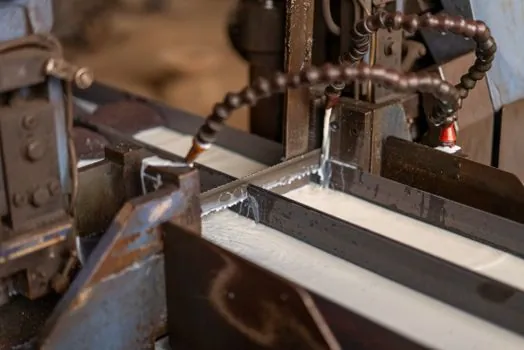
Standard automated motor lines (insertion winding, flyer winding, basic rotor assembly) are well-matched to BLDC out-runner stators, universal motors, induction motors for appliances, and small industrial motors, but they are generally not sufficient for high-volume hairpin EV traction stators without dedicated hairpin insertion, laser welding, and paper/insulation insertion stations [S2][S3].
If you are building appliance or power tool volumes, the off-the-shelf line is the right call. If you are building OEM-grade traction motors at hundreds of thousands of units per year, expect a custom line with hairpin forming, laser stripping, paper insertion, twisting, and welding as separate stations, plus in-line EOL dynamometry, and plan accordingly. The same vertical-integration logic that pushed Ford, GM, BMW, and Volvo to in-house assembly is what is forcing suppliers to deliver higher-automation, higher-yield lines at lower unit cost [S3].
Selection Criteria and a Side-by-Side Comparison
For a plant engineer choosing a winding line, four decision criteria drive the spec: target stator OD range, slot fill factor target, copper cross-section (round vs rectangular/hairpin), and annual volume [S2].
Compared on these axes, the four winding technologies line up as follows:
Insertion winding: best for round wire, rectangular slots, very high volume (appliance, industrial). Moderate slot fill.
Needle winding: best for multi-pole stators, servo motors, mixed small-batch. Higher slot fill than insertion on round wire, slower cycle time.
Segmented / hairpin: best for high-torque-density traction stators, rectangular wire, OEM volumes. Highest slot fill, highest capex, requires laser welding and forming stations.
Flyer winding: best for armatures with medium-to-large round wire, BLDC out-runner and power tool. Fast cycle, lower cost, not typically used for traction motor stators.
For an at-scale view of how Chinese and ex-China suppliers are positioning capacity for the upstream materials feeding these lines, the tungsten and rare-earth supply picture in tungsten production capacity planning is a useful parallel read, because permanent-magnet rotor lines and stator copper content both pull on the same critical-materials base.
What to Watch Through 2026
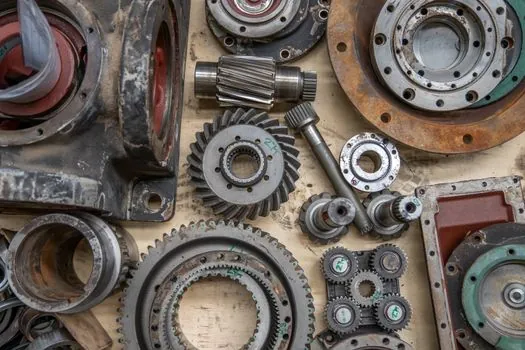
Three signals are worth tracking on a 6-month cadence as the 30.58% CAGR forecast [S7] plays out. First, OEM announcements of in-house e-motor plant capex and refurbished transmission-plant conversions, the GM Ultium Drive shared-line model and the Ford Van Dyke rebuild are the public benchmarks to beat [S3]. Second, hairpin stator line commissioning rates and laser-welding throughput, since hairpin remains the dominant process for high-volume traction stators and the bottleneck for many new programs. Third, the appearance of higher-voltage (800 V-class) EOL test specifications and partial-discharge acceptance criteria, because these are typically the first spec to be locked once an OEM commits a new motor platform.
For the relevant spec sheets and selection criteria, see additive manufacturing material.