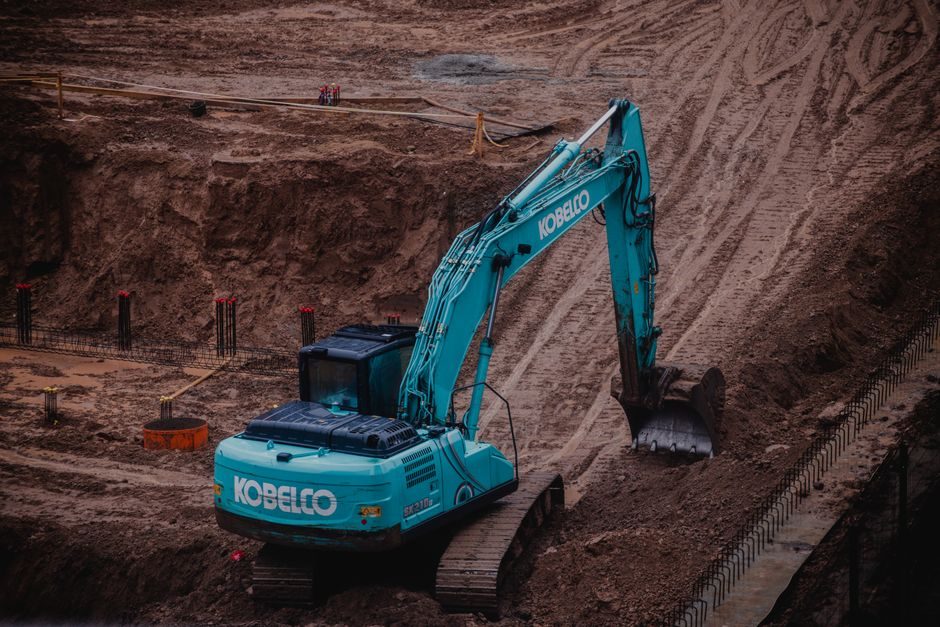
Road construction excavator selection is decided by the work phase, not the brand badge: tracked units in the 20–50 tonne operating weight band carry bulk earthmoving and rock loading, while 1.5–7 tonne mini excavators handle curb, drainage, and utility trench work adjacent to finished pavement [S3][S5].
Public contractor listings, dealer inventories, and marketplace data from mid-2026 confirm that contractors routinely cross-shop crawler, wheeled, and high-speed excavator configurations against graders, rollers, and pavers as a matched fleet [S2][S3][S6].
Operating-Weight Classes and the Road-Build Phases They Cover
Operating weight remains the single most consequential selection variable, and a 20-tonne class is the workhorse for bulk cut-and-fill on new alignments [S3]. Tracked excavators in the 20–50 t range dominate because they combine the hydraulic breakout force needed for shot rock and hardpan with the lift capacity to load 30-tonne articulated haul trucks in 3–4 passes [S2][S3].
Below 7 t, the machine class splits sharply. Machineryline's market taxonomy lists mini excavators (8,307 active ads) and tracked excavators (16,833 active ads) as separate buyer segments, with backhoe loaders (2,104 ads) sitting in between for mixed utility-and-grade work [S3]. Sub-2-tonne units are typically specified for finished-grade curb, sidewalk, and shallow utility trenching where ground pressure must stay below roughly 30 kPa to avoid disturbing the prepared sub-base [S3].
Crawler vs Wheeled vs High-Speed Undercarriage for Highway Work
Undercarriage choice is driven by haul distance between cuts, not by terrain alone. Gradall positions its wheeled and high-speed models explicitly for highway, road, and heavy-construction markets where machines self-transport between work segments at posted-road speeds [S5].
Crawler undercarriages still win on soft subgrade and long-haul embankment work because they spread load over a larger contact patch; the trade-off is transport cost — tracked 30-tonne units typically need a lowboy and permits, while a comparable wheeled unit drives on under its own power [S5][S6]. For new road alignment in stable soil, tracked 20–50 t machines remain the default; for shoulder reconstruction, ditch cleaning, and sign-footing work on live highways, the wheeled and high-speed machines recover their higher acquisition cost in transport savings within a single season [S5].
Boom Geometry and Attachment Match for Road Tasks
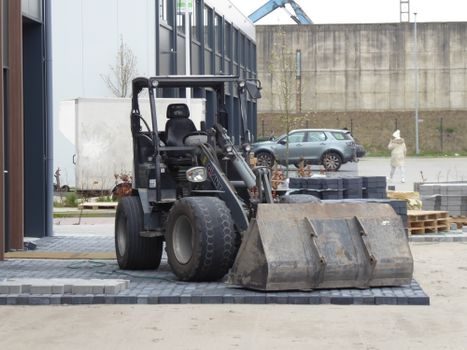
Boom configuration is the second-tier decision after class. Tri-boom (variable-angle boom) and knuckle boom geometries add roughly 15–25% to acquisition cost versus a standard monoboom but deliver the reach envelope needed for slope finishing, ditch cleaning, and truck loading on one-position setups common in road work [S2].
Attachment interchange is the productivity multiplier. A 20-tonne crawler fitted with a hydraulic tilt bucket can grade a 4 m wide sub-base lane in a single pass; the same machine on a standard bucket needs two passes and a follow-up motor grader [S2][S6]. Used-equipment listings in mid-2026 confirm that buyers actively filter by attachment-ready hydraulics, with manufacturer pages listing thumb, tilt bucket, breaker, and compactor as the four most-requested road-build attachments [S2].
Selection Criteria: Cost, Mobility, and Maintenance Access
Three decision criteria separate the finalists: hourly owning-and-operating cost, jobsite mobility, and dealer service radius. A used 20-tonne crawler from a major brand typically lists in a price band 40–60% below its new equivalent and ships inside 30 days from regional dealer inventory; new units from XCMG, Sany, and similar OEMs in the 135–215 HP class list FOB in the $50,000–$100,000 range for motor graders and proportionally for matched excavators [S6][S7].
Contractors running two or more excavators in the same operating-weight class standardize on a single brand to keep wear parts, hydraulic hoses, and filter SKUs interchangeable, a practice repeatedly noted in mid-size road contractor profiles [S1]. For fleet owners, dealer service radius within 4–6 hours' drive time is the deciding factor between two otherwise comparable machines; parts availability, not purchase price, dictates uptime on remote highway segments [S6].
What an Excavator Cannot Do on a Road Job
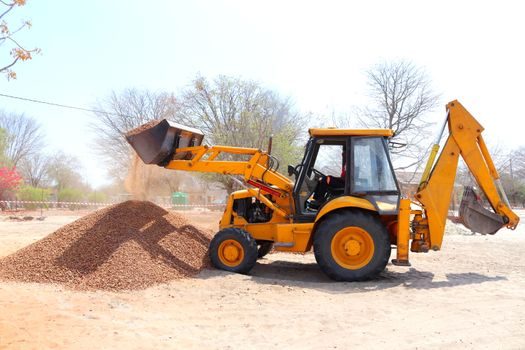
An excavator is not a replacement for a motor grader on fine grading, nor for a vibratory soil compactor on lift compaction.
For utility trenching inside finished pavement, mini excavators under 3 t are the practical lower limit; below that, the machine lacks the hydraulic flow to drive a hydraulic breaker for asphalt or reinforced concrete, forcing a manual jackhammer and erasing the productivity gain [S3]. Road-build excavator fleets therefore pair with a dedicated road roller for compaction and a motor grader for finish work, not in place of them.
Sourcing, Dealer Channels, and Used vs New
Mid-2026 sourcing channels split into three: OEM dealer networks for new and certified-used units, regional used-equipment dealers, and cross-border online marketplaces. Construction Equipment Guide's Volvo excavator category, for example, aggregates dealer inventory with model and attachment filters, while Machineryline Bangladesh tracks 352,707 active construction-equipment ads globally and surfaces 16,833 tracked excavators and 8,307 mini excavators as distinct sub-segments [S2][S3].
Used-equipment dealers such as Road Machinery LLC explicitly market multi-brand inventories of excavators, bulldozers, cranes, and paving machines to road contractors shopping by phase rather than by brand [S6]. The procurement signal worth tracking in 2026: dealer inventories of 20–30 t crawler excavators with under 3,000 hours have tightened relative to 2024–2025 levels, pushing effective prices on late-model used units within 10–15% of new-equivalent financing quotes on a 5-year total-cost basis [S6]. Buyers watching that spread will see the crossover point move back toward new units if dealer inventory remains thin into late 2026.
For procurement teams cross-referencing an excavator buy against other heavy machines, the road roller selection runs on a parallel logic of weight-class and drum-type match to lift thickness, and the broader flow meter spec domain offers a useful template for how operating-parameter, certification, and material-of-construction criteria get layered into a single buying decision.
See also our earlier report, Miniature Circuit Breaker Selection: Spec Map, Trip Curves, and Duty Match.