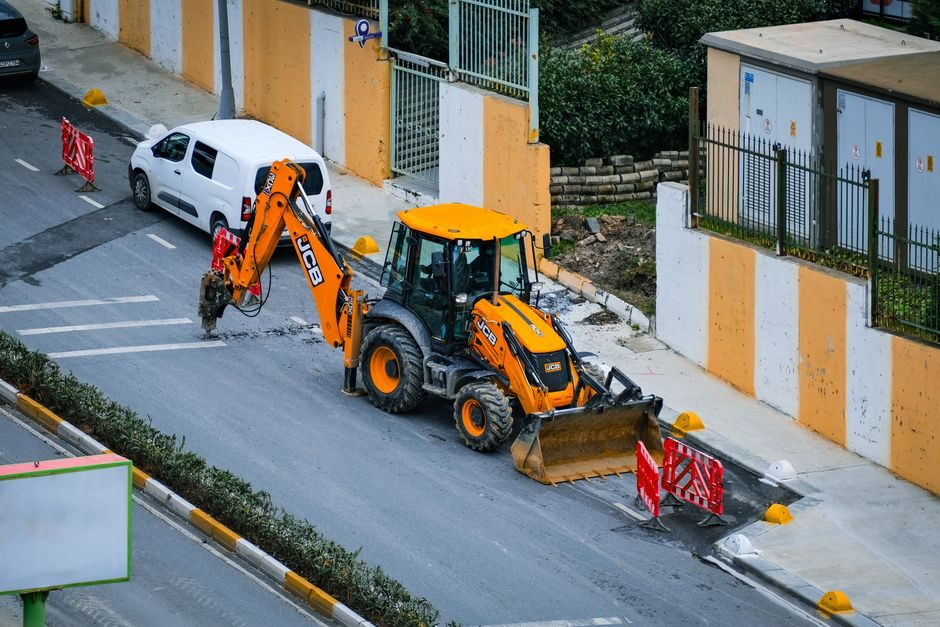
Thirty industrial manufacturers list 203 telehandler models on DirectIndustry as of 2026-06-26, with Merlo (38 models), Manitou (13) and Bobcat (11) dominating the catalog breadth [S1]. Capacity buckets fall under 3 t, 3.1–4 t and 4.1–5 t, while lifts in the live product list span 5.84 m (Bobcat TL619) to 17.1 m (container-handler STH1056A at 4.5 t) [S1].
Market Research Future segments demand across construction, agriculture, and mining, and pegs the 2024 global market at 5.6 USD billion, growing to 9.6 USD billion by 2035 at a 5% CAGR [S3]. Rental, telematics and compact-machine demand are the three structural trends named in that same report, alongside the major OEMs JCB, Caterpillar, Manitou, Bobcat, Liebherr and Merlo [S3].
Capacity Bands and Where Each Class Earns Its Keep
Telehandler capacity is conventionally split into three working bands: under 3 tonnes for light-site and finished-material handling, 3.1–4 t as the workhorse class for brick-and-block yards and residential builds, and 4.1–5 t for heavier palletised loads and aggregate placement [S3]. A concrete data point from the live OEM list is the Bobcat TL619, rated 2,500 kg (with a derated 1,000 kg configuration) at 5,842 mm lift height and driven by a 74-hp turbocharged engine [S1].
For heavier lifts, the same catalog surfaces the container-handler class STH1056A at 4.5 t and 17.1 m of lift, purpose-built for intermodal container positioning rather than pallet duty [S1]. Selection between these bands is not just about peak load but about the stability envelope: telehandler rated capacity falls as boom extension increases, which is why machines in the 4–5 t class are typically matched to shorter-reach work, while the high-reach 17 m class is justified where the lift envelope (not the static load) is the constraint [S1].
For procurement teams that already spec industrial valve and flow meter classes by duty band, applying the same banded-spec discipline to telehandlers reduces re-spec churn: lock the capacity class first, then the lift envelope, then the attachment hydraulics.
Lift Height, Reach Envelope and Powertrain
Lift height in the surveyed OEM range goes from 5,842 mm (TL619) to 17,100 mm (STH1056A), with the mid-range Kramer 5509 covering 0–8,750 mm at 0–5,500 kg capacity and engineered for low fuel consumption and high torque at up to 9 m [S1]. Powertrain language is consistent across the manufacturers surveyed: 74-hp-class turbocharged diesels dominate the 2.5–4 t segment, with high-torque delivery flagged explicitly as a procurement criterion [S1].
New OEM launches in 2026 emphasise validation duty cycles: Genie's redesigned GTH series (2026-07-10) was put through testing equivalent to 10 years of severe service across five power-packed models aimed at limited-access work sites [S2]. The same release ties reliability claims to all-terrain utility rather than peak capacity, signalling that the 2026 buying pattern is shifting from headline-lift to lifecycle-durability evidence [S2].
Application Split: Construction, Agriculture, Mining, Rental
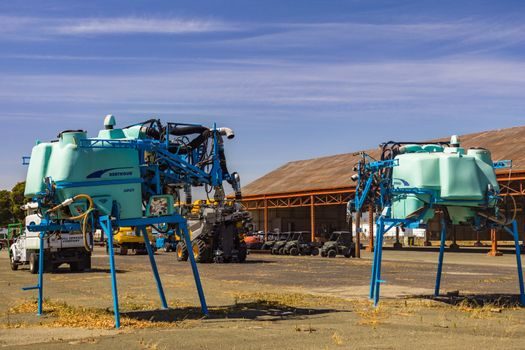
MRFR's segmentation places construction as the dominant application, with agriculture and mining as secondary end-uses and rental as a structural growth channel [S3]. The compact-model trend is explicitly tied to urban construction sites and limited-space agricultural work, which is where telehandlers functionally overlap with smaller servo-motor-driven handling platforms but at heavier mass ratings [S3].
Rental-side economics are visible in UK operator hiring data: a telehandler operator in Rugeley, Staffordshire, was advertised at 20.92 GBP/hr on a temporary contract requiring a Blue CPCS or NPORS card and a full UK driving licence, with duties covering loading/unloading and on-site material placement [S4]. That wage line and certification requirement is the practical anchor of the rental-application class — telehandlers in this channel are CPCS/NPORS-operator assets, not owner-operator machines.
Mining and aggregate-quarry duty is a smaller slice but is the reason machines like the Manitou and Merlo lines offer rops/fops-certified cabs, reversing fans and high-cycle boom lubrication as standard options; the PLC-controlled load-moment indicator on modern units is the same architecture as on cranes and is what enforces the falling-capacity-with-reach curve referenced earlier.
Selection Criteria: Capacity vs Reach vs Attachment vs Certification
Four decision criteria govern most telehandler purchases. (1) Rated capacity at full reach, not the headline static figure — the 2,500 kg / 1,000 kg split on the Bobcat TL619 is the textbook example of derate-under-extension [S1]. (2) Lift height, with 5.8 m, 8.75 m, 9 m and 17.1 m as the visible OEM set-points in 2026 [S1]. (3) Attachment interface and auxiliary hydraulic flow, since telehandler ROI is set by how many tool changes the machine covers per shift. (4) Operator certification and emissions tier, where CPCS/NPORS is the UK floor [S4] and Stage V / EPA Tier 4 Final is the engine compliance line for European and North American sites.
For buyers cross-referencing this category against pressure transmitter or pressure sensor procurement, the same logic applies: a single capacity number is not the spec — the spec is the load chart, the load-moment indicator's enforcement logic, and the validation test behind both.
Operating Constraints, Failure Modes and Service Network
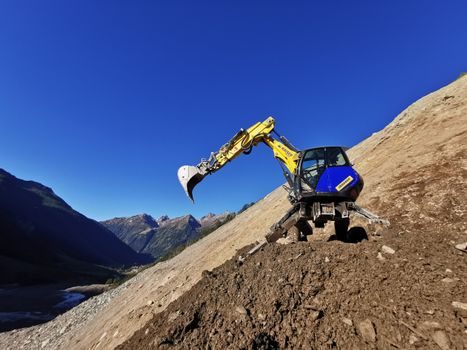
Telehandler failure modes cluster around three areas: hydraulic contamination (the auxiliary circuits that drive attachment tools are the most exposed), boom-extension wear pins (the pivot that lets the boom telescope is the highest-stress lubrication point), and load-moment sensor drift (which silently lifts the derate curve and is the root cause of most tip-over events). The after-sales network is therefore a procurement variable, not an afterthought: the UK Merlo specialist Agriscope, profiled 2026-07-29, explicitly stocks genuine Merlo parts across all ages of machine and runs a dedicated attachment inventory because that is where the bulk of in-service failures originate [S7].
Where the use case is rental fleet, the aerial work platform types and applications map overlaps with telehandlers on reach envelope and on CPCS-style operator-card requirements, though telehandlers carry the additional load-chart and load-moment-indicator compliance burden that scissor and boom lifts do not.
Manufacturer Landscape and 2026 Product Signals
The 2026 OEM field is wide: 30 manufacturers and 203 models on DirectIndustry, with the European core (Merlo, Manitou, Kramer, Bobcat/Doosan, Liebherr) joined by US and Asian lines including JCB, Skyjack, JLG, Genie, Landoll, Noblelift and Anhui HeLi [S1][S3]. MRFR's key-player list adds Caterpillar, Doosan, Genie, Skyjack and JLG Industries to the European core of JCB, Manitou, Bobcat, Liebherr and Merlo [S3].
Trackable signals for the next procurement cycle: (a) compact-model launches tied to urban-construction demand [S3]; (b) Stage V / Tier 4 Final engine rollouts on the 2026 model year; (c) the Genie GTH 5-model redesign validated to a 10-year severe-duty equivalent [S2]; (d) rental-channel wage and certification benchmarks, currently 20.92 GBP/hr + CPCS/NPORS in the UK West-Midlands sample [S4].