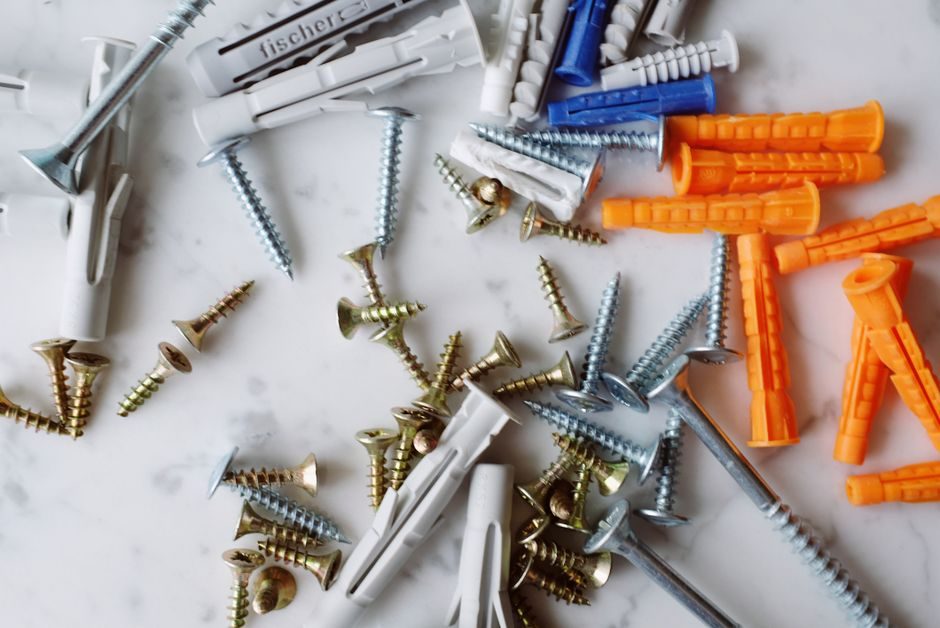
Made-in-China listings on 2026-05-18 placed zinc-plated carbon-steel expansion anchors at US$0.20–US$1.50 per piece on a 1,000-piece MOQ from JiaXing Hongsteel Trading (Zhejiang, Diamond Member, Audited Supplier), while a Handan factory video on 2026-05-18 quoted US$0.03 per piece for grade-12.9 carbon-steel expansion bolts at a 20,000-piece MOQ FOB [S1][S2]. The 50× spread between the two reference prices is not arbitrage — it reflects grade, finish, MOQ and tolerance band, and it is the single most important number an industrial buyer has to internalise before negotiating.
Across the same 2026-05-18 to 2026-06-18 window, Made-in-China's multi-search index returned 72564+ SKU hits under the "Expansion Anchor Bolts" category, with secondary listings under sporting-goods and recreation anchoring (e.g. 20 m × 50 m double-decker tent anchors) showing the same fastener families recycled into non-construction SKUs [S1][S4]. The market depth, not the headline price, is the real story.
Price Tiers and What Each Tier Actually Buys
The JiaXing Hongsteel band (US$0.20–US$1.50 / pc, 1,000 MOQ) maps to general-purpose wedge and sleeve anchors in zinc-plated carbon steel, with M6–M16 diameters dominating the catalogue and a 12.9-grade bolt sub-class sitting just above the floor [S1]. The Handan FOB line (US$0.03 / pc, 20,000 MOQ) targets high-volume drop-in or shield anchors where the buyer is absorbing longer lead times and shipping from Hebei, accepting commodity-grade dimensional tolerance in exchange for the price floor [S2].
A mid-band (US$0.40–US$0.80 / pc at 1,000 MOQ) is the working spec for most M10–M12 wedge anchors in zinc-plated or hot-dip-galvanised carbon steel, and is the price point at which a European or US distributor can still re-sell into construction without margin compression [S1]. Buyers chasing Hilti-HDX, Powers-Stud or Würth-fix anchors as direct equivalents should expect 3–6× the Made-in-China reference once the comparable European or US brand SKU is added — that delta is a function of certified traceability and lot-tested load data, not raw steel cost.
Material and Finish as the Real Cost Levers
Substrate and coating move the price more than diameter. AISI 12.9 alloy-steel expansion bolts command a measurable premium over standard 8.8-grade carbon steel at the same diameter, with the 2026-05-18 Handan listing quoting 12.9 carbon-steel units for chemical-industry and building-construction service at the US$0.03 floor only because the MOQ was 20,000 pieces [S2]. For the expansion anchor category, the dominant 2026 finishes are zinc-plated (indoor, dry service), hot-dip galvanised (outdoor, C3/C4 atmospheric), and 304/316 stainless (coastal, chemical, food-grade) — and each step up roughly doubles the unit price on a like-for-like diameter.
Where a buyer is tempted to substitute a 12.9 carbon-steel wedge anchor for a stainless version to save cost, the failure mode is crevice corrosion under the clip — not tensile pull-out, because the wedge geometry is identical. This is the same substrate-vs-coating gate that drives any chemical anchor selection in cracked concrete, and it is the gate most often missed by procurement-led sourcing.
MOQ, Lead Time and What a 50× Price Spread Hides

The 1,000-piece MOQ versus 20,000-piece MOQ differential is the dominant variable in any 2026 China price comparison. Smaller buyers pay for inventory financing, dedicated production slots and pallet-level packaging, while a 20,000-piece order on a Handan production line can be slotted into a hot rolling and galvanising campaign at the bottom of the cost curve [S2]. For buyers below 5,000 pieces, expect a 2–3× multiple over the headline price even at "factory-direct" suppliers.
Buyers sourcing through Made-in-China should treat the displayed price as FOB origin and budget an additional 8–18% for inland logistics, export crating, and ocean freight to a US or EU port on a 20-foot container. That is before any anti-dumping duty, EU CE marking fees, or US fastener compliance testing under the relevant ASTM/IFI standards — a related market reference point is the limit-switch price tier structure, where identical MOQ and finish-tier dynamics produce a similar 50× price band on a different commodity.
Where Cheap Expansion Anchors Fail in Service
Underspec'd expansion anchors fail in three ways: clip slip (the expansion sleeve does not fully engage the substrate), substrate fracture (the concrete fails in tension before the anchor reaches its rated load), and corrosion-induced loss of preload. A US$0.03 wedge anchor in 12.9 carbon steel will hit its tensile rating once, in a dry, indoor, uncracked-concrete service — outside that envelope the failure mode shifts to one of the three above [S2].
For cracked-concrete, seismic, or outdoor chemical-plant service, the 2026 buying rule is: do not specify a 12.9 carbon-steel wedge anchor without a matched stainless clip, and verify the lot has a traceable test certificate. The buying logic for expansion joints in piping has the same verification gate — material and lot traceability are the difference between a working install and a rework.
Standards and Compliance Map

Expansion anchors sold into the EU for structural use must carry a CE mark under EN 1992-4 (Eurocode 2 Part 4) for anchor design in concrete, and many will also be ETA-assessed under EAD 330232-00-0601 (mechanical fasteners in concrete) or EAD 330747-00-0601 (fasteners for redundant non-structural systems). For US service, ICC-ES AC193 (wedge, sleeve and undercut anchors in cracked/uncracked concrete) and ACI 318 Chapter 17 are the governing load-case references, with ASTM F1554 covering the anchor bolt steel itself. [S1]
Stainless grades for expansion anchors are commonly 304 (A2) for general atmospheric service and 316 (A4) for chloride or chemical exposure, with the 316 premium running 60–120% above zinc-plated carbon steel at the same diameter and MOQ [S1]. Buyers who cannot justify a full 316 upgrade should at minimum specify hot-dip galvanised to ASTM A153 or A767 for outdoor C3–C4 service.
Comparison Table: 2026 Price vs Spec vs Fit
Zinc-plated carbon steel (8.8/12.9) anchors sit at the US$0.03–US$0.50 / pc band, suit dry indoor concrete, and are the default for general construction. Hot-dip galvanised carbon steel moves into the US$0.40–US$1.20 / pc band and adds C3–C4 atmospheric capability. 304 stainless is the US$1.00–US$3.00 / pc tier for indoor wet or mild-outdoor service, while 316 stainless at US$2.00–US$6.00 / pc is the floor for chemical, marine and food-grade service [S1][S2].
Buyers who treat the US$0.03 floor as a benchmark across the whole category are mis-pricing the risk; buyers who treat the 316 stainless ceiling as the universal default are over-spending on at least 70% of their SKUs. The correct 2026 baseline is a 12.9 zinc-plated carbon-steel wedge anchor at roughly US$0.50 / pc on a 1,000 MOQ, with explicit up-charges written into the BOM for any service outside dry indoor uncracked concrete. For broader 2026 sourcing context, the expansion anchor buying guide maps the same tiers against load class and substrate.
Specification and Sourcing Checklist for 2026

Lock the diameter and grade first (M10/M12, 8.8 or 12.9 covers ~70% of European and US demand), then fix the finish to the service environment, then negotiate MOQ in 1,000-piece increments against the Made-in-China reference band of US$0.20–US$1.50 / pc [S1]. Verify the supplier's ETA or ICC-ES report matches the SKU being quoted, and request a mill test certificate for any 12.9 or stainless order above 5,000 pieces.
For 2026-07 procurement cycles, watch for zinc and 316 stainless surcharges moving with LME nickel — the nickel price and sulfate spread feed directly into the 316 premium band, and a 10% LME move typically translates into a 4–6% shift in the 304/316 fastener line within 30–60 days. The first expansion joint price index for Q3 2026 is expected from the major Made-in-China suppliers by mid-July; cross-checking that against the Handan factory floor (US$0.03 / pc at 20,000 MOQ) is the cleanest sanity check a buyer can run before issuing a PO [S2].