
LME three-month nickel closed the first week of July 2026 near US$15,000 per tonne, with intraday bands reported between roughly US$14,800 and US$15,400 — a fraction of the US$100,000/t peak the LME halted trading on 8 March 2022 [S3]. Spot liquidity in Shanghai is correspondingly thin: the CBCIE daily Ni≥22%, Co≤0.4% nickel-sulfate average held around RMB 27,000 per tonne on 18 June 2026, with single-day moves mostly inside ±1% [S5].
For a process engineer or procurement lead, that gap between the 2022 squeeze and the 2026 floor is the working number. It defines the order-of-magnitude swing that any nickel-bearing spec — from Ni-Ti shape-memory wire to nickel-sulfate feed for precursor plants — has to budget for. Reference: nickel alloy grades and industrial valve trim callouts all price off the same LME curve, so the floor-versus-peak ratio is the first thing to pin down before negotiating 2026 Q3 supply.
LME Spot Bands and the 2022 Squeeze Anchor
The single most important data point for any 2026 nickel budget is the contrast between today's range and the March 2022 dislocation. On 8 March 2022, three-month nickel went vertical through US$100,000/t before the LME suspended trading and cancelled several billion dollars of trades; the exchange then imposed daily price limits and a multi-day halt to break the short squeeze driven by Tsingshan-style positions and Russia-Ukraine supply fear [S3].
Four years later, the same contract trades in a US$14,800–15,400/t corridor. That is roughly a 6–7× compression off the squeeze high, and a useful sanity check: any supplier quoting 2026 nickel surcharge on a 2022-anchored formula is overcharging by hundreds of percent unless the contract specifically indexes to a defined historical base. Procurement contracts written in 2022 with peak-priced nickel surcharges should be re-papered, or at minimum re-based, before the next renewal window.
China Nickel-Sulfate Spread: Spot Average vs LME
China spot nickel-sulfate is the more relevant reference for Li-ion precursor, plating and catalyst buyers. The CBCIE daily index for Ni≥22%, Co≤0.4% grade sat near RMB 27,000/t on 18 June 2026, with reported daily deltas generally inside ±1% [S5].
Three reading rules for a sulfate spot quote: (1) always confirm the assay — Ni≥22% Co≤0.4% is the battery-grade baseline, plating grades run Ni≥24% with tighter heavy-metal limits; (2) check whether the price is ex-works Shanghai, FOT, or delivered — a 200–400 RMB/t spread is common across these Incoterms in a flat tape; (3) treat single-day moves below ±1% as noise, not as a trend signal [S5]. When the sulfate-LME spread blows out above ~15% of contained nickel value for more than a week, precursor plants typically start drawing down inventory rather than buying spot.
Nickel Flat Wire and Downstream Form-Factor Pricing
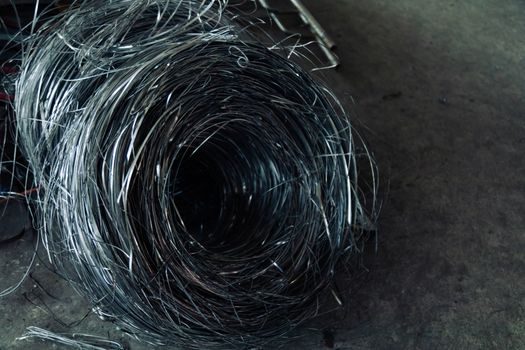
Finished-product reference points anchor the LME curve to real form factors. On Made-in-China.com, superelastic Ni-Ti (Nitinol) flat wire for medical use is listed at roughly US$210.00 per kilogram (i.e. ~US$210,000/t of contained nickel-titanium alloy) for shape-memory and superelastic grades, with multiple Chinese manufacturers offering cut-to-width spools [S1]. That figure is form-factor premium, not LME-equivalent: Ni-Ti feedstock is ~55% Ni by mass, and the medical-grade wire carries a 5–10× conversion premium over nickel-metal input.
For non-medical flat wire (e.g. pure nickel strip for battery tabs, Ni 201/Ni 200 strip for alkaline-electrolyzer components, Ni-Cu alloy (Monel 400) strip for marine use), expect form-factor pricing closer to 1.5–3× LME for commodity thicknesses above 0.1 mm, and 3–6× LME for ultra-thin foil below 0.05 mm. Anyone budgeting a 2026 build should separate the LME pass-through (which is now tame) from the rolling, slitting and annealing pass-through (which is where the real cost lives).
Selection Criteria: Which Nickel Form Fits Which Spec
For procurement, the decision tree in 2026 is straightforward. Plating and catalyst → Ni≥22% nickel-sulfate solution (Co≤0.4%), ex-works Shanghai at the CBCIE index, freight on top [S5]. Medical and actuator → Ni-Ti Nitinol flat or round wire, US$200–250/kg for superelastic grades, with ASTM F2063 or ISO 5832-11 as the spec gate [S1]. Marine and chemical-service trim → Ni-Cu (Monel 400) or Ni-Cr-Fe (Inconel 600/625) bar, billet and weld wire, priced off LME with alloy surcharge in the 1.8–2.5× range, and these grades are the default wetted material in pressure transmitter bodies for sour and chloride service.
The single most common spec mistake in 2026 is conflating price bands. A buyer asked to source "nickel wire" gets quotes ranging from US$20/kg (pure nickel, industrial) to US$250/kg (Nitinol, medical) and assumes the supplier pool is inconsistent. It is not — those are different alloys. Write the UNS number (N02200, N02201, N04400, N06600, N06002, N01555) and the applicable ASTM/ASME/ISO line on the RFQ, and the quote spread collapses to within a normal conversion-premium range.
Where Nickel Pricing Touches Adjacent Industrial Specs

Nickel does not sit in isolation. The same soft-tape environment is visible in adjacent raw-material flows: rare-earth oxide prices climb into July 2026 as magnet-grade supply tightens, with NdPr oxide moving on a different cycle from nickel but hitting the same NdFeB-magnet supply chain that touches EV traction motors. For silicon-steel sourcing, the Ni-plated or Ni-diffused grain-oriented (NGO) electrical-steel variants carry a small nickel surcharge that has compressed in line with the LME tape. [S1]
Downstream, cable and wire upstream and downstream industries: 2026 squeeze map and the China cable and wire supplier map 2026 both use nickel-plated copper conductors for high-temperature and marine cable, where the nickel layer is a small mass fraction of the total conductor but a large fraction of the unit cost. In a soft nickel tape, that sub-segment is one of the few where the raw-material tailwind actually reaches the buyer; in the 2022 squeeze it was the opposite.
2026 Outlook: Floor Mechanics and What Could Break Them
Three signals to track into H2 2026: (1) the LME nickel inventory curve — warehouse stocks have rebuilt materially since 2022, and visible inventory above ~250,000 t is a hard ceiling on squeeze attempts; (2) Indonesian NPI (nickel pig iron) and Class II capacity ramp — added matte and MHP tonnage is the structural reason sulfate and LME have decoupled from the 2022 peak; (3) stainless-steel mill operating rates in China — Tsingshan/Posco/BAOSTILL capacity utilisation drives ~70% of primary nickel demand, so any sustained run above 80% utilisation will tighten the tape before the LME does. [S2]
The base case for the rest of 2026 is a flat-to-mildly-up range, with LME nickel oscillating inside a US$14,000–17,000/t corridor absent an Indonesia export shock or a major Tsingshan-style short. The 2022 peak is not a forecast — it is a stress-test anchor. Anyone re-pricing a multi-year nickel-bearing contract should model the LME base at the current tape, then stress-test the surcharge clause against the 2022 extreme; if the surcharge cannot survive a re-run of 8 March 2022 without bankrupting the supplier, the contract is not actually hedging — it is just transferring tail risk to the buyer.