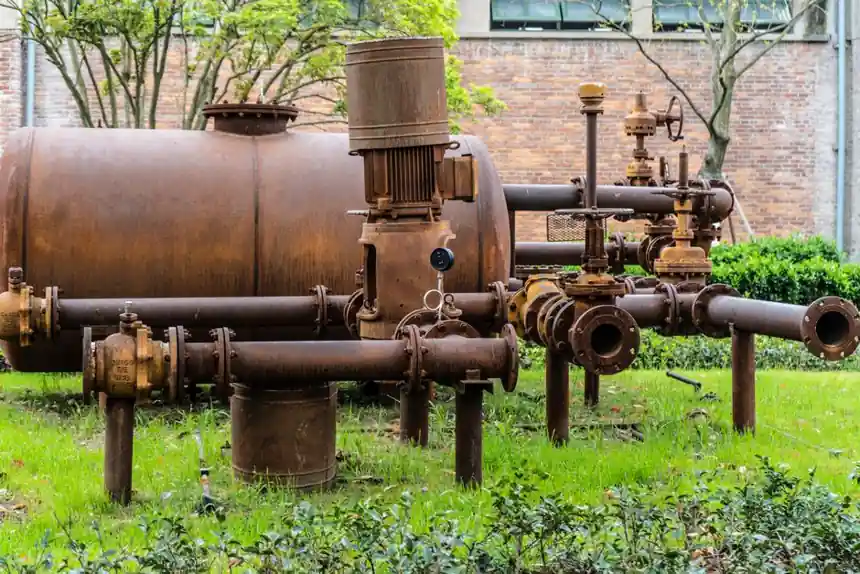
Breather and drain fittings on explosion-proof enclosures serve two functions: pressure equalization during thermal cycling, and gravity drainage of condensate that migrates into conduit and enclosure cavities [S1]. Eaton's ECD-series combination breather/drains are installed at the top of an enclosure or upper section of a conduit system, with a standard drain at the bottom, a configuration that has become the de facto NEC Class I Division 1 and ATEX Zone 1 layout [S1].
The fitting itself is small, typically an M20 x 1.5 or 3/4" NPT male thread, but its certification envelope is what governs selection: ATEX, IECEx, UL 1203, CSA, and INMETRO markings are routinely required, and the device must keep its IP66 or higher rating while still passing air and water [S2][S4]. Common body materials run from nickel-plated brass through 316 stainless, with the Appleton DBE20B (M20 brass) and the Adalet BD-Series combination units representing typical US hazardous-location offerings [S4][S7].
Why a Hazardous-Rated Breather/Drain Is Not the Same as a Conduit Drain
An ordinary conduit drain, like the gravity-operated design disclosed in US Patent 6,075,206, is meant to bleed water from rigid conduit in non-hazardous areas and depends on sealant compounds to keep insects and rodents out while letting condensate escape [S5]. That construction is acceptable in unclassified spaces but cannot be used to ventilate a flameproof enclosure because its open path would defeat the enclosure's ability to contain an internal ignition [S3][S5].
For explosion-proof enclosures, the breather/drain element must be part of the certified enclosure system: it limits flamepath propagation while still allowing the slow diffusion of air that prevents pressure differential and moisture accumulation [S1][S2]. EX Industries explicitly states its breather/vent plug line is "certified to ATEX, IECEx and AEx for use in Zone 1, Ex e applications," a scope that does not transfer to a generic conduit drain [S2].
Where the Fitting Goes and What the Threads Must Do
Standard installation places a breather at the highest point of an enclosure or vertical conduit run, and a drain at the lowest, so that rising warm air exits through the breather and descending condensate drains out the bottom [S1][S3]. On a Crouse-Hinds/Eaton ECD18 combination unit rated Class I Division 2 Groups C and D, that is the exact field practice in chemical-plant installs, where the unit sits at the bottom of every enclosure and at the base of every vertical conduit run [S3].
Thread engagement is a separate, frequently violated requirement. Per the explosion-proof protection technique review, threaded conduit entries into explosion-proof enclosures must be made up with five full threads fully engaged, with an exception allowing only 4½ full threads where the thread is tapered (NPT) [S9]. The breather/drain entry is a conduit entry in the certification sense, so the same engagement rule applies; under-engagement shortens the flamepath and is one of the most common field-cite findings [S9].
Division 1 vs Division 2 vs Zone 1 vs Zone 2: What the Forum Veterans Argue

The Mike Holt forum thread on breather/drain selection captures the live engineering disagreement: the original poster, a chemical-plant designer running Class I Division 2 with z-purge panels, asked whether an ordinary-location drain would suffice, and was told by two respondents that ordinary listed fittings are acceptable in conduit runs in Division 2 but not on explosion-proof enclosures, where the drain must itself be explosion-proof to complete the protection concept [S3].
One respondent extended the argument to Division 1, reasoning that seals local to enclosures isolate any arcing device, but a fourth voice disagreed for Division 1 specifically [S3]. The takeaway for spec writers: in Zone 1 / Division 1, treat the breather/drain as part of the certified explosion-proof assembly, not as a generic plumbing fitting, and match the gas group (B for hydrogen, C/D for typical hydrocarbons) to the fitting's listing [S1][S3].
ATEX/IECEx Ex d vs Ex e: Two Different Certification Routes
Ex d (Flameproof) and Ex e (Increased Safety) breather/drains answer the same physical problem with different certification logic. Ex d devices sit on a flameproof enclosure and contain any internal ignition inside their own flamepath, while Ex e devices rely on the enclosure's increased-safety construction (no arcing parts, IP54 minimum, creepage/clearance compliance) and the breather/drain simply maintains that integrity by blocking dust and water ingress while letting the enclosure breathe [S2][S6].
The Heating and Process product page lists metric Ex e Type CV breather/drains with an Allen-key top, while EX Industries carries both Ex e and Ex d certified units with metric and NPT sizing for global projects [S2][S6]. Where the enclosure is Ex d (e.g. cast aluminum junction box, explosion-proof junction box), specifying an Ex e breather can break the certification chain; conversely, dropping an Ex d breather onto an Ex e enclosure is overkill but not a certification violation, only a cost and thread-form issue [S2][S6].
Material, Thread, and Thread-Form Selection

Brass (nickel-plated), 316 stainless, and aluminum are the three common body materials; selection tracks the corrosion regime of the plant, with offshore and coastal sites defaulting to 316 stainless and onshore chemical plants accepting nickel-plated brass [S4][S7]. The Appleton DBE20B example is a brass M20 fitting, the Eaton ECD18 is an aluminum combination unit, and the Adalet BD-Series ships in multiple body materials to match the explosion-proof distribution enclosure's metallurgy [S1][S4][S7].
Thread form divides cleanly along regional lines: NPT (3/4", 1/2") in North America per NEC, and metric M20 x 1.5 or M25 x 1.5 for IEC 60079-0 / ATEX projects in Europe, the Middle East, and Asia [S1][S2][S6]. Mixing thread forms requires an Ex-certified adapter, and adapters must be listed for the hazardous area, not off-the-shelf [S2].
Moisture Control Logic: Why You Cannot Skip the Breather
Condensation forms in any sealed enclosure exposed to diurnal temperature swing, and in a hazardous-area enclosure the resulting water film is more than a corrosion nuisance: standing water in a conduit seal or junction box can migrate into terminations and create tracking or ground faults that the explosion-proof concept does not anticipate [S8]. A breather/drain plug introduces controlled ventilation while meeting ATEX/IECEx/INMETRO certification, which is the only way to dry the enclosure without compromising the explosion-proof electrical integrity [S8].
For refinery and chemical plant operators, the field signal to watch is unexplained trip events on instrumentation after weather changes, which usually trace back to a missing or plugged breather/drain rather than to the instrument itself [S3][S8]. Specifying a maintenance-friendly breather (Allen-key or thumb-screw top, visible from grade) reduces the chance it gets ignored during turnaround [S6].
Common Field Failures and Spec Pitfalls
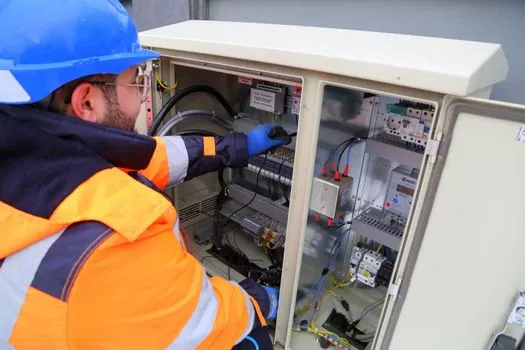
Three failure modes dominate field calls: (1) threads under-engaged below the 5-full-thread / 4½-tapered minimum, which is a citation under NEC 500-series enforcement; (2) thread form mismatch, where an NPT breather is forced onto an M20 metric entry with tape or paste, breaking the flamepath; (3) ordinary-location drain installed in a conduit that runs into a Division 1 enclosure, which compromises the enclosure's explosion-proof rating [S3][S9].
A fourth, less obvious pitfall is using the wrong gas group: a Groups C, D only unit on a hydrogen (Group B) service fails the listing outright, regardless of how well the threads are made up [S1][S3]. For more on how these fittings interact with downstream equipment, the explosion-proof motor and explosion-proof light enclosures follow the same breather/drain logic on their terminal compartments [S1].
Specification Checklist Before You Buy
Lock down five parameters before ordering: hazardous area classification (Class I Div 1, Class I Div 2, Zone 1, Zone 2), gas group (B, C, D, or IIA/IIC), thread form and size (3/4" NPT, M20, M25), enclosure protection concept (Ex d, Ex e, or UL Type 4/4X/7), and body material (brass, 316 SS, aluminum) [S1][S2][S6]. Match the certification body stamp to the project jurisdiction: UL/CSA for North America, ATEX/IECEx for EU and most of EMEA and APAC, INMETRO for Brazil, and CCC for China [S2][S8].
Track the install verification: torque the threaded entry to the manufacturer's specified value, confirm five full threads engaged (4½ for NPT tapered), and verify the breather orientation points up and the drain points down [S9]. For an integrated look at the wider explosion-proof button and control station envelope on the same enclosure, the same rules apply at every entry. Look for the next signal: the 2026 IEC 60079-0 maintenance cycle and any CENELEC harmonization updates on Ex e breather/drain IP ratings, both of which will reshape the spec sheet for new EU plant builds.