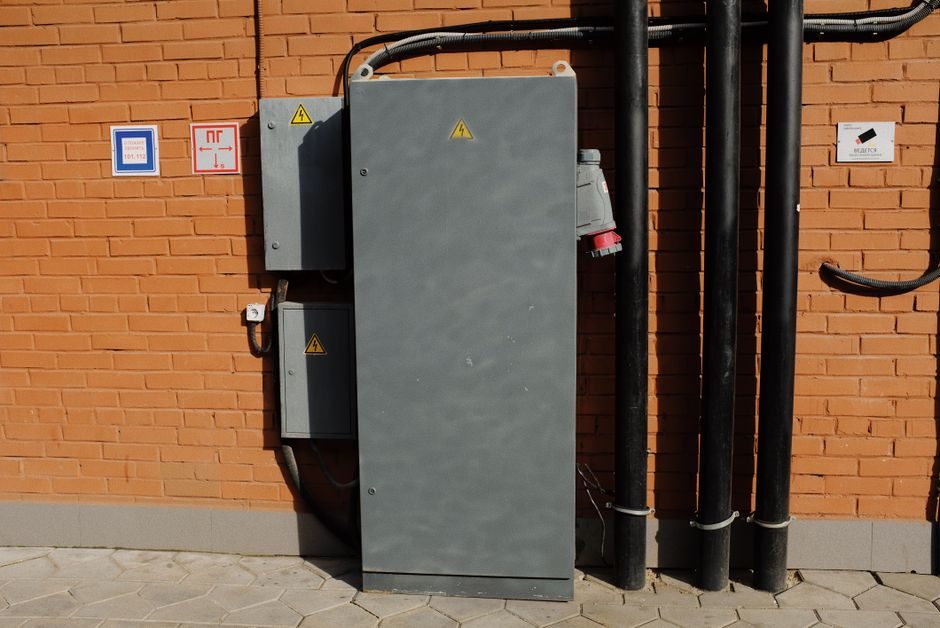
Wall-mounted explosion-proof junction boxes on the 2026 market split cleanly by protection concept: increased-safety (Ex e) terminal housings such as the SJB-A-e series rated Ex e IIC T6 Gb with Ex tb IIIC T80 °C Db and IP66 [S4], versus heavier cast or stainless flameproof (Ex d) bodies for Zone 1 conduit junctions like KROMA MEC's S series in aluminum or AISI 316 [S1].
Buyers in oil & gas, chemical, and pharmaceutical plants now treat the junction box as a long-lead engineered component rather than commodity hardware, with leading Chinese suppliers listing 130+ series and 500+ specifications across the explosion-proof range [S2] and dedicated lines such as the BJX51 and AH series covering IIB, IIC, e, and dust-by-installation (DIP) variants [S3].
Ex-Marking, Gas Group, and Temperature Class
The Ex-marking string is the first gate, and the gas group dictates the enclosure's worst-case hydrogen test: IIC T6 Gb is the conservative ceiling, requiring the box to contain any ignition of the most easily ignited gas group and keep the surface below 85 °C [S4][S1].
For dust atmospheres the marking extends to Ex tb IIIC T80 °C Db, where the IIIC dust group covers conductive metal dusts and T80 °C sets the maximum surface temperature limit at 80 °C under fault conditions [S4]. The SJB-A-e series carries both gas and dust markings in a single body, simplifying spec for mixed-environment process areas such as pharma powder handling and grain terminals [S4].
Buyers specifying only IIB equipment in an IIC-classified area create a real safety gap; an IIB-rated enclosure has not been hydrogen-tested to the same gap and flamepath standards. Always read the full string, not the simplified "explosion-proof" marketing label that still appears on many B2B listings [S6].
IP Rating, Materials, and Thread Standards
IP66 is the practical floor for outdoor hazardous-area boxes, with IP67 specified where temporary immersion is plausible [S4][S1]. Cast aluminum remains the default for onshore and offshore non-corrosive duty because of its weight-to-strength ratio and heat dissipation; AISI 316 stainless is the upgrade for coastal, chemical, or hygienic environments [S1].
Conduit entries must match the regional thread standard, otherwise the flamepath or sealing ring is invalidated. The KROMA MEC S series offers GAS Rp UNI ISO 7/1 as standard with NPT ANSI B1.20.1, GAS UNI ISO 228, and metric ISO 261/965 as options [S1]. Threaded entries are mandatory in flameproof (Ex d) designs because the thread itself forms part of the certified flamepath.
Galvanised-iron round conduit junction boxes remain common in CCC 9000 and CE-certified power distribution builds where budget dominates [S6]. They are a poor match for offshore or chloride exposure, where 316L or GRP enclosures outperform them on lifecycle cost even at higher unit price. For deeper material and corrosion comparisons across explosion-proof junction box families, the enclosure type page is a useful cross-reference.
Zone and Division Mapping (NEC vs IEC)

US projects typically specify Class I Division 1 or Division 2 and Class II/III Divisions, while European, Middle Eastern, and Asian process plants work in Zones 1/2 for gas and Zones 21/22 for dust [S4]. A box certified to both schemes — such as the SJB-A-e line listing Class I Div 1 Groups A–D, Zone 1/2, and Class II Div 1 Groups E–F–G — lets EPCs standardise one part number across geographies [S4].
Inside Zone 1, an increased-safety (Ex e) terminal housing is acceptable because the design philosophy is to prevent any spark or hot surface during normal operation, not to contain an internal explosion. The trade-off is that the internal wiring, terminations, and creepage distances must follow IEC 60079-7, which is why the SJB-A-e series is described as a "strictly sealed increased-safety housing with Ex e terminal blocks" rather than a generic junction box [S4]. For a wider view of how this fits with explosion-proof distribution hardware, the related article provides useful context.
Terminal Blocks, Wiring, and Empty-Box Variants
Empty junction boxes are sold as conductor-pull or derivation housings without terminals, and the project engineer is responsible for fitting Ex e-certified terminal blocks that match the conductor cross-section and current rating [S1]. The S series explicitly supports both modes — empty boxes for conductor insertion and boxes with terminals for derivation — and offers a wide range of sizes and thread layouts to suit cable cross-sections typical in motor and lighting circuits [S1].
Built-in terminal blocks supplied by the OEM reduce field assembly risk and remove the chance of mixing non-Ex terminal accessories into an Ex e housing [S4]. For long cable runs with high strand counts, the box internal volume, gland count, and bending radius need to be checked against the planned cable cross-section, since undersized boxes are one of the most common reasons for non-conformance findings during factory acceptance tests [S1].
Selection Criteria and Comparison of Main Types
For routine Zone 1 lighting and small-motor junction duty, an increased-safety (Ex e IIC T6 Gb) aluminum terminal box with IP66 and pre-installed Ex e terminal blocks is the default low-risk choice [S4]. It is cheaper and lighter than an Ex d equivalent, easier to inspect, and sufficient where no internal ignition source exists during normal operation.
For Zone 1 areas containing equipment that can spark or run hot internally — such as some instrumentation, relays, or heating elements — an Ex d flameproof cast enclosure is mandatory because it contains any internal explosion and quenches the flamepath at the machined joint. AISI 316 variants extend the same protection to corrosive atmospheres at higher cost and weight [S1].
For Zone 2 only, an Ex e or even Ex nA non-sparking enclosure is acceptable, opening the door to lighter plastic and GRP bodies that are uneconomic in Zone 1. Buyers should never apply a Zone 2-rated box to a Zone 1 area, regardless of gas group match, because the absence of flamepath testing under IEC 60079-1 leaves no defence against an internal ignition event.
The table below summarises the main enclosure types against four selection criteria: typical zone, material option, IP floor, and indicative relative cost.
Ex e IIC T6 Gb aluminum, IP66, terminal box — Zone 1 and Zone 2, aluminum or 316L, IP66, low-to-medium cost, default for new builds [S4]. Ex d IIB/H2 cast aluminum or steel — Zone 1, aluminum or cast iron, IP66, medium-to-high cost, used where internal ignition sources cannot be eliminated [S1]. Ex d IIC stainless AISI 316 — Zone 1 with H2 or acetylene, stainless 316, IP66/IP67, high cost, used in chemical, offshore, and hygienic plants [S1]. Ex tb IIIC T80 °C Db dust-only — Zones 21/22, aluminum or GRP, IP66, low-to-medium cost, dust-only or combined gas+dust marking [S4].
For an at-a-glance look at the broader equipment family including the closely related explosion-proof button stations and motor enclosures, the encyclopedia links cluster cross-reference the same standards framework.
Who Should NOT Pick the Default Ex e Aluminum Box
If the classified area contains hydrogen (Group IIC, A in NEC terms) or acetylene, the box still needs to carry the IIC gas group marking — many IIB-only boxes are mechanically similar but have not passed the most stringent gas group test and must be rejected at goods-in [S4]. Plants with chloride exposure, sour service, or frequent wash-down cycles should also avoid standard aluminum despite its cost advantage, because pitting corrosion and galvanic attack at the gland entries shorten service life.
Buyers sourcing one-off boxes for Zone 0 intrinsically safe loops (Ex ia) are also over-specifying if they order an Ex d or Ex e enclosure; the correct low-cost choice is a simple IP66 industrial enclosure, since IS loops limit energy below ignition threshold by design. For mixed-electronic assemblies that need viewing windows, breaker cut-outs, or operator interfaces, a more specialised product such as a [explosion-proof control station](/encyclopedia/explosion-proof-control-station.html) becomes the right reference point rather than a junction box.
Standards, Sourcing, and Trackable 2026 Signals
Selection should always be traced to the relevant IEC 60079 part for the chosen protection concept, the ATEX 2014/34/EU directive for European certification, and the NEC/CEC framework for North American projects. Chinese domestic CCC 9000 remains the most common certification on B2B-sourced cast-iron and aluminium conduit boxes from the Tianjin export cluster [S6].
Project pricing snapshots on B2B portals in mid-2026 list galvanised-iron round conduit boxes in the typical Chinese ex-works range with a 1000-set MOQ and 1000-set/month supply capability from the Tianjin corridor [S6], while small IP68 plastic enclosures for non-hazardous general-purpose use sit closer to US$11.60–13.50 per piece at 1-piece MOQ from Zhejiang custom OEM lines [S7]. Used/refurbished industrial stock — for example EGS Appleton AJBEW061004 bolt-on cover units in "new open-box" condition — still appears in the secondary channel, but the absence of original packaging is a paperwork red flag for safety-critical projects [S8].
For a broader view of how junction-box selection connects to upstream distribution hardware, the Explosion-Proof Distribution Box vs Junction Box spec map is a useful adjacent read. Buyers comparing wall-mount enclosures can also cross-check the explosion-proof distribution box price and cost guide to anchor 2026 unit economics. The explosion-proof control station selection map closes the loop where junction boxes feed into operator panels and motor starters.