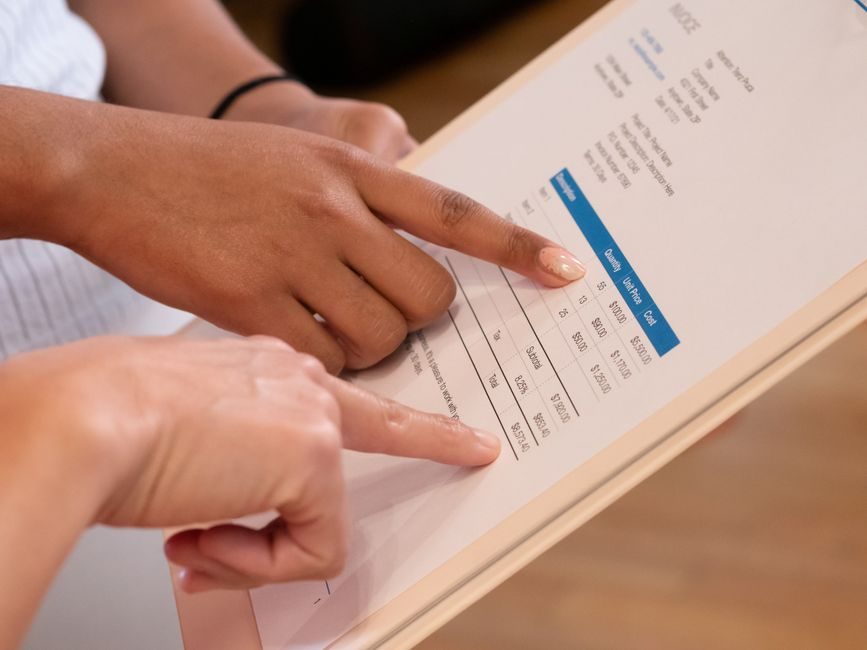
Wholesale listings on Made-in-China.com for ATEX/IECEx LED explosion-proof lighting fixtures were priced from US$30.20 to US$54.60 per piece in tier-1 listings, while certified floodlight configurations reached US$480 per piece for 1-piece MOQ [S5][S6].
The category covers Zone 1/Zone 2 gas atmospheres and Zone 21/Zone 22 dust atmospheres under the IEC 60079 family, with housings typically cast aluminum alloy (copper-free for Group IIC) or impact-resistant alloy plastic rated -40°C to +55°C operating temperature [S2][S8].
Unit Price Bands by Product Type and Certification
Three distinct price tiers dominate the 2026 China-warehouse market: economy LED ceiling/fluorescent fixtures at US$30.20-$54.60 per piece (Jiangsu suppliers, 1-piece MOQ, ATEX IP66 listed) [S5]; certified LED flood lighting at US$36.00-$480.00 per piece with explicit IECEx + ATEX marking and 130 lm/W efficacy (Nanyang Zhongtong listing) [S6]; and specialty explosion-proof hand lamps / work lights in the US$41-and-up range for portable units with 10 W LED heads [S1][S9].
Portable explosion-proof flashlights and hand lamps from DirectIndustry-listed manufacturers (KIRA Leuchten, Otennlux, ECOM, Marechal) consistently specify 3-12 W LED modules with 360° illumination patterns and IP67 sealing [S1]. The BLATX series (10 W ATEX hand lamp) targets Zone 1/2 and Zone 21/22, while the KE-LED-EX 5018 (10 W) uses 360° optics for tank/silo inspection work [S1]. MOQ for Made-in-China portable-lighting SKUs sits at 50 pieces at US$41.00 unit cost for the lowest-tier listing visible [S9].
Primary Cost Drivers and How Each Moves the Price
Hazardous-area certification is the single largest price lever. A unit carrying both ATEX (EN 60079 series, EU Directive 2014/34/EU successor to 94/9/EC) and IECEx certification commands 3-8x the price of an uncertified IP65 industrial fixture, because the OEM absorbs type-test fees, factory audit costs, and ongoing PCEC/CNEX surveillance [S2][S6]. The BAT54 floodlight, for instance, is positioned as PCEC-certified for Zone 2, IIA + IIB gas groups — a meaningful cost step versus a non-certified equivalent [S2].
Wattage and lumen output move price on a near-linear curve in the LED segment: 10 W portable units sit at the US$40-$80 band, 50-100 W floodlight bodies at US$100-$250, and 150-200 W high-bay fixtures at US$300-$480 [S5][S6]. Housing material is the third lever — copper-free aluminum alloy die-castings (required for Group IIC hydrogen atmospheres) cost 1.5-2x equivalent alloy-plastic enclosures, but alloy-plastic units like the CZ 0240 5162 0001 lighting switch are limited to 16 A and standard Zone 2 service [S8].
MOQ tier matters: 1-piece MOQ on Made-in-China carries 15-30% list-price premium versus 100-piece tier, and 500+ piece orders unlock factory-direct pricing. A 20-day factory lead time is typical for alloy-plastic lighting switches at OEM tier [S8].
Technology Comparison: LED vs HID vs Fluorescent Explosion-Proof Lamps
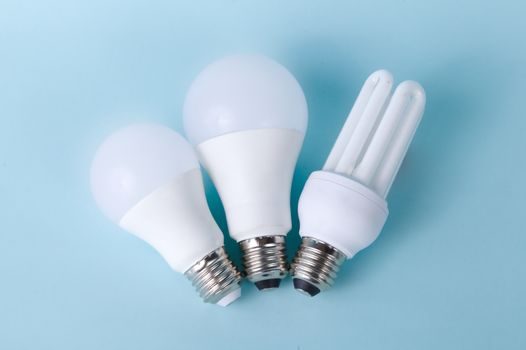
LED has displaced HID (high-pressure sodium, metal halide) and linear fluorescent as the default explosion-proof lamp type in 2026, with three measurable advantages relevant to TCO calculations. First, efficacy: ATEX/IECEx LED fixtures now hit 130 lm/W versus 80-90 lm/W for HPS equivalents [S6]. Second, service life: LED drivers in certified explosion-proof housings are commonly rated 50,000 hours, versus 20,000-25,000 hours for HPS lamps, which directly cuts relamping labor in Zone 1 areas where hot-work permits add cost. Third, inrush current: LED fixtures start below 2x running current, eliminating the warm-up restrike delay that drives HID-fixture redundant-lighting designs.
Linear fluorescent (T8/T5) still appears in 1x16 W and 2x16 W dual-tube ATEX IP66 configurations from Jiangsu suppliers at the US$30-$55 price band — useful where 4000K-6500K color temperature selection matters and where replacement LED tubes are field-serviceable [S5]. For chemical plants with high-vibration service, the 24-30 W heavy-duty LED work lights with IP67 + oil-resistant tempered glass (QLED3 series, aluminum-alloy pressure-resistant shell) sit at the upper end of the portable segment [S1].
Selection Criteria: Matching Fixture to Zone, Gas Group, and Duty
Specifying explosion-proof lighting is a four-step gate. Step one — zone classification: Zone 1 (continuous hazard) requires Ex d flameproof or Ex e increased-safety enclosures; Zone 2 (infrequent hazard) accepts Ex nA non-sparking, which is why most economy-tier ATEX floodlights are Zone 2 only [S2][S5]. Step two — gas group: Group IIC (hydrogen, acetylene) mandates copper-free aluminum and tighter flame-path tolerances than IIA (propane) or IIB (ethylene), raising fixture cost 20-40% for the same wattage.
Step three — dust: Zone 21 (conductive dust) and Zone 22 (non-conductive) require Ex tb IIIC T75°C Db ratings, visible on KIRA and ECOM product markings [S1]. Step four — ingress and temperature: IP66 is the floor for outdoor process-area service, IP67 for wash-down zones, and ambient ratings must cover site extremes — the CZ-series alloy-plastic switch operates -40°C to +55°C, which is the practical envelope for most onshore oil-and-gas and chemical installations [S8].
Decision rule: if the application is Zone 2, Group IIB, IP66, ambient -20°C to +40°C, a US$30-$55 ATEX LED fixture is fit for purpose [S5]. The moment the spec sheet adds Zone 1, Group IIC, or IP67 with -40°C cold-start, budget steps up to the US$80-$200 band, and adding both ATEX and IECEx dual-certification pushes 100 W+ floodlights into the US$200-$480 range [S6]. For related spec-driven selection logic between luminaires and control gear, see the comparison on explosion-proof lighting vs control station selection.
Total Cost of Ownership: What Purchase Price Leaves Out
Purchase price is roughly 40-60% of 10-year lifecycle cost for explosion-proof lighting in continuous-service process plants. The remaining drivers are installation labor (rigging and conduit in classified areas typically runs 2-3x the fixture cost), certification maintenance (re-surveillance audits every 3 years for ATEX/IECEx QAN holders), energy, and relamping. [S6]
Energy math: a 150 W HPS explosion-proof floodlight running 8,000 hours/year at US$0.10/kWh costs US$120/year per fixture; the 130 lm/W LED equivalent delivers the same light at ~58 W, costing US$46/year — a US$74/year saving that repays the LED price premium in 18-30 months at 1-piece MOQ and faster at volume. Relamping math: HID lamp replacement in a Zone 1 area typically requires a hot-work permit, scaffolding, and gas-test — totaling US$300-US$600 per fixture swap, so a 50,000-hour LED versus 20,000-hour HPS cuts 1.5 relamping events over a 10-year horizon.
For projects that weight first-cost above all else, the US$30-$55 alloy-plastic or economy aluminum ATEX IP66 LED units remain the volume workhorse on Made-in-China listings [S5]. Plants that operate 24/7 in Zone 1 Group IIC hydrogen service and cannot tolerate a relamping outage should default to dual-certified (ATEX + IECEx) aluminum floodlights in the US$200-$480 band [S6]. For a broader cost-driver methodology applied to adjacent process equipment, the TCO breakdown used for linear guide rail sourcing is a useful cross-reference for structuring the buyer's cost stack.
Applicable Standards and Certification Stack
The governing standards family is IEC 60079 (爆炸性环境 — explosive atmospheres), with parts 0 (general requirements), 1 (flameproof enclosures Ex d), 7 (increased safety Ex e), 11 (intrinsic safety Ex i), 18 (moulding encapsulation Ex m), and 31 (dust ignition protection Ex t) being the most cited. ATEX equipment directive 2014/34/EU is the EU regulatory framework (replacing the older 94/9/EC instruction referenced on the BAT54 datasheet), while IECEx is the international IEC scheme accepted in Australia, Singapore, and most Middle East jurisdictions [S2].
For the Chinese domestic market, CCC (China Compulsory Certification) is the mandatory mark; Made-in-China listings show CCC certificates issued from 2022 onward, with the most recent validations dated 2024-10-08 and 2024-12-05 [S6]. For hazardous-area wiring accessories (lighting switches rated 16 A at AC220/380 V), CCC plus ATEX dual-marking is the standard combination in 2026 [S8]. Buyers shipping into multiple regions should require ATEX + IECEx + CCC triple-marking on the same fixture to avoid per-region inventory splits.
Sourcing Channels and MOQ Reality
The 2026 sourcing map for explosion-proof lighting is concentrated in China's Jiangsu and Jiangxi provinces, with the Made-in-China platform listing 9,308 explosion-proof light SKUs as of late June 2026 [S5]. Typical MOQ for tier-1 LED floodlights: 1 piece (sample), 50 pieces (small project), 500 pieces (distributor pricing). At 50-piece MOQ, ex-works pricing on portable LED explosion-proof hand lamps lands at US$41.00 per piece from Shanghai-based OEMs [S9].
Jiangxi Ledun Photoelectric, founded February 2016 and holding ISO 9000 and ISO 14000 certifications, exemplifies the mid-tier explosion-proof lighting factory with integrated die-cast, SMT, and assembly capacity [S7]. Lead time from PO to factory dispatch is 20 days for alloy-plastic lighting switches at the OEM tier, which is broadly representative of custom-configured ATEX orders [S8]. Buyers should validate PCEC, CNEX, or NEPSI certificate numbers directly with the issuing body before releasing payment on orders above US$10,000. The HS code 9405 (luminaires) covers most fixed explosion-proof light fittings, while 8513 covers portable hand lamps — accurate declaration matters because China import tariffs differ between the two HS lines [S4].
Trackable signals for the next 90 days: (1) whether dual-certified (ATEX + IECEx) 130 lm/W LED high-bay fixtures break below US$200 per piece at 100-piece MOQ as Jiangxi and Jiangsu suppliers scale; (2) CCC certificate re-validation cycles for Jiangsu OEM SKUs issued in 2022, which begin lapsing in mid-2027 and will force re-listing on Made-in-China and ERUI catalogs.
Spec-level background on the components involved: explosion proof button, explosion proof distribution, and explosion proof electrical.