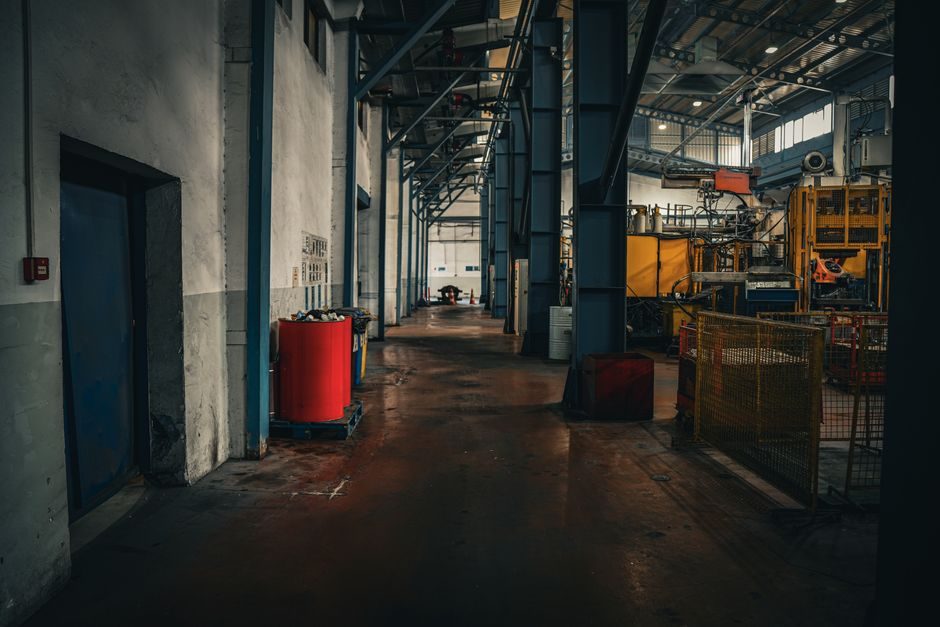
Explosion-proof lighting and explosion-proof control stations are governed by the same IEC 60079 and NEC 500/505 framework but solve entirely different field problems: one delivers lumens, the other delivers switching and motor control inside a certified flameproof or increased-safety enclosure [S3][S4].
Jiangsu Ouhui Lighting, founded 1993 with 100 patents and a 60 m² technical staff pool, lists LED explosion-proof, metal-halide explosion-proof, mobile explosion-proof and explosion-proof electrical appliances as parallel product lines, evidence that lighting and control gear are designed, certified and sold as distinct families even on the same vendor's price list [S1]. On the luminaire side, GUANMN publishes 150 W explosion-proof floodlight and explosion-proof sight-glass lighting for fluid equipment as standalone SKUs, with no control-station electronics in the same housing [S4].
Definition and Scope: What Each Product Family Actually Does
Explosion-proof lighting is a luminaire whose housing, lens and cable entry prevent an internal ignition of a surrounding explosive atmosphere from propagating outside. Typical ratings printed on the nameplate include Ex d IIC Gb, Ex tb IIIC Db, IP66 and Type 4X, covering gas Groups A–D and dust Groups E–G in Class I Division 1, Class II Division 1, Class III, Zone 1, Zone 2, Zone 21 and Zone 22 [S3]. WorkSite Lighting categorises its fixtures into portable (magnetic work lights, hand lamps, string lights, intrinsically safe headlamps) and fixed (explosion-proof high bay, Class 1 Division 1, Class 1 Division 2) buckets, confirming that "explosion-proof light" always means a self-contained optical assembly, not a control device [S2].
An explosion-proof control station is an enclosure that carries operator devices — pushbuttons, selector switches, pilot lights, ammeters, motor starters — and routes field wiring through explosion-proof conduit entries. SU-series explosion-proof unions are designed specifically to mate a control enclosure to a conduit run without removing the housing, a maintenance-driven feature that has no equivalent in lighting [S3]. Ouhui's separate "Explosion-Proof Electric Appliance / Assignment" line reinforces that the control function lives in its own certified enclosure family, not grafted onto a luminaire [S1].
Selection Criteria: Five Numbers That Drive the Decision
Five spec gates decide which family fits a given plant area: hazardous area classification, IP/Type rating, photometric output, control function, and ambient temperature range [S3][S4]. For Zone 1 gas + Zone 21 dust combined sites, both families must carry dual Ex d IIC Gb / Ex tb IIIC Db marking; a luminaire missing the dust marking cannot be used in a Zone 21 grain-handling bay even if the gas rating is correct [S3].
WorkSite Lighting's Class 1 Division 1 versus Class 1 Division 2 split shows that the same physical fixture is often re-rated rather than re-engineered: Division 1 requires the fixture to survive an internal ignition, while Division 2 only requires it to not become an ignition source under normal operation, a difference that flows from NEC 500.6 (A) and (B) rather than from a vendor's marketing [S2]. On the control side, the same logic drives Ex d (flameproof) versus Ex e (increased-safety) enclosure choice — Ex d for Division 1, Ex e for Division 2 — and the two are not interchangeable for the same conduit run [S3].
Who It's For — and Who It Is Not For
Specifying explosion-proof lighting makes sense for tank farms, offshore platforms, refinery process areas, paint spray booths, mining roadways and grain elevators where the task is to see, not to switch. WorkSite Lighting markets aviation and aerospace maintenance, offshore and marine lighting, gas station canopies, oil-field lighting and confined-space lighting as the core fit, all of which are illumination problems [S2]. An explosion-proof high bay at 100–300 W LED is a poor choice if the requirement is to start a 15 kW motor — that is a control station job, and the luminaire form factor will not accept a contactor and overload block.
Explosion-proof control stations are for motor control, emergency stop, local isolation and ammeter readout in the same hazardous areas. They are not for area lighting: a control station with pilot lights gives status indication, typically a few lumens, not task illumination. Ouhui's parallel LED explosion-proof, metal-halide explosion-proof and explosion-proof electrical appliances categories confirm that vendors treat them as separate quote lines with separate certification files [S1]. The decision rule is simple: if the operator needs to see a gauge or push a button, specify a control station; if they need to see a vessel, walkway or work envelope, specify a luminaire.
Criteria-Based Comparison: Lighting vs Control Station
Compared across the four decision criteria most engineers use on a hazardous-area datasheet, the two families diverge sharply. Primary function: luminaire = photometric output (lm, lm/W, beam angle); control station = switching/indication (number of operators, contact rating, pilot lamp voltage) [S3][S4]. Enclosure: both use Ex d cast aluminium or stainless, but luminaires add tempered glass or polycarbonate lenses and reflectors, while control stations add gland plates, DIN rails and operator cut-outs [S2][S3].
Typical rating overlap: Ex d IIC Gb, Ex tb IIIC Db, IP66, Type 4X, Class I Division 1 Groups A–D, Class II Division 1 Groups E–G, ambient −40 °C to +55 °C (per SUREALL AEG emergency-light data) — both families are tested to the same ingress and gas-group envelopes, so a plant does not need to re-prove the area classification when swapping from one to the other [S3]. Where they differ is power topology: luminaires are single-circuit driver-fed at 100–277 V AC or 24 V DC, while control stations carry multi-conductor terminal blocks, contactor coils and often 4–20 mA signal wiring for analogue indication. Cost driver: luminaire cost tracks wattage and lens material; control-station cost tracks operator count, contactor current rating and number of conduit entries.
Real Use Cases Drawn from Vendor Catalogs
A petroleum tank-farm walkway uses a 150 W explosion-proof floodlight (GUANMN) on a 6 m pole for area lighting, plus separate flameproof control stations at each pump skid for start/stop and local isolator duty — the same Zone 1 area, two different equipment families, one procurement package [S4]. Mining roadway installations pair explosion-proof high-bay luminaires (WorkSite Class 1 Division 1 fixed lighting) with control stations housing vacuum contactor starters at every loader station; the luminaires handle 50–150 lux roadway lighting, while the control stations handle 400 V 3-phase motor switching, with no functional overlap [S2].
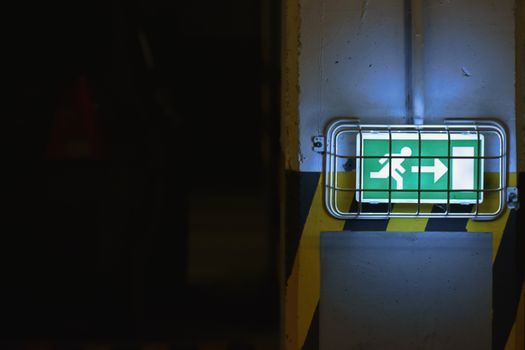
Chemical-plant emergency egress uses SUREALL AEG-series twin emergency lights rated LED 1.8 W, 3-hour battery, 100–240 V AC, DC 3.7 V, ambient −40 °C to +55 °C, IP66, Type 4X — a self-contained luminaire with internal battery, not a control station with a pilot light [S3]. For the related motor-control and distribution side of the same plant, see explosion-proof distribution gear and explosion-proof motor starters, which sit one tier upstream of any local control station.
Limitations, Failure Modes and What the Standards Do Not Cover
Both families share a known failure mode: degraded flame-path surfaces. On an Ex d IIC enclosure, a scored flange or a missing bolt drops the unit from "explosion-proof" to "ordinary enclosure in a hazardous area", and no photometric or contact-rating spec compensates for that [S3]. Luminaires add a lens-specific failure: polycarbonate yellows under UV within 3–5 years in offshore sunlight, dropping usable output by 20–40% even though the LED engine itself is rated 50,000 hours — a useful spec-side reminder that "rated life" on a hazardous-area luminaire is a driver life, not a system life.
Control stations fail most often at the cable entry: an under-torqued gland on an Ex e enclosure breaches IP66 and admits water that tracking-fails the terminal block, while an Ex d gland that is over-torqued cracks the conduit and breaks the flame path [S3]. Neither failure mode is visible on the nameplate, which is why both IEC 60079-14 and NEC 500.8 require periodic inspection of flame paths and gaskets — a procedural requirement that the equipment datasheet cannot waive. The SU-series three-piece union exists precisely so that maintenance can separate conduit from enclosure without prying on the flame path, the kind of design-for-maintenance feature that has no analogue on a sealed luminaire [S3].
Sourcing, Standards and What to Verify on the Datasheet
The standards chain is identical for both families at the certification level: IEC 60079-0 (general requirements), IEC 60079-1 (flameproof enclosures "d"), IEC 60079-7 (increased safety "e"), IEC 60079-31 (dust "t"), with ATEX 2014/34/EU for the EU market and IECEx for global projects, plus NEC 500/505 and CEC Part 18 for North America. SUREALL's SU-series datasheet carries all of these on a single nameplate, evidence that vendors expect buyers to cross-reference [S3]. Chinese-origin explosion-proof lighting from Ouhui, GUANMN and SUREALL typically ships with ATEX, IECEx and CCC certification, with WorkSite Lighting products carrying UL 844 / CSA C22.2 No.137 for the North American Class I/II/III market [S1][S2][S3][S4].
What to verify before signing the PO: the exact gas group (IIA / IIB / IIC for ATEX/IECEx, A/B/C/D for NEC), the dust group (IIIA / IIIB / IIIC, or E/F/G), ambient temperature range with the T-class or surface-temperature marking, IP66 or Type 4X as a minimum for outdoor or wash-down areas, and the cable entry thread standard (NPT, M, or G/PF) matching the conduit run [S3][S4]. For plants also weighing catalytic-bead versus infrared gas detection on the same procurement package, the catalytic gas detector comparison covers the matching detection-side decision. A 2026 trackable signal: new ATEX 2014/34/EU and IEC 60079-0 aligned datasheets are now appearing with explicit −40 °C to +55 °C ambient windows, and vendors shipping below that window without a documented derating curve are the first ones to fail on the next plant audit.