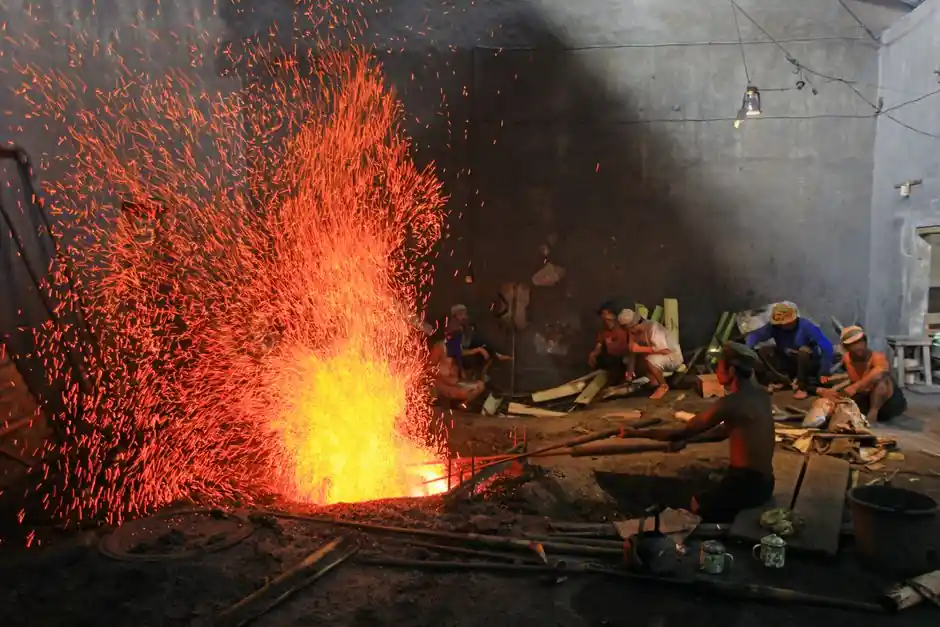
A furnace refractory lining typically lasts four to 15 years, with service life varying according to alloy type, melt rate, combustion system, scrap-charging size, and furnace practice.
What Determines UBC Scrap Refractory Life
Refractory service life is governed by temperature, temperature variation, chemical corrosion, and mechanical abrasion rather than by a single material property [S1]. Alloy composition, melt rate, combustion system, scrap charging size, furnace practice, and furnace design also materially alter lining performance [S3][S4].
UBC service adds variable charge geometry, coatings, moisture, and contamination to that operating envelope. Published technical data establishes a 4–15 year furnace-lining range, but it does not provide a universal life for a gas-fired UBC furnace [S3][S4]. The applicable furnace design and operating duty must therefore be defined before a lining schedule is committed.
A gas-aluminum melting furnace also has to balance heating capacity, melt rate, and residence conditions. A furnace drawing with a 30,000 lb capacity and 3,000 lb/h melting rate illustrates why rated capacity alone is not a refractory design point [S2].
Compare the Three Lining Exposure Zones
Below the melt line, alumina can reduce oxide constituents such as silica, while aluminum may penetrate the lining through redox reactions or capillary infiltration [S1]. Oxidation also produces corundum, Al₂O₃, and the associated crystal-structure change produces volume expansion, cracking, and progressively deeper infiltration [S1].
The zone comparison is direct: upper lining is driven mainly by alkali and thermal exposure, submerged lining by molten-metal chemistry and penetration, and the bellyband by combined chemical, thermal, and mechanical attack [S1]. A single lining compound for all three zones can provide a poor balance, so furnace-specific zoning is the defensible engineering approach [S1].
Select Chemistry Against the Failure Mode
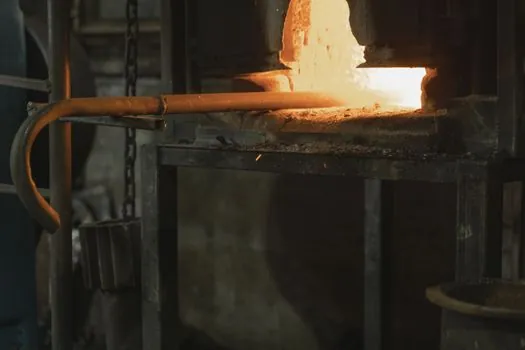
High strength and abrasion resistance can improve resistance to scrap impact and erosion, but stronger compositions may be more vulnerable to cracking under severe temperature swings [S1].
These additives must still be evaluated within the furnace zone because one chemical answer will not solve thermal-shock damage, mechanical erosion, and chemical attack at the same rate.
Refractory selection for UBC service should account for molten-aluminum penetration, mechanical abrasion, and cracking caused by extreme temperature variations, while balancing price, properties, and performance for the application and operating conditions.
Control the Variables Before Purchasing the Lining
Documented operating practice can change lining life by years: one 30,000 lb, 3,000 lb/h natural-gas reverberatory furnace required annual patching in high-wear areas and its first complete reline after 6 years, while an almost identical furnace required a complete reline after 6 months [S2].
The documented difference was associated with furnace care and management, because the first customer followed the manufacturer's recommended maintenance procedures, including cleaning and fluxing. The comparison also shows why an estimated 4–15 year life cannot be inserted into a project schedule without a service-specific basis.
For a gas-fired UBC installation, operating records should consider charge size, melt rate, alloy composition, operating temperature, charging and drossing practices, and maintenance. Separate tracking of high-wear patches from complete relines prevents routine local repairs from masking a system-level deterioration trend.
Since 1974, the Pyrotek TAB Refractory Services team has installed over 1,100 aluminum furnace linings in more than 30 countries for primary and secondary aluminum plants and foundries. For UBC applications, the comparison between dry-hearth and wet-hearth process concepts is also relevant to charge preparation and downstream metal handling, as discussed in Dry Hearth vs Wet Hearth Furnace for UBC Scrap.
Install for Commissioning Speed and Stress Control
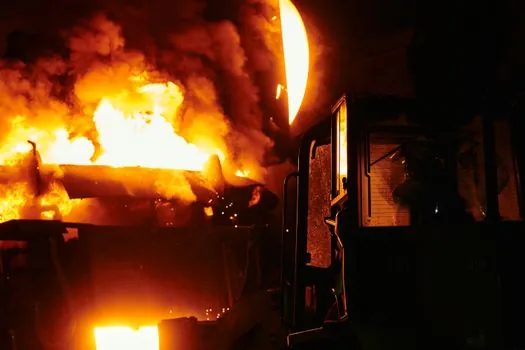
The refractory systems are pre-fired to 932°F (550°C) to eliminate water and allow for faster commissioning. Pre-firing eliminates water to allow for faster commissioning.
Zoned systems combine cast-in-place and precast monolithic components rather than imposing one material across the furnace [S3][S4]. This approach permits stronger, abrasion-resistant material where charging and dross work are severe while reserving more crack-tolerant or non-wetting compositions for chemically exposed zones.
The holding furnace comparison reinforces the zoning logic: holding duties emphasize maintaining metal temperature and limiting prolonged chemical contact, whereas melting duties add charge impact, melt formation, and greater circulation-related wear. Even a 5-year customer observation involving reduced repair downtime should be treated as application-specific performance, not a guaranteed UBC operating result [S4].
Know the Limits of Published Life Claims
The 4–15 year range covers furnace refractory service under varying conditions and is not a gas-fired UBC guarantee [S3][S4]. The lower end becomes credible when scrap handling, thermal cycling, chemical attack, metal penetration, erosion, and maintenance combine against the same lining [S3][S4].
No single source establishes a defensible UBC-specific life in months or years. In addition, the 4–15 year range comes from material published in 2017–2018, while the maintenance case and technical guidance were published in 2024–2025 and 2026 [S1][S2][S5]. A procurement specification should therefore require furnace geometry, charge analysis, melt-rate envelope, alloy mix, fuel and burner arrangement, and maintenance assumptions to accompany any life guarantee [S5].
The key failure checks are not vague. Inspect for bellyband thinning, alumina penetration, cracks associated with corundum growth, erosion around charge impact points, and alkali attack above the melt line [S1][S3]. Any proposed warranty should define measurement locations, repair acceptance limits, operating exclusions, and whether local patching resets part of the refractory-life accounting.
Build a Trackable Refractory Acceptance Plan
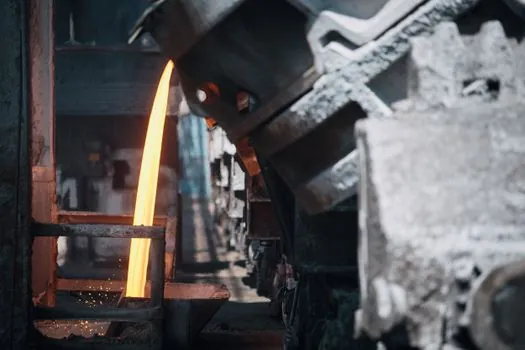
The most defensible procurement approach is a zoned lining with documented non-wetting behavior for molten-metal contact, thermal-shock tolerance for burner exposure, abrasion resistance at charge-impact zones, and an installation sequence that controls drying and stress relief [S1][S3][S4].
For a 2027 operating trial, track 12 months of UBC throughput, melt rate, burner cycles, flux additions, dross removals, high-wear patch events, and bellyband measurements against the furnace baseline. Any proposal that claims 10 years of UBC life without charging data, maintenance records, and zone-specific material data should be returned for clarification [S2][S3][S5].