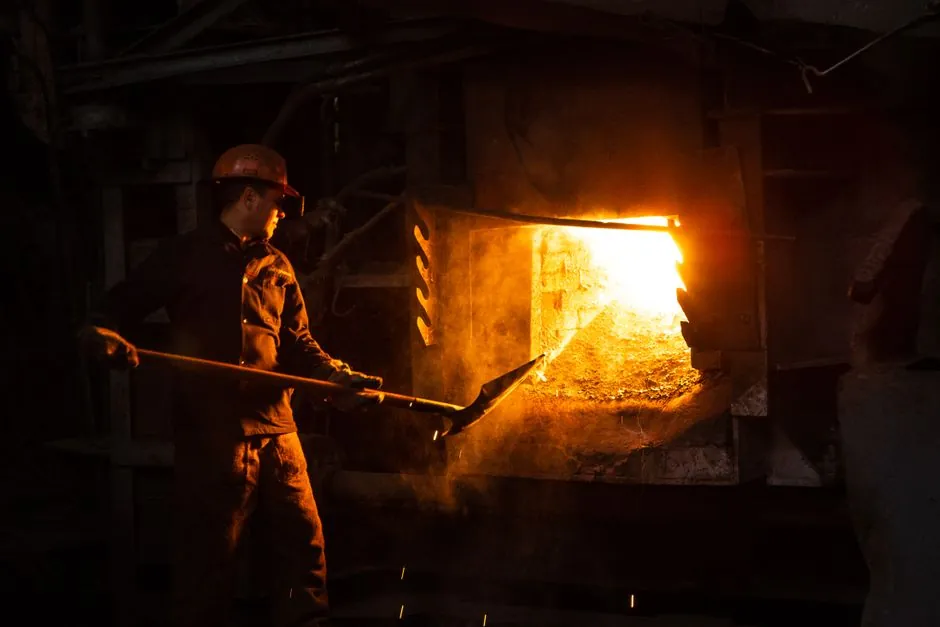
Gas-fired reverberatory furnaces commonly operate at about 20–45% thermal efficiency, while electric resistance melting can exceed 90% in the cited review [S1][S5].
For aluminum, scrap-chip melting and ingot melting should be compared on furnace efficiency, metal loss, charge preparation, contamination control, throughput, and operating cost rather than on a single efficiency figure.
Efficiency depends on the charge, not only the fuel
Conventional natural-gas-fired reverberatory furnaces transfer heat to molten aluminum mainly through refractory radiation and some convection, with reported thermal efficiency of approximately 20–45% [S1]. For a gas-fired system, the practical question is how much useful heat reaches the metal after combustion, stack loss, exhaust heat, furnace-wall loss, and charge-conditioning losses are deducted.
Scrap chips and turnings arrive with much greater surface area than dense ingots. If the furnace receives them cold, the burner first supplies sensible heat to the charge before the metal melts. Scrap-specific systems can reduce this penalty through integrated preheating, organic gasification, and heat recovery, and can efficiently remelt clean and contaminated scrap containing paint, plastic, and oil residues [S4].
The comparison is therefore not simply gas-fired versus electric. A gas furnace with scrap preheating and energy recovery may outperform a poorly operated electric furnace, while clean ingot generally presents the simpler thermal and metallurgical duty. For the broader equipment context, see gas-fired aluminum melting furnaces.
Scrap melting versus ingot melting
Scrap-chip melting has higher recovery potential when a specialized furnace can preheat the charge and recover combustion energy from oil, paint, and polymer residues, but feed variability increases the burden on charging, skimming, alloy control, and downstream refining [S4]. Clean ingot melting provides a more uniform charge, faster and more stable melt formation, and lower exposure of liquid aluminum to oxidation.
Direct-immersion electric resistance systems have demonstrated thermal efficiency of about 99% and melt loss below 1% [S1]. These figures span different furnace designs and cannot be transferred directly to every production furnace without a duty-cycle test.
For gas-fired crucible applications specifically, electric resistance melting is documented as limiting metal loss to typically 1–1.5% of metal melted, versus higher loss in conventional gas-fired crucible practice [S6]. The applicable technology categories include crucible furnaces, reverberatory melting furnaces, and electric arc furnaces, but their efficiency must be evaluated on equivalent feed and production schedules.
Decision criteria for furnace selection
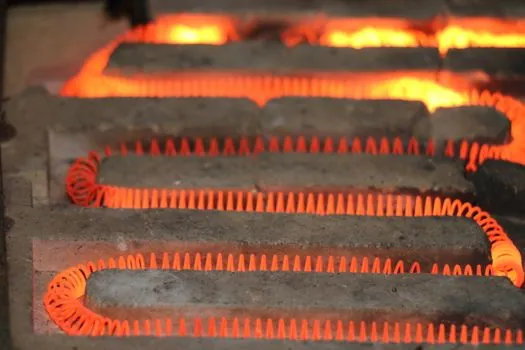
Use a bid comparison that charges identical scrap mass, records natural-gas and electricity consumption, and separates active melting from standby and holding. Specify charge moisture, oil content, coating fraction, particle size, bulk density, alloy mix, target melt rate, and permitted dross rate before comparing equipment. [S4]
Gas-fired scrap melting fits recyclers with consistent access to natural gas, high-volume chip or turnings streams, and capital for preheating, charging, combustion control, exhaust treatment, and skimming equipment [S3][S4]. Ingot melting fits foundries requiring predictable alloy chemistry and low contamination, especially where primary ingot and clean remelt returns are already segregated [S7].
For dirty, mixed scrap, neither fuel choice cures the upstream problem. Deleterious impurities are a principal drawback of recycled aluminum, and sorting, comminution, decoating, and other preliminary treatments must be balanced against their processing cost [S5]. A chip recycling furnace can simplify handling, but it does not remove the need for feed preparation and alloy segregation.
Metal loss and melt quality
Aluminum’s strong affinity for oxygen makes oxidation the decisive yield issue. Gas flames, air entrainment, excessive circulation, long holding periods, and repeated skimming can increase oxidation, while specialized furnace agitation and refractory management can reduce it. A gas-fired system should be judged on delivered metal, not only on burner efficiency. [S5]
Hertwich describes single-chamber, multi-chamber, rotary tilting, and chip-remelting configurations for clean and contaminated scrap, with integrated scrap preheating, internal combustion, and energy recovery to reduce fuel use and oxidation loss [S4]. The Ecomelt PS design addresses baled and painted forms containing as much as 10% organic material, while Ecomelt PR targets loose scrap with moderate organic contamination [S4].
For ingot melting, the furnace should minimize residence time and temperature variation because superheat and prolonged holding consume fuel without increasing useful output. In a broader production system, energy-efficient transportable electric ladles consumed less than 10 Btu per pound per hour, versus 30–40 Btu per pound per hour for typical industrial holding furnaces [S1]. Holding losses therefore belong in a system-level comparison even when only the melting furnace is being purchased.
Throughput, integration, and operating cost
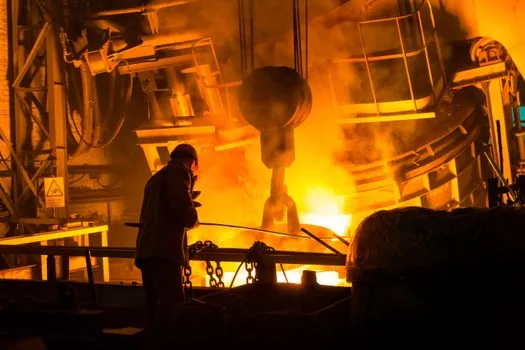
Scrap melting offers the largest opportunity where the plant controls two variables: recovered fuel from organic contamination and recovered sensible heat from the charge. It also adds failure modes: bridging of chips, uneven filling, local oxidation, inconsistent melt density, fluctuating burner demand, dross handling, and variable alloy composition [S4][S5].
Ingot melting offers steadier burner loading and easier charge accounting, but it transfers more value into purchased primary metal and loses some of the economic benefit of local closed-loop scrap. Recyclers commonly mix different alloys into alloy-specific scrap batches before furnace charging, which makes furnace-level comparisons dependent on the assumed alloy-management discipline [S7].
Gas combustion requires a continuous assessment of fuel price, furnace availability, burner and combustion-control maintenance, refractory condition, flue-gas pathways, and local emissions obligations. The claim that gas combustion produces fewer pollutants than competing processes should not be used as a project approval argument without an emissions calculation for the proposed furnace, fuel, and operating profile [S3].
Explicit selection recommendation
Select a gas-fired, preheated scrap furnace when the feed is segregated, its organic and moisture content is measured, burner and charging systems are engineered for that range, and avoided purchase of primary aluminum outweighs higher skimming and contamination-control costs. This configuration is strongest for clean chips, turnings, UBC, and known alloy streams with documented melt-loss targets [S3][S4].
Select ingot melting when alloy consistency, low melt loss, short holding time, and simple operations outweigh the metallurgical value of recycling. For mixed or contaminated scrap, a gas furnace with integrated preheating and energy recovery is more defensible than a basic charge-and-melt design, but its result must still be verified by measured gas use, dross mass, and recovered-metal yield.
A useful procurement test is to normalize energy to Btu per pound of usable liquid metal and report metal loss separately. If a proposed gas furnace cannot demonstrate a defined dross and oxidation allowance, furnace temperature profile, and scrap-conditioned heat balance, its nominal efficiency does not establish operating superiority. Detailed crucible cost benchmarking is available in natural gas crucible furnace cost per kilogram of aluminum melted.
Standards, measurements, and acceptance limits
Specify furnace performance under a written acceptance protocol rather than relying on vendor terms such as “high efficiency.” Record fuel-meter readings, charge mass, moisture correction, alloy and dross samples, melt temperature, melt rate, holding time, power consumption, and the mass of usable metal delivered. The cited material establishes comparative values but does not provide a single universal standard for rating gas-fired scrap and ingot furnaces [S1][S5].
For process safety, apply the applicable jurisdiction’s rules for fuel-fired combustion equipment, exhaust systems, pressure equipment, workplace exposure, and aluminum-dross handling. Where a plant handles oily, painted, or polymer-contaminated scrap, the furnace vendor must substantiate its declared organic-content limit, preheat arrangement, combustion-control method, and downstream treatment requirements [S4].
The clearest decision signal is the combined result of usable-metal yield and energy per pound. A scrap furnace that uses preheat and organic fuel but leaves a high dross rate may consume less gas per pound charged while losing more aluminum; an ingot furnace may use more gas per pound but deliver more saleable metal. Track both values monthly, split by scrap grade and furnace campaign, and reject any efficiency claim that omits melt loss.