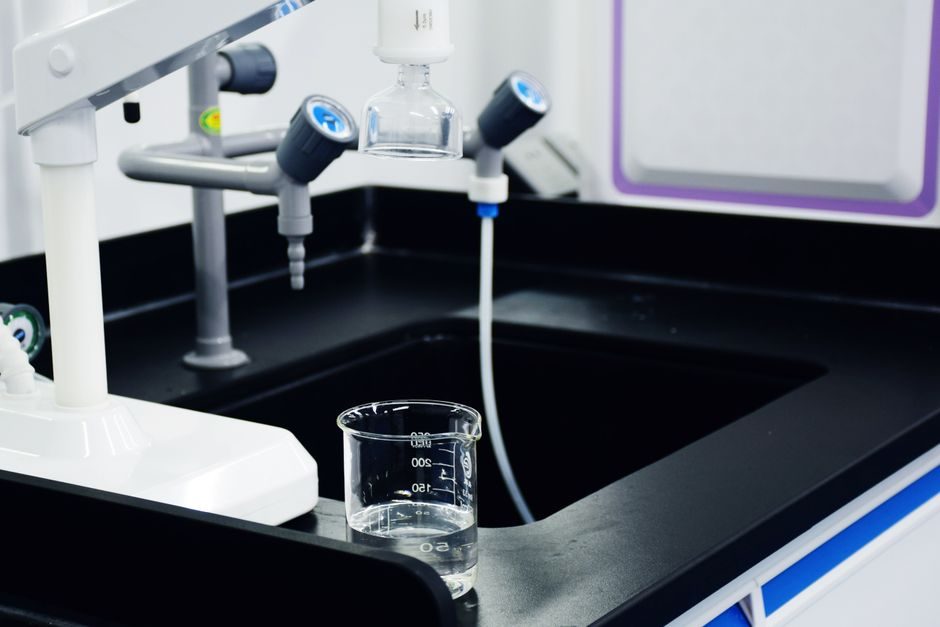
Eye wash station total cost of ownership (TCO) breaks down into 5 cost elements per the USPS TCO model: purchase (P), operating (O), training (T), maintenance (M), and disposal/end-of-life (W + E − S) [S2]. On a typical 10-year horizon, the line-item that quietly dwarfs the unit price is the recurring weekly flush verification and annual inspection, not the galvanized or stainless bowl itself [S1][S2].
A 2026-compliant plumbed eye/face wash unit meeting ANSI/ISEA Z358.1-2014 has a procurement range that varies roughly 3× between a Chinese-fabricated galvanized wall unit and a stainless floor-pedestal unit with thermostatic mixing and freeze protection, before certification and labor are added. The TCO view prevents procurement teams from underestimating the 7-year tail of water, parts, and labor that any eye wash station spec must carry.
Cost Element 1: Purchase Price vs. Hidden Acquisition Costs
The USPS TCO framework states explicitly that preliminary estimates "are the most difficult to obtain and the least accurate because very little detail is known in the early stages of the life cycle," which is why purchase price alone is a poor proxy for total spend [S2]. For an eye wash station, the acquisition line item must be decomposed into: unit FOB price, certified thermostatic mixing valve (TMV) if tepid-water delivery is required, freeze-protection enclosure or heat-trace tape, ASI/InletStop, ANSI Z358.1 conformance certificate, and freight to site.
For a 2026-spec plumbed eye/face wash with bowl, foot treadle, and 1/2" NPT inlet, the working procurement tier runs from sub-$200 for a bare galvanized wall-mount to roughly $350-$500 for stainless with a factory-set 60-100 °F thermostatic mix valve, and $700+ for freeze-protected/heated cabinet configurations. The 3× spread between bare and compliant units is the single largest reason TCO discipline matters on the front end [S1][S2].
Cost Element 2: Operating Cost — Water, Energy, and Flushing
Operating cost (O) in the USPS formula is "costs to run a product or service" [S2], and for an eye wash station the dominant O-driver is the mandatory weekly flush cycle used to purge stagnation and verify flow. ANSI Z358.1 requires a 15-minute continuous flushing capability at a minimum 0.4 gpm for eye wash and 3.0 gpm for eye/face wash — meaning a single weekly test that runs 1-3 minutes consumes 0.4-9.0 gallons depending on configuration and test discipline.
At a typical industrial water-and-sewer rate of $0.01-$0.02 per gallon, raw water cost is a rounding error; the real O-cost is the labor of a technician or EH&S officer walking the unit, opening the valve, capturing the flow time, and logging the result in a CMMS. When plumbed eye wash is paired with a thermostatic mixing valve and heat tracing, the 24/7 heating element becomes a continuous O-cost that is non-zero but small — typically 50-200 W continuous draw, which over a year adds a single-digit to low-double-digit kWh figure per unit.
Cost Element 3: Maintenance — The Dominant TCO Lever
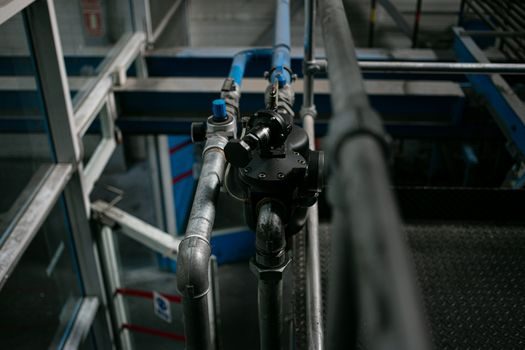
Maintenance (M) in the USPS TCO formula is "costs to maintain the product or support the service" [S2], and for an eye wash station this line item is the structural TCO driver, not purchase price. ANSI/ISEA Z358.1-2014 codifies a weekly flush activation, an annual inspection of valve, flow, and tepid-water delivery, and a formal recordkeeping trail. Across a 10-year service life, that is 520 weekly flushes plus 10 annual inspections per unit.
Industry practitioner guidance consistently flags that water-quality damage (sediment clogging the aerator, scale on the TMV, biological growth in stagnant lines) is the leading maintenance trigger, and that neglecting the weekly flush is the leading cause of an ANSI-citation during an OSHA 29 CFR 1910.151(c) walk-through. A common 5-year remediation event — TMV cartridge replacement plus strainer rebuild plus bowl/piping disinfection — runs in the $150-$400 parts band, which is comparable to the original purchase price of a bare galvanized unit. Maintenance, not capital, sets the long-run TCO [S1][S2].
Cost Element 4: Training and the Hidden Adoption Cost
Training (T) in the TCO formula is "costs to train users" [S2], and for an eye wash station this line item is widely underestimated by procurement. A unit that is installed but never demonstrated to nearby employees delivers zero first-15-second response, which is the entire ANSI compliance point — a "Worker must be able to reach an eye wash within 10 seconds of corrosive exposure" rule that is, like all Z358.1 thresholds, a strict spec the engineering team must defend in writing.
The training line item includes initial onboarding (typically 15-30 minutes per employee, including hands-on activation), annual refresher drills, signage review, and a buddy-system protocol so the injured worker does not have to find the unit alone. For a 200-person facility, this T-line is one- to two-day labor of a safety officer, plus the recurring annual refresher. It is small per year but real, and it is the line that EH&S auditors and ANSI field inspectors will actually verify [S1][S2].
Cost Element 5: Disposal, End-of-Life, and Salvage
The TCO formula at USPS closes with W (withdrawal/disposal) and E (environmental handling) minus S (salvage value), making the disposal tail non-zero rather than a free write-off [S2]. For a plumbed eye wash station, W+E covers: water-line decommissioning, backflow preventer removal, certified disposal of the thermostatic mix valve's lead-free brass if a lead-bearing legacy unit is being retired, and refrigerant or glycol reclaim if a heated cabinet is involved.
The net W+E−S for a single 10-year cycle typically lands in the low double digits to low hundreds of dollars depending on whether asbestos-era insulation, lead solder, or refrigerant recovery is present. It is the smallest T-line but the most likely to be missed by a purchase-only budget, which is exactly the failure mode the USPS TCO model is designed to flag [S2].
Options Comparison: 3 Common Eye Wash Station Types vs. 4 TCO Criteria
The three ANSI-compliant options a 2026 buyer is most likely to compare are: (1) a plumbed galvanized wall-mount eye/face wash with hand-held drench hose, (2) a stainless plumbed floor-pedestal eye/face wash with thermostatic mixing, and (3) a self-contained / portable gravity-fed eye wash with sterile buffered solution, often used for field or unmanned sites. Lining them up against the four decision criteria that move TCO:
· Purchase price: option 1 (lowest) < option 2 (mid) < option 3 (highest per gallon of capacity).<br/>· Maintenance burden: option 1 is moderate (strainer, valve), option 2 is the highest (TMV cartridge + freeze-protection service), option 3 is unique — solution cartridges expire on a 6-month to 2-year cycle and must be replaced regardless of use, which is a known TCO pitfall.<br/>· Training / response risk: option 1 and 2 require plumbed familiarity, while option 3 trades plumbing risk for an absolute cartridge-expiry hard stop.<br/>· Disposal / end-of-life: option 1 and 2 generate standard plumbing decommissioning costs; option 3 generates recurring solution-cartridge waste (buffered saline, often with bacteriostatic additive) that must be handled as non-hazardous-but-controlled waste per local sewer rules.
For indoor, plumbed, code-driven sites (chemical plants, semiconductor wet benches, university labs) option 2 is the lowest 10-year TCO despite the highest purchase price, because its maintenance profile is well-understood and its Z358.1 conformance is unambiguous. For unmanned or remote sites, option 3 is often chosen for its independence from freeze-risk and from a building water system. A pressure transmitter or flow meter tied into the same safety skid can carry the ANSI-mandated weekly-flow verification into the plant's DCS, but the eye wash station spec itself is mechanical/electrical, not instrumentation, so the link is a documentation convenience rather than a spec dependency.
Total Cost of Ownership Stack — A 10-Year Example

Running the USPS TCO formula TCO = P + Present Value of (O + T + M + W + E − S) on a single indoor stainless plumbed eye/face wash unit in a temperate-zone plant, the working 10-year allocation is roughly: P ~25-35%, O ~10-15% (water + heat-trace), T ~5% (onboarding + annual refresher), M ~45-55% (weekly flush labor + 2 major TMV/strainer services), and W+E−S ~5-10% [S2]. The same allocation for a self-contained portable unit flips the stack: P drops below 20% because there is no plumbing, but the W+E line swells because solution-cartridge replacement and disposal repeat on a 6-24 month cycle across the 10 years.
This is the structural reason CoSN's TCO framing, originally written for K-12 EdTech budgeting, applies cleanly to safety equipment: the purchase price is the visible line, the lifecycle is the bill [S1]. For a multi-unit facility, the leverage point is rarely "buy a cheaper unit" — it is "buy the unit with the lowest M-line, and invest the savings in a weekly-flush CMMS record so labor time falls from 15 minutes per visit to under 5." A weather station class of environmental sensor is sometimes co-located with outdoor freeze-protected eye wash to drive the heat-trace thermostat more cleanly, but again this is an integration choice, not a spec requirement of the eye wash itself.
Trackable Signals: What to Watch Through Q3 2026
Two signals will move eye wash station TCO between now and the next procurement cycle. First, any 2026 revision of ANSI/ISEA Z358.1 — the current 2014 edition is the live conformance reference and the 5-year review window puts a refresh in scope; readers should verify which edition is in force on their project before locking the spec, since newer editions typically tighten the tepid-water window and the weekly-activation recordkeeping trail. Second, the 2026 stainless-steel and lead-free brass spot market continues to swing the P-line of option 2, so a multi-site rollout should re-quote the unit cost within 30 days of PO rather than locking a budget figure 6 months out. [S2]
See also our earlier report, Concrete Batching Plant Types: Stationary, Mobile, Compact Spec Map.