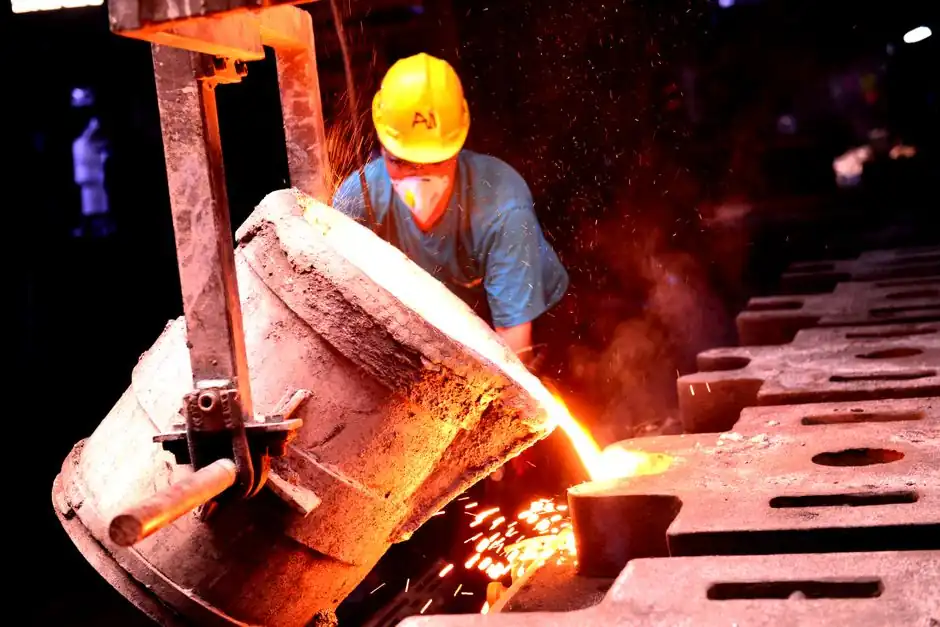
The ferroalloy complex remains a steel-derivative play: global market value was US$50.06 billion in 2023, and ResearchAndMarkets projects US$71.05 billion by 2029 at a 6.01% CAGR (2024-2029) [S2]. Spherical Insights tracks a parallel series at US$52.7 billion in 2023 growing to US$98.10 billion by 2033, a 6.40% CAGR, with North America as the fastest-growing region [S4].
Product split is dominated by four grades: ferrochrome, ferromanganese, ferro silico manganese, and ferrosilicon, which together define the bulk of physical trading flows in 2026 [S4]. On October 12, 2026, FerroAlloyNet's daily transaction log showed active LC ferrochrome and silicon-manganese deals in Inner Mongolia, manganese-ore trades, and a zirconium-sand report out of Jiangxi, confirming that Chinese spot liquidity is intact across all three core grades [S5].
Ferrochrome: capacity is concentrated, India holds the export slot
Berry Alloys Ltd runs 320,000 tons of annual ferroalloy capacity and claims 9% of the Indian market, supplying ferro manganese, silico manganese, ferro silicon and ferro chrome grades [S3]. Mortex Group exports HC FeCr at 60% min and 65% min, plus LC FeCr 60% and 65% min, from a base that moves roughly 400,000 MT of bulk alloys a year to 60+ countries [S3].
Indiano Group has commercialised a thermite-process route that delivers ultra-low carbon ferro chrome with very low phosphorus and very low titanium, a chemistry positioned for stainless-steel mills that need tighter residuals than standard LC FeCr [S3]. LC ferrochrome transactions cleared the FerroAlloyNet tape on October 10, 2026 in Inner Mongolia, evidence that the low-carbon grade still trades actively at the China spot hub [S5].
Ferromanganese and silicon-manganese: HC, MC and SiMn grade stack
Indian exporters anchor the standard grade stack: HC FeMn at 75% min, MC FeMn at 78% and 80% min, and SiMn at 60/65/70 min are the workhorse bulk-alloy specs shipped from India to global mills [S3]. Mortex alone turns over approximately 400,000 MT of these manganese-bearing bulk alloys per year [S3].
FerroAlloyNet's spot log for October 10, 2026 includes a silicon-manganese transaction report, keeping SiMn liquidity aligned with the LC FeCr tape on the same day [S5]. Bihar Foundry & Castings Limited (BFCL) operates 120,000 MTPA of ferroalloy capacity alongside 500,000 MTPA of sponge iron and 150,000 MTPA of MS billets from Jharkhand, illustrating how Indian integrated steel plants couple ferroalloy output with downstream steelmaking [S3].
Ferrosilicon: a 150,000 MTPA capacity addition lands in 2026
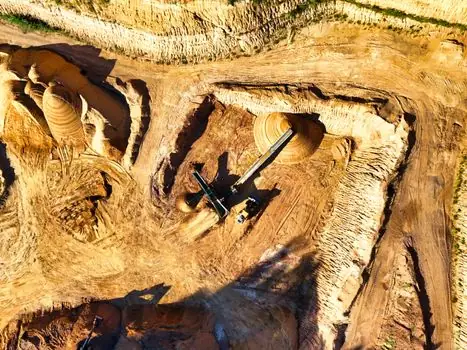
Carbon Resources is commissioning two 75,000 MTPA FeSi plants in Bhutan through joint ventures D. V. Ferro Alloys and B. V. Ferro Alloys, adding 150,000 MTPA of ferro silicon capacity with both facilities targeted for end-2026 start-up, which the company says will make it the largest FeSi producer in the Indian subcontinent [S3]. The capacity is sized against a subcontinent that today imports a meaningful share of its FeSi needs.
Mortex also runs a 75% min HC FeMn line in parallel to its SiMn book [S3]. With global FeSi demand driven largely by deoxidation in carbon steel, silicon-steel and magnesium reduction (the Pidgeon process), a 150,000 MTPA addition is material for spot balance, though the ramp depends on Bhutan hydro-power availability, an external variable outside the producer's control.
Standards, applications and chemistry by grade
Ferrochrome, ferromanganese and ferrosilicon each serve distinct metallurgical functions: FeCr supplies chromium for stainless and tool steels, FeMn supplies manganese as a deoxidizer and sulphur-fixer, and FeSi is used for deoxidation and as a silicon source in silicon-steel and magnesium production [S4]. Spherical Insights' segmentation by application covers carbon and low-alloy steel, stainless steel, alloy steel, cast iron, and other uses, the same five-bucket split that defines merchant ferroalloy demand globally [S2].
Key spec markers seen on 2026 commercial offers: HC FeCr 60% min Cr, LC FeCr 60% min Cr with controlled C, HC FeMn 75% min Mn, MC FeMn 78-80% min Mn, SiMn 60/65/70 min Mn+Si, and FeSi grades (Berry Alloys and Carbon Resources both reference the standard FeSi grade stack) [S3]. Mortex's grade-by-grade disclosures match the standard merchant-quality spec ranges that procurement teams benchmark against.
Regional supply: Asia-Pacific dominance, North America accelerating
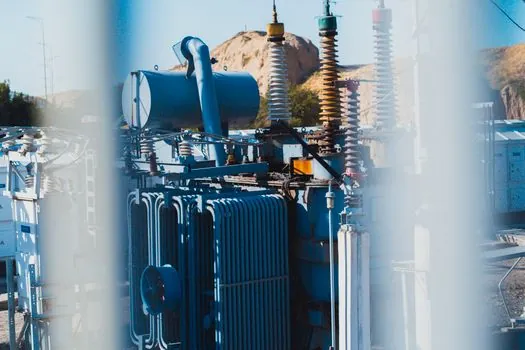
Asia-Pacific is the largest regional ferroalloy market, driven by Chinese and Indian steel output, low ferroalloy production labour cost, and government infrastructure support across India, South Korea and China [S2]. North America is the fastest-growing region in the 2023-2033 forecast window on the back of reshored steel capacity and downstream EV/stainless demand [S4].
The market is described as fragmented, with a high concentration of producers in India and China, and high capital and energy intensity that keeps new entrants out [S2]. Major players named in the 2026 vendor set include ArcelorMittal, Brahm Group, China Minmetals, Glencore, Gulf Ferro Alloys (SABAYEK), Jindal Group, Nikopol Ferroalloy Plant, OM Holdings, SC Feral, Chandrapur Ferro Alloy Plant (SAIL), Samancore Chrome and Tata Steel [S4].
Trade friction and policy overhang on Chinese exports
Two 2026 trade-policy items are reshaping non-Chinese sourcing: EU anti-dumping duties on Chinese titanium dioxide (relevant for the Ti-grade FeCr chain), and the US-initiated fourth antidumping sunset review referenced on FerroAlloyNet's China policy tape [S5]. For buyers routing FeSi through third countries, both actions can shift the delivered cost by 5-15% depending on the HS code and country of origin declaration.
India has stated a target to lift steel capacity to 300 million tonnes by 2030, a policy line that flows directly into incremental demand for FeMn, SiMn and FeSi [S5]. The combination of Indian capacity additions (Berry Alloys, Carbon Resources, BFCL) and the Indian capacity target sets up a structurally tighter Asian bulk-alloy balance into 2027.
Use cases, failure modes and what to watch
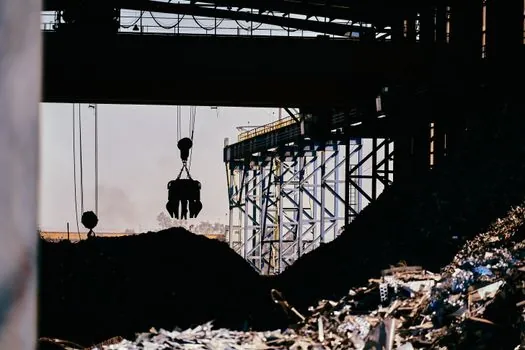
Procurement teams typically split ferroalloy buying by steel family: stainless mills anchor on FeCr (with LC FeCr for tight residual specs), long-product and rebar mills anchor on FeMn and SiMn for deoxidation and sulphur control, and silicon-steel and magnesium producers anchor on FeSi [S4]. Berry Alloys explicitly targets all four ferroalloy families from one Indian site, the same single-site multi-grade model that BFCL uses to balance ferroalloy, sponge iron and billet output [S3].
Key failure modes buyers should price in: FeSi supply tightness whenever Chinese silicon-metal output falls (silicon metal competes with the same furnace capacity), FeCr residual drift on LC grades that the thermite process at Indiano is designed to eliminate, and FeMn/SiMn freight premium spikes out of India during the April-June pre-monsoon export window. Two trackable signals for the rest of 2026: the Carbon Resources Bhutan commissioning at year-end and the next FerroAlloyNet monthly transaction report on Inner Mongolia LC FeCr spot volumes.