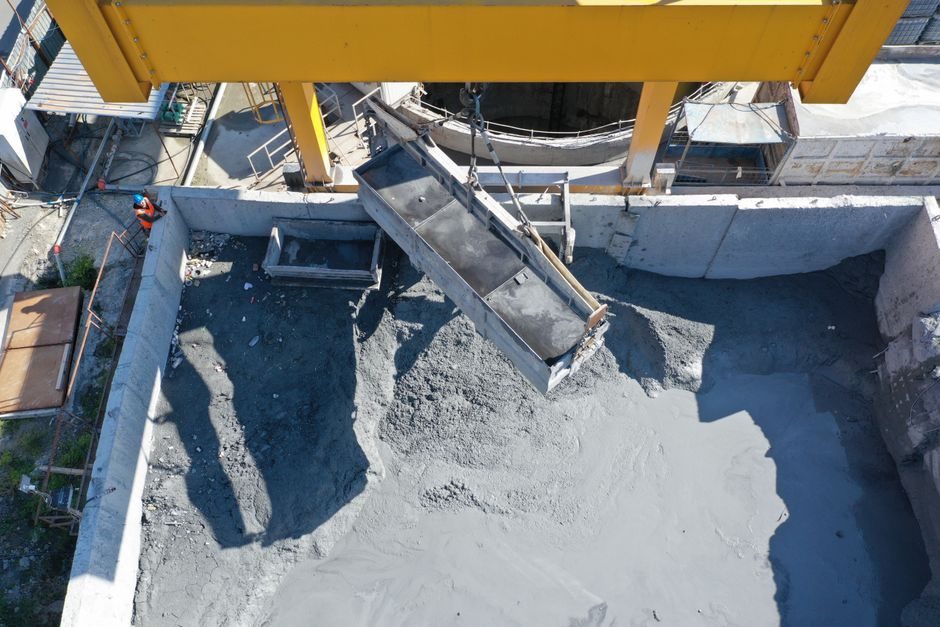
Type Segmentation: Atomised vs Milled FeSi and Silicon Content Bands
Ferrosilicon is commercially classified by silicon content ranging from 15% to 90%, with FeSi 75 (nominal 75% Si) representing the workhorse grade for steelmaking deoxidation and FeSi 45 / FeSi 65 serving lower-silicon inoculation duty in cast iron [S3].
Two physical forms drive the end-use split: atomised ferrosilicon is specified where controlled particle size and rapid dissolution in molten metal are required, while milled ferrosilicon serves dense-media bath applications in mineral processing and heavy-media separation circuits [S3].
Atomised grades command a price premium of 8-15% over milled equivalents in 2026 spot pricing, driven by additional gas-atomisation capex and tighter particle-size distribution tolerances, with typical cut points landing at 50 µm, 75 µm, and 150 µm grades for magnesium reduction and welding electrode coating [S3].
Application Split: Deoxidizer vs Inoculant Duty
Deoxidizer duty in carbon, alloy, and stainless steel accounts for the largest volume share of 2026 ferrosilicon consumption, with stainless steel alone representing the leading end-use segment due to chromium-grade melt shop requirements [S1][S3].
Inoculant application in cast iron represents the second pillar, where FeSi 75 and calcium-silicon variants control graphite morphology in ductile and grey iron foundries, with typical addition rates of 0.3-0.8% by melt weight in late-stream ladle inoculation [S3].
Magnesium production via the Pidgeon process is the third major consumption channel, using FeSi 75 as a silicon reductant in retort furnaces, with China-based producers operating the majority of global capacity and supplying both domestic magnesium ingot and export volumes, as documented in the magnesium ingot supply chain 2026 reference [S1][S3].
Regional Outlook: Asia-Pacific Lead, Europe Demand Floor

Asia-Pacific holds the dominant 2026 regional share, anchored by Chinese steel output and the cluster of submerged-arc furnace smelters in Inner Mongolia, Ningxia, and Qinghai provinces [S1].
Europe and North America represent mature, stable-demand regions with consumption tied to stainless flat product output, electric-arc-furnace minimill capacity, and ductile iron foundry throughput for automotive castings [S1][S3].
MarketsandMarkets segments ferrosilicon by region across Asia-Pacific, Europe, North America, and RoW, with the Asia-Pacific block projected to grow at the fastest regional CAGR through 2028 on the back of Indian and Southeast Asian infrastructure steel demand [S3].
Cost Stack and Sourcing Constraints in 2026
The 2026 ferrosilicon cost stack is dominated by quartzite feedstock, metallurgical coke, iron scrap or mill scale, and electricity, with submerged-arc furnace smelters drawing 8,000-9,000 kWh per tonne of FeSi 75 at typical operating loads [S3].
Stringent environmental regulations, particularly EPA emissions standards in the United States and equivalent EU industrial emissions directives, impose capex burdens on smelter upgrades including baghouse filtration, waste-heat recovery, and CO₂ capture retrofits on existing furnace fleets [S3].
Raw material cost volatility is flagged as a challenge to ferro silicon market growth, while the broader ferroalloys market context shows a global ferroalloys market value of USD 50.06 billion as referenced in early 2026 [S1][S3].
Adjacent Alloy and Steel Demand Drivers

Vanadium-bearing and molybdenum-alloyed steel specifications create cross-demand signals for ferrosilicon as the base deoxidizer charge, with vanadium flow battery and high-strength linepipe demand tracked separately in the vanadium industry 2026 spec map [S1][S3].
Silica fume, a by-product of ferrosilicon and silicon metal smelting, parallels FeSi supply dynamics and is specified in high-performance concrete and refractory applications, with the silica fume market covered in detail through 2035 [S7].
Foundry consolidation in Europe and North America has tightened long-term contract pricing for inoculant-grade FeSi, while Chinese merchant supply continues to dominate spot and containerised export channels into the Middle East, Turkey, and South America, per Research and Markets regional commentary [S1].
Forecast Comparison Across Published 2026 Estimates
Research and Markets' 2026 base value of USD 11.2 billion, growing to USD 15.4 billion by 2034, sits at the upper end of published forecasts, with the same publisher's earlier 2025-2032 study projecting a USD 16.1 billion opportunity window across the broader ferro-silicon value chain [S1].
MarketsandMarkets' earlier 2023 baseline of USD 10.9 billion growing to USD 12.9 billion by 2028 implies a 3.4% CAGR, a more conservative trajectory reflecting pre-2024 stainless melt rate assumptions and tighter Chinese output [S3].
Grand View Research's 2024-2030 segment forecast structures the market by deoxidizer, inoculants, and end-use industries including carbon and alloy steel, stainless steel, electric steel, and cast iron, with the stainless steel column carrying the highest 2026 share by volume [S9].
Selection Guidance for Procurement and Process Engineers

Specifying engineers should match FeSi grade to duty: FeSi 75 for carbon and stainless steel deoxidation at 1.5-3.0 kg per tonne of liquid steel, FeSi 45 or FeSi 65 for grey iron inoculation, and atomised FeSi 75 for magnesium reduction retorts requiring 75 µm top-size feed [S1][S3].
Particle size, Al and Ca trace limits, and C residue content are the three most contested acceptance criteria in 2026 procurement specifications, with European stainless mills typically demanding Al below 1.5% and Ca below 0.6% in FeSi 75 spot tenders.
Verification points to track: Research and Markets' 2026-2034 segment update, MarketsandMarkets' next refresh of the ferro-silicon 6106531 study, and quarterly European ferroalloys benchmark publications, with the rare earth magnesium ferrosilicon alloy sub-segment tracked separately through 2030 in Research and Markets' November 2025 release [S1].
Spec-level background on the components involved: pressure transmitter, flow meter, and industrial valve.
Background reading: Inclinometer Price and Cost Guide 2026: Sensors, Modules, and Handhelds.