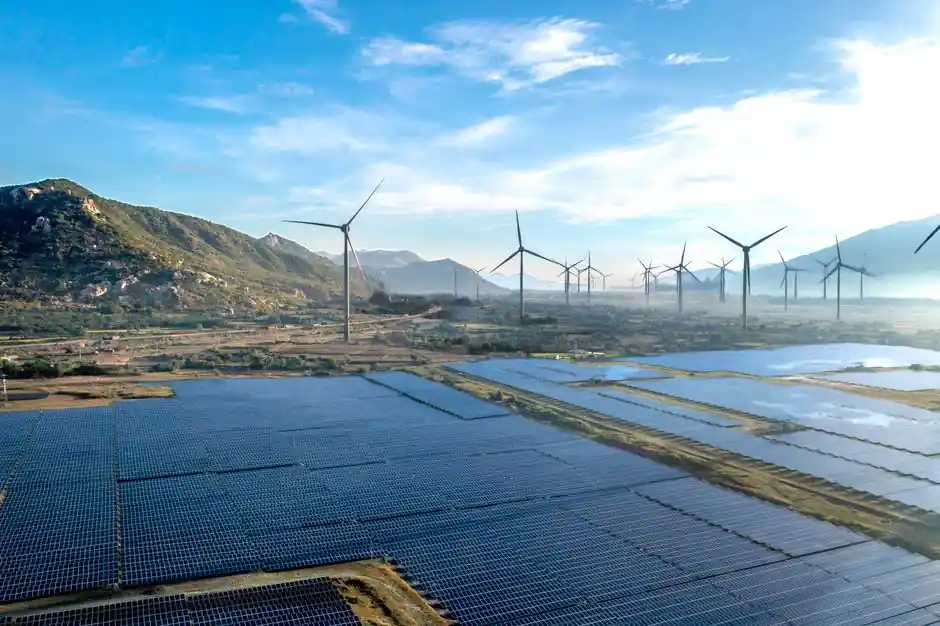
The global fuel cell vehicle market was valued at $3.7B in 2025, with Grand View Research sizing the 2026-2033 outlook across passenger cars, light commercial vehicles, and heavy commercial vehicles in North America, Europe, Asia Pacific, and the Middle East and Africa [S1].
Stack chemistry is consolidating around polymer electrolyte membrane (PEMFC) for light-duty applications, with peer-reviewed work showing PEMFC remains the workhorse for automotive duty cycles, hybridized with a high-voltage battery and electric drive to manage load transients [S3].
PEMFC operating envelope and stack efficiency
PEMFC stack efficiency is governed by gas management, with anode recirculation strategies consistently outperforming purge-and-bleed schemes in laboratory cells on hydrogen utilization at fixed current density [S3]. Stack-level thermal and water management are the binding constraints: published PEMFC models show coolant flow-field geometry and serpentine channel design directly affect temperature uniformity and membrane hydration, which in turn cap continuous power density [S3]. For a process engineer specifying auxiliary balance-of-plant, pressure transmitters on the hydrogen and cathode air circuits, flow meters on anode recirculation, and industrial valves for purge and isolation are the standard instrumentation trio. Hybrid topologies (fuel cell plus battery plus ultracapacitor) use rule-based energy management to keep the stack in its high-efficiency band, with simulation results showing measurable gains in hydrogen consumption over a drive cycle [S3].
Vehicle-level performance benchmarks from active programmes
BMW's published iX5 Hydrogen specification is 750 km WLTP range, sub-five-minute refuelling, and full xDrive versatility, with the fuel cell, hydrogen supply, air supply, control units, and cooling subsystems treated as one integrated package rather than a stand-alone stack [S2]. The vehicle carries a high-voltage battery sized to absorb regenerative braking peaks and supply transient power above the stack's steady rating, a topology documented in PEMFC hybrid energy-management literature [S3]. Refuelling throughput (sub-five-minute targets) sets the upstream flow meter and dispenser accuracy class for any hydrogen station spec, and station economics scale with compressor and storage capacity rather than dispenser count [S3]. BMW's programme is now 47 years deep in hydrogen technology and over a decade in fuel cell stack development, with the first BMW hydrogen vehicle (the 535iA) running on a first-generation Toyota stack in 2014 [S2].
Comparison: light-duty, heavy-duty, and stationary demand profiles
Demand profiles diverge sharply by duty cycle. Light-duty FCEVs (passenger cars, LCVs) target consumer range and refuelling parity, which is why BMW, Toyota, and Hyundai focus on 700+ km WLTP range, sub-five-minute refuelling, and -30°C cold-start capability [S2]. Heavy-duty trucks and buses prioritize continuous-load efficiency and high-throughput refuelling, which is where PEMFC's part-load efficiency advantage over diesel matters; Toyota's Mirai programme is the reference data set for automotive duty-cycle stack ageing [S3]. Stationary and backup power is a separate sub-market with relaxed weight and volume budgets but stricter durability targets (40,000+ hours), and it is where UK-based Intelligent Energy operates with the IE-SOAR product family for drone and aerospace derivatives [S4]. Across all three segments the same BOP disciplines apply: precise pressure transmitter drift on the hydrogen circuit, controlled flow meter accuracy on the cathode, and reliable industrial valve cycling on purge and isolation.
Standards, conferences, and trackable signals through 2026
Stationary PEMFC durability research cites operating lifetimes of 40,000-80,000 hours at controlled load, against a 5,000-8,000 hour target for light-duty automotive stacks, with membrane thinning and catalyst dissolution as the primary end-of-life mechanisms [S3]. Two 2026 events anchor the North American calendar: the 4th Annual Hydrogen Fuel Cells USA conference runs 1 August to 30 November 2026 in Anaheim, CA [S5], and the Hydrogen & Fuel Cell Seminar marks almost fifty years as the longest-running North American hydrogen sector conference and exposition [S6]. A lookback on the 2020-2025 hydrogen fuel cell market exists from IndustryArc, giving a baseline against which the 2026-2030 forecast can be read [S7]. Cross-sector auxiliary suppliers are also tracking the ramp: OEM directories for adjacent process equipment, such as the 2026 hydraulic accumulator supplier map, illustrate how process-component supply chains are being audited for hydrogen-station BOP demand.
A complementary view of adjacent powertrain transitions is in this 2026 forklift selection spec and powertrain map, where PEMFC and lithium-battery duty cycles overlap in warehouse and port logistics.