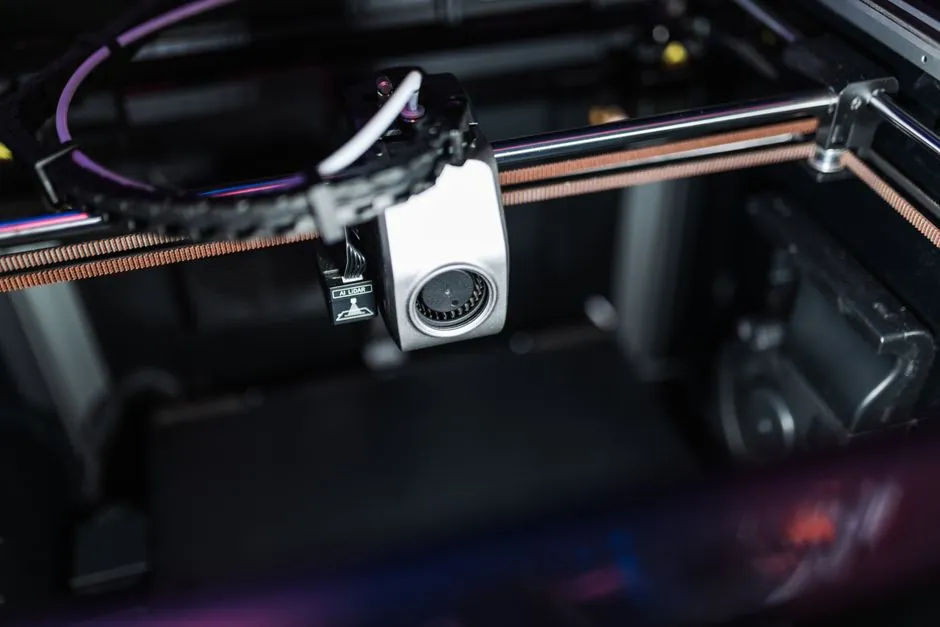
Global additive manufacturing (AM) market value is forecast to reach $35,244.3M by 2026, growing at a 19.7% CAGR over 2021-2026, driven by automotive, aerospace, and medical end-use uptake [S1]. Adjacent plastic-fabrication demand for additive masterbatches is projected at $2.87Bn by 2030, expanding from $2.15Bn in 2025 at a 5.97% CAGR [S2].
Process families and the standards that bound them
AM processes are formally classified under VDI 3404:2014, which defines the basic terminology, processes, and uses across prototype, tooling, and end-part production [S5]. For metal powder bed fusion of beam-melting alloys, VDI 3405 Blatt 2.3:2018 specifies the powder-feedstock requirements placed on powder manufacturers, purchasers, and operators, and is the practical reference for vendors quoting laser powder bed fusion (LPBF) and electron beam melting (EBM) runs [S5].
Material-spec integrity is the binding gate across process families. Buyers evaluating additive manufacturing material grades should map VDI 3405 powder requirements against the downstream process window: LPBF typically runs 20-60 micron layer thickness on 316L, Ti-6Al-4V, and Inconel 718 powders, while binder jetting trades surface finish for higher build rate, and directed energy deposition handles large aerospace structures with coarser feedstock. Standards discipline is the difference between a part that holds a 0.1 mm tolerance and one that fails leak or fatigue gates.
End-use demand split: where the volume is going
Packaging leads the additive masterbatch market across 2025-2030 on e-commerce and food-and-beverage pull, while flame retardants dominate by type on construction, automotive, and packaging fire-safety compliance [S2]. PP is the largest carrier resin segment by share due to compatibility with antimicrobial, antioxidant, UV-stabilizer, and nucleating-agent additive packages [S2].
Healthcare is the highest-momentum AM vertical. A 2025-2030 outlook for China Healthcare Additive Manufacturing covers 2019-2022 historical product and service sales, 2023-2024 projections, and 2025-2030 forecasts, reflecting how orthopaedic implants, dental frameworks, and patient-specific surgical guides are now standard hospital procurement categories rather than one-off pilots [S3]. The COVID-19 episode, where 3D-printed nasopharyngeal swabs, face shields, and ventilator valves filled supply gaps, is cited as the inflection that put AM on hospital procurement short lists [S1].
Geographic demand bands and the Asia-Pacific lead

Asia-Pacific is forecast as the fastest-growing additive masterbatch region at a 6.68% CAGR through 2030, lifted by packaging, construction, and manufacturing in China, India, and Southeast Asia, plus e-commerce logistics expansion [S2]. This APAC growth pattern is consistent with the IDTechEx 2020-2030 outlook, which values the 3D printing market at $45Bn by 2030 and identifies APAC manufacturing capacity as the swing variable [S4].
For context on the OEM side, the additive manufacturing OEM market share 2026 spec bands and process-family map lays out how polymer and metal system builders are positioning against that demand curve, and the nickel alloy selection for aerospace 2026 grade map and spec chain is the parallel reference for the Inconel 718 and 625 powders feeding aerospace AM growth.
Selection criteria: 4 gates buyers should run on any AM bid
Process-to-fit: match VDI 3404 process class (PBF, DED, binder jetting, material extrusion, vat photopolymerization) to the geometry, lot size, and tolerance window. A 0.05 mm tolerance and 10,000-piece run rules out binder jetting, while a 5 kg aerospace bracket rules out material extrusion. [S1]
Material traceability: require a VDI 3405 Blatt 2.3 powder certificate with chemistry, particle size distribution, flow rate, and apparent density. Without that data sheet the AM process window cannot be qualified.
Post-processing capacity: confirm in-house or contracted heat treatment, HIP, and surface finishing. Ti-6Al-4V LPBF parts typically require HIP at 900-950 deg C, 100-200 MPa, for 2-4 hours to meet aerospace fatigue specs, and that step dominates lead time.
Standards and certification: hold vendors to ISO/ASTM 52900 series terminology, ASTM F3301 for post-processing, and any sector-specific cert (ISO 13485 for medical, AS9100 for aerospace, IATF 16949 for automotive). Process control without a named cert is not auditable.
Adjacent process tooling: how AM fits next to CNC and injection molding
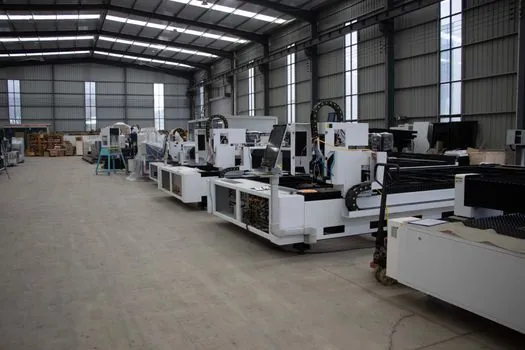
AM does not replace CNC or injection molding across the board; it complements them in the prototyping and low-volume tooling segments where tooling cost dominates unit cost. For high-volume polymer parts above 50,000 units/year, injection molding keeps a unit-cost edge; AM wins at lot sizes under 1,000 and on geometries that need undercuts, internal lattices, or part consolidation that would otherwise require multi-axis CNC or assembly. [S1]
The same plastics value chain drives both AM filament production and masterbatch demand: PP-based masterbatches feed the carrier resin used in material extrusion and SLS powder production, so the $2.87Bn 2030 masterbatch projection is a leading indicator for AM polymer feedstock tightness [S2]. Buyers specifying pressure transmitter enclosures or industrial valve bodies in 3D-printed metal should lock powder lot certification alongside mechanical testing, since HIP-induced distortion shifts the pressure sensor calibration window.
Limitations and failure modes to plan for
Anisotropy remains the dominant mechanical failure mode: LPBF vertical-build tensile strength typically runs 80-95% of horizontal-build values, with elongation at break often halved. Buyers should require test coupons in the same orientation as the part and the same build plate position, not generic material datasheet values.
Residual stress and distortion on LPBF require build simulation, support-structure design, and post-build stress relief. Skipping stress relief at 600-700 deg C for steel or 650-700 deg C for Ti-6Al-4V before machining is a common cause of out-of-tolerance first articles. Powder reuse degrades: 316L powder can typically be reused for 5-10 cycles before oxygen pickup and PSD drift push it out of VDI 3405 Blatt 2.3 spec.
Supply-side risk to watch: metal powder atomization capacity is concentrated, and APAC's 6.68% masterbatch CAGR pulls parallel demand for compounding lines, which can bottleneck both polymer and metal AM feedstock in tight quarters [S2].
Sourcing and standards checklist for a 2026-2030 AM rollout

Lock the VDI 3404 process class and VDI 3405 Blatt 2.3 powder spec in the purchase order; ISO/ASTM 52900 series terminology removes ambiguity on what was actually quoted. For each part, hold the vendor to a First Article Inspection including density (Archimedes or CT), surface roughness (Ra), and tensile testing on oriented coupons. For medical, the China Healthcare Additive Manufacturing 2025-2030 outlook lists the regulatory checkpoints buyers should expect regional vendors to clear [S3].
Trackable signals through 2030: the IDTechEx $45Bn 2030 3D-printing baseline and the additive masterbatch climb to $2.87Bn are the two cross-checkable demand anchors; German manufacturer smart-fab spend through 2025 and the UK National Strategy 2018-2025 GVA target are the policy anchors [S1][S2][S4]. For shop-floor control hardware pairing AM with conventional automation, the PLC and flow-meter references cover the process instrumentation side of any new build.