The 2026 additive manufacturing competitive landscape is being shaped by a published multi-stakeholder standards roadmap, a defined 2026 show calendar and a clearly tiered peer-review signal across two leading journals.
Buyers evaluating additive manufacturing material feedstocks, software stacks and service bureaus should anchor decisions on the AMSC Standardization Roadmap Version 3.0 (published July 2023) [S1], the Formnext Frankfurt exhibition slot of 17-20 November 2026 [S3], and the diverging impact factors of the field's two flagship journals, Additive Manufacturing at 11.1 and 3D Printing and Additive Manufacturing at 2.1 [S8][S9].
Standards backbone: the AMSC Standardization Roadmap Version 3.0
The America Makes and ANSI Additive Manufacturing Standardization Collaborative (AMSC) published Version 3.0 of the Standardization Roadmap for Additive Manufacturing in July 2023, with the document describing both the current and desired future standardization landscape and focusing on industrial market sectors using AM technologies [S1]. Version 3.0 remains the most recent published edition referenced in industry tracking as of 2026, and it is the reference grid buyers should cite in RFPs when they need to map gaps in process, material, post-processing and qualification coverage [S1].
For procurement teams that have to demonstrate due diligence on a metal pressure transmitter bracket printed in Inconel 718 or a polymer flow meter housing, the AMSC roadmap provides the cross-section of ASTM/ISO/SAE work items a qualified supplier is expected to track, rather than acting as a single purchase specification in itself [S1].
Show calendar and venue map for 2026
Formnext Frankfurt is scheduled for 17-20 November 2026, with the four-day event gathering the full AM value chain, from industrial 3D-printing systems (metal, polymer, composite and hybrid machines) through metal powders, high-performance polymers, bio-based feedstocks, software, process monitoring and end-to-end production services [S3]. Confirmed exhibit categories include metal AM (laser powder bed fusion and DED), polymer extrusion and vat photopolymerisation, continuous-fiber reinforcement, large-format and construction-scale printers, and post-processing technologies such as surface finishing and inspection [S3].
Supporting programs at Formnext cover sustainability, digital twins and industry-specific applications in aerospace, automotive, medical and defense, and the platform runs year-round resources including an AM directory, job portal, whitepapers and webinars [S3]. The November slot places Formnext as the primary competitive benchmark for OEM roadmaps, with the Cincinnati-based Additive Manufacturing Conference and Expo at the Duke Energy Convention Center serving the North American audience earlier in the year [S3].
Peer-review signal: a two-tier journal hierarchy

The Elsevier journal Additive Manufacturing (ISSN 2214-8604) reports a 2024-2025 Impact Factor of 11.1, a self-citation rate of 9.0%, a CiteScore of 11.60 and a LetPub composite score of 8.7 from 227 reviewers [S8]. The journal is affiliated with America Makes, the National Additive Manufacturing Innovation Institute, and is indexed with the 2017 volume 13 as the earliest available issue on major Chinese aggregators [S2][S6].
Sister title 3D Printing and Additive Manufacturing (ISSN 2329-7662, E-ISSN 2329-7670) carries a 2024-2025 Impact Factor of 2.1, a five-year IF of 2.9, a JCI of 0.39, a CiteScore of 7.10 and a LetPub score of 6.4 from 64 reviewers, placing it in Q1 for Industrial and Manufacturing Engineering (84/425) and Q2 for Materials Science miscellaneous [S9]. The 5.3x impact-factor gap between the two journals is the clearest quantitative split in the field's peer-review landscape, and it materially affects where suppliers should target high-citation application studies versus faster-turnaround process notes [S8][S9].
Software stack and traceability requirements
Additive manufacturing software in 2026 spans CAD model import, layer-by-layer slicing, simulation, build-preparation and production-management functions, with the SourceForge 2026 software directory listing traceability and nonconformance management as the differentiators most often highlighted by competing platforms [S4]. For buyers tied to ISO 9001 and AS9100 audit trails, the software layer is now the de facto evidence store for powder lot genealogy, machine parameter logs and post-process inspection results, rather than a stand-alone CAD tool [S4].
This software convergence matters for process engineers who also spec industrial PLC hardware on the same line: AM cell controllers increasingly publish OPC UA companion specs so that a pressure sensor reading the build chamber can land in the same time-series store as the laser power trace [S4].
Material and process landscape: feedstocks and machine classes
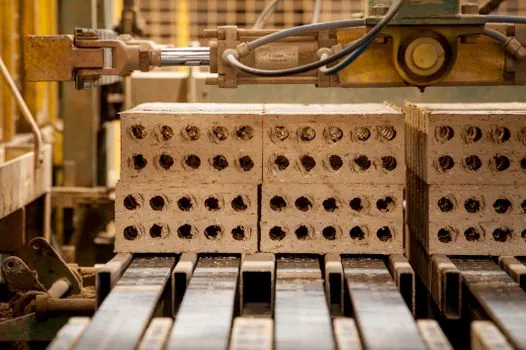
The 2026 material menu covers metal powders (aluminum, titanium, nickel-based superalloys, maraging and stainless steels), high-performance polymers (PEEK, PEKK, PPS, PA-CF), bio-based and recycled feedstocks, photopolymer resins for vat systems, and continuous-fiber reinforced composites, with the 2016 IDTechEx presentation track "Materials For A Changing Additive Manufacturing Landscape" still cited as a baseline taxonomy of how powder, filament, resin and pellet feedstocks map to LPBF, DED, extrusion and vat platforms [S5].
On the machine side the competitive splits sit between laser powder bed fusion (LPBF) for fine-feature metal parts, directed energy deposition (DED) for large-format and repair, polymer extrusion for cost-driven production, vat photopolymerisation for high-resolution polymer parts, and hybrid machines that combine additive and subtractive heads in one envelope [S3]. Buyers writing an industrial valve body in duplex stainless should match the alloy to the process window the supplier actually qualifies, rather than to a generic "metal AM" label.
Selection criteria and competitive comparison
Four decision criteria dominate 2026 supplier and process selection: (1) standards alignment against the AMSC Version 3.0 roadmap, (2) journal-backed evidence depth, where Additive Manufacturing (IF 11.1) sets the bar and 3D Printing and Additive Manufacturing (IF 2.1) handles faster process notes, (3) show-floor presence, with Formnext Frankfurt 17-20 November 2026 as the primary venue and Cincinnati AM Conference as the North American counterpart, and (4) software traceability, where OPC UA integration with plant pressure transmitter and flow meter loops is the differentiator [S1][S3][S4][S8][S9].
Across these four axes the competitive map lines up as follows: standards-led consortia (America Makes/ANSI AMSC) define the playing field [S1]; flagship journals Additive Manufacturing and 3D Printing and Additive Manufacturing separate deep-research vendors from fast-iteration vendors [S8][S9]; Formnext Frankfurt sets the annual technology-release cadence [S3]; and the 2026 software tier sets the data-integrity bar any serious production cell must clear [S4].
Limitations, failure modes and sourcing risk
The AMSC Standardization Roadmap Version 3.0 is a gap-analysis document, not a purchase specification, so a vendor's claim of "roadmap-aligned" should be unpacked into specific ASTM/ISO/SAE work items actually cited in the supplier's PQR package [S1]. Likewise, the journal impact factor of 11.1 for Additive Manufacturing applies to the journal as a whole, not to any individual paper, and a single 2024-2025 IF reading should be averaged with multi-year trends before it is used to gate a supplier [S8].
On the software side, traceability and nonconformance management are flagged as differentiators rather than table stakes, meaning that two competing AM software stacks in the 2026 SourceForge directory may differ sharply on what evidence they actually store per build [S4]. Process engineers specifying AM-produced parts for service on pressure sensor or PLC assemblies should require lot-level powder certificates, machine log export and post-CT inspection data as contractual deliverables, not optional extras.
Trackable signals for the next planning cycle: the next AMSC roadmap revision cycle (Version 3.0 still listed as the current published edition in industry references [S1]), the Formnext Frankfurt 17-20 November 2026 technology releases [S3], and the 2025-2026 Impact Factor refresh for the two flagship journals, where Additive Manufacturing (ISSN 2214-8604) sits at 11.1 and 3D Printing and Additive Manufacturing (ISSN 2329-7662) at 2.1 [S8][S9]. Procurement teams rebuilding an AM supplier shortlist in Q3 2026 should lock those three dates before reissuing an RFP.