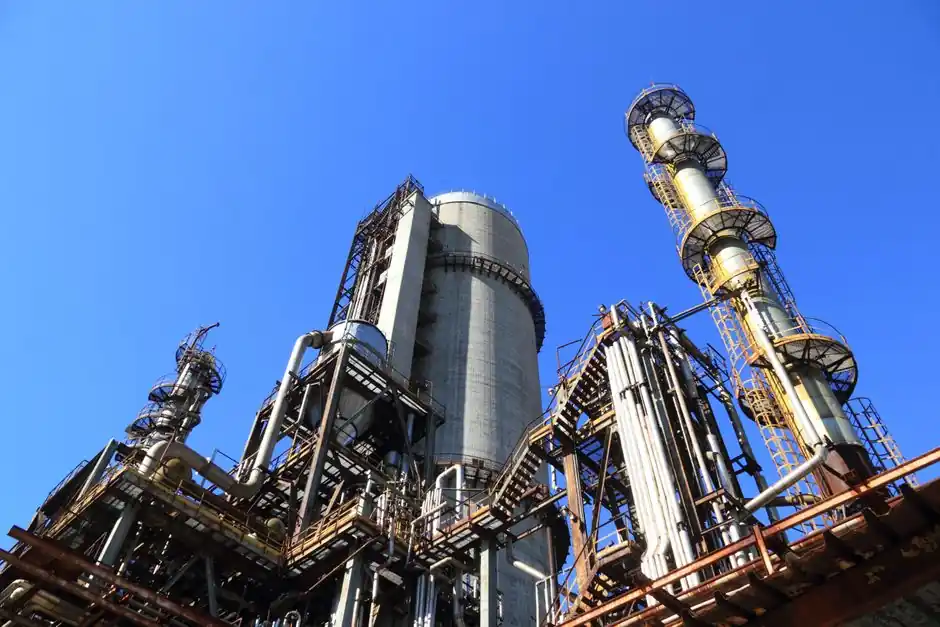
Ferrosilicon (FeSi) and ferro silicon chrome (FeSiCr) sit at the front of every stainless, electrical, and high-strength steel melt, with the global FeSi market valued at USD 12.8 B in 2025 and forecast to reach USD 15.4 B by 2034 at a 2.0% CAGR (2026-2034), while the FeSiCr market was valued at USD 5.8 B in 2025 with a steeper 5.5% CAGR to USD 9.4 B by 2034 [S1][S3].
Both alloys are produced by carbothermic reduction in submerged electric arc furnaces operating above 2,000 °C, and they feed four downstream blocks in parallel: carbon and stainless steelmaking, cast iron inoculation, magnesium and silicon-metal reduction, and welding-electrode coating [S1].
FeSi product grades, Si range, and the role of FeSi 75% in steelmaking
Commercial FeSi spans a silicon range of 15% to 90%, sold mainly as FeSi 45%, FeSi 65%, FeSi 70%, and FeSi 75%, with the FeSi 75% grade described as the most widely consumed grade in global steelmaking operations because it carries enough silicon to deoxidize a full ladle while still being soluble in the iron-carbon melt [S1].
FeSi's three metallurgical jobs, deoxidation, alloying, and inoculation, line up directly with three downstream specs: in liquid steel it strips dissolved O to limit oxide inclusions; in electrical and stainless steels it raises Si to the 1.5-6.5% window for magnetic and corrosion behaviour; and in cast iron it nucleates graphite flakes or spheroids in the ladle or pour stream [S1]. For a process engineer's spec sheet the implication is straightforward: any FeSi certificate needs a Si value, a C ceiling (typically 0.05-0.15% for steel grades), an Al ceiling for fine-grain steel, and a P + S trace, because every one of those elements travels straight into the melt.
For comparison, tool and die steel grades mapped to energy equipment share the same Cr, Mo, V logic but require tighter inclusion control than commodity FeSi users, so high-purity FeSi 75% is the crossover point where foundry and tool-steel buyers overlap.
FeSiCr composition, the High Carbon 52.4% share, and stainless-steel linkage
FeSiCr combines iron, silicon, and chromium into a single ferro alloy used as a deoxidizer, desulfurizer, and alloying element in steelmaking, with its primary outlet being stainless steel production where chromium imparts corrosion resistance and mechanical strength [S3].
The High Carbon grade held the largest single-grade share at 52.4% in 2025, with medium- and low-carbon grades taking the rest, and Asia Pacific commanded 47.3% of global FeSiCr revenue in 2025 thanks to the combined stainless melt shop footprint of China, India, Japan, and South Korea [S3]. A 5.3% year-on-year volume lift in 2025 was attributed to new refineries, LNG terminals, and petrochemical complexes coming online in the Middle East and Southeast Asia, all of which require grade 304/316 stainless for process piping and instrumentation, including pressure transmitter diaphragm housings and flow-meter wetted parts.
The FeSiCr pull is therefore not driven by generic construction demand; it is pulled by the food, pharmaceutical, and LNG sectors, where grade 304/316 stainless is specified for hygienic and sour-service lines, and that demand pattern is the main reason ferro silicon chrome grows at roughly 2.7x the rate of plain FeSi over 2026-2034 [S3].
Upstream raw materials: quartz, metallurgical coke, and chromite concentration risk
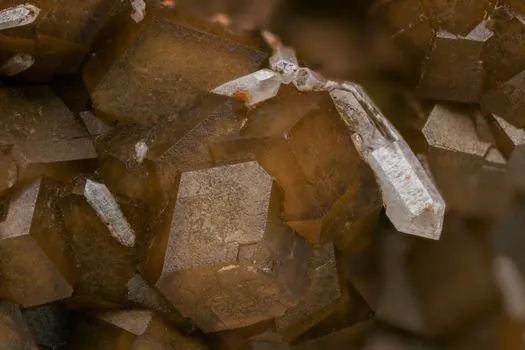
The FeSi reduction train needs quartz or quartzite, a carbon reductant (metallurgical coke, coal, or charcoal), and an iron source (iron scrap or mill scale) charged into a high-power submerged electric arc furnace, so the cost stack is dominated by silica quality, reductant fixed-carbon, and electricity [S1].
Chromite ore is far more concentrated than silica: reserves are heavily skewed to South Africa, Kazakhstan, and India, which creates periodic FeSiCr supply tightness and price premia, and pushes refiners toward vertical integration and energy-efficient smelting upgrades to absorb carbon compliance costs [S3]. For a spec-driven buyer, that means FeSiCr contracts need both a Si and Cr certificate of analysis (typical Si 35-45%, Cr 30-50% depending on grade), plus a documented mill origin to price in chromite risk.
For a parallel look at how metal-grade supply concentration shapes another alloy market, the vanadium supply chain map for 2026 follows the same permitting and price-elasticity logic as chromite, while energy-cost-driven inputs are the same lever operators pull on for both FeSi and FeSiCr furnace fleets.
Downstream block 1: automotive AHSS, electrical steel, and EV motor cores
Automotive demand for high-strength, lightweight, and corrosion-resistant steel drives consistent FeSi consumption in advanced high-strength body panels, structural components, suspension parts, and safety systems, plus silicon-manganese steels for spring and structural applications [S1].
Electrical steel for EV traction motor laminations is the highest-value FeSi downstream outlet, with typical Si content 2.5-3.5% (high-grade non-oriented) and 3.0-3.5% (grain-oriented), a band that FeSi 75% can hit cleanly with the right tap chemistry [S1]. EV unit sales are projected to surpass 30 million annually by 2026, and that is a direct FeSi pull because each motor stator lamination stack feeds off silicon-bearing electrical steel [S3]. Lightweighting rules under Euro 7 and China's NEV emission standards are accelerating chrome-alloyed and high-strength steel adoption, which in turn widens the spec window for both FeSi 75% and FeSiCr [S3].
Process instrumentation on these lines (e.g. ladle metallurgy, continuous casting, and rolling mill stands) typically uses industrial valve assemblies and pressure sensor manifolds that themselves need to be made from 304/316 stainless, closing the loop back to FeSiCr demand.
Downstream block 2: construction, infrastructure, and cast iron inoculation
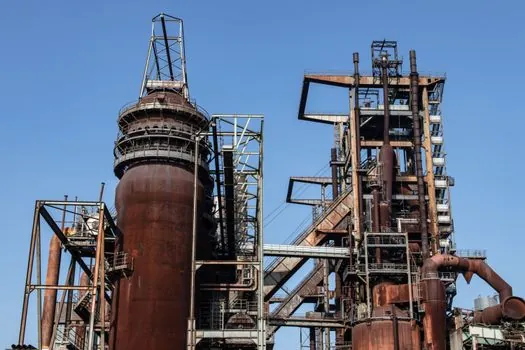
Construction, transportation networks, and urbanization are the second FeSi pillar: alloy steels, reinforcing bar, and cast iron fittings all consume FeSi as a ladle deoxidizer and inoculant, and Asia Pacific is the largest regional FeSi consumer because of its construction tonnage [S1][S2].
A useful parallel is the inline pipeline pump spec map for 2026 builds, where ductile iron and 316 stainless wetted parts both show up and pull from the same FeSi/FeSiCr upstream chain.
Stainless demand is forecast to exceed 80 million metric tons annually by 2032, which keeps FeSiCr as the higher-velocity downstream lever even when FeSi's tonnage remains larger in absolute terms [S3].
Downstream block 3: silicon metal, magnesium reduction, and welding electrodes
Beyond steel, FeSi is a feedstock for silicon metal and magnesium reduction (the Pidgeon and Magnetherm processes), plus a coating component in welding electrodes, and these three outlets absorb a non-trivial share of the higher-Si FeSi grades [S1].
For welding consumables, FeSi powder and FeSi 45% are specified for the deoxidizer and slag-former function in stick-electrode flux coatings, and demand tracks shipbuilding, structural fabrication, and pipeline welding cycles, which is the same demand set the tapered roller bearing vs ball bearing selection map follows in heavy industrial equipment [S1]. Magnesium reduction uses FeSi 75% as the silicon reductant against calcined dolomite in retorts at 1,200-1,400 °C, and is therefore a structural pull on FeSi 75% outside the steel cycle.
Cost stack, environmental compliance, and selection criteria for buyers
Stringent environmental regulations are the binding restraint on FeSi supply growth, with the US EPA enforcing strict emissions and waste disposal rules that require continuous upgrades to dust collection, off-gas cleaning, and slag handling, and the same dynamic applies across other production hubs [S2]. Energy cost is the single biggest OpEx variable, which is why producers are pivoting to energy-efficient smelting and process optimization to preserve margin [S1][S2].
For steelmakers who need Si but not Cr, FeSi 75% remains the default; for stainless and corrosion-resistant grades, FeSiCr (High Carbon for commodity austenitic, Medium/Low Carbon for low-C austenitic and ferritic) is the spec-aligned choice.
Limitations, failure modes, and spec pitfalls
FeSi's failure modes are spec-driven: high Al in FeSi can pin grain growth wrong in electrical steels, high P raises cracking risk in cast iron, and high C contaminates low-carbon stainless and electrical-steel heats, so certificates of analysis must enforce Al, P, S, and C ceilings as line items, not as a footnote [S1][S2].
FeSiCr's main failure mode is grade mismatch: feeding High Carbon FeSiCr into a low-carbon stainless melt drives carbon pickup and breaks the corrosion-resistance case, and the High Carbon grade's 52.4% 2025 share is a reminder that the bulk of global FeSiCr supply is not always the right spec for low-C and electrical-steel applications [S3]. Supply concentration in chromite (South Africa, Kazakhstan, India) is the second failure mode, because any single-origin disruption translates into price premia within 4-8 weeks, so contracts with dual-origin clauses carry a real premium today [S3].
Sourcing signals and what to track next
For plain FeSi, watch for FeSi 75% spot premia versus FeSi 65%, which is the cleanest read on EV electrical-steel and magnesium-reduction demand versus commodity deoxidation; and track whether EPA-equivalent dust and off-gas rules in major hubs tighten further, since that is the lever that pushes FeSi and FeSiCr unit costs up faster than throughput can compensate [S1][S2].