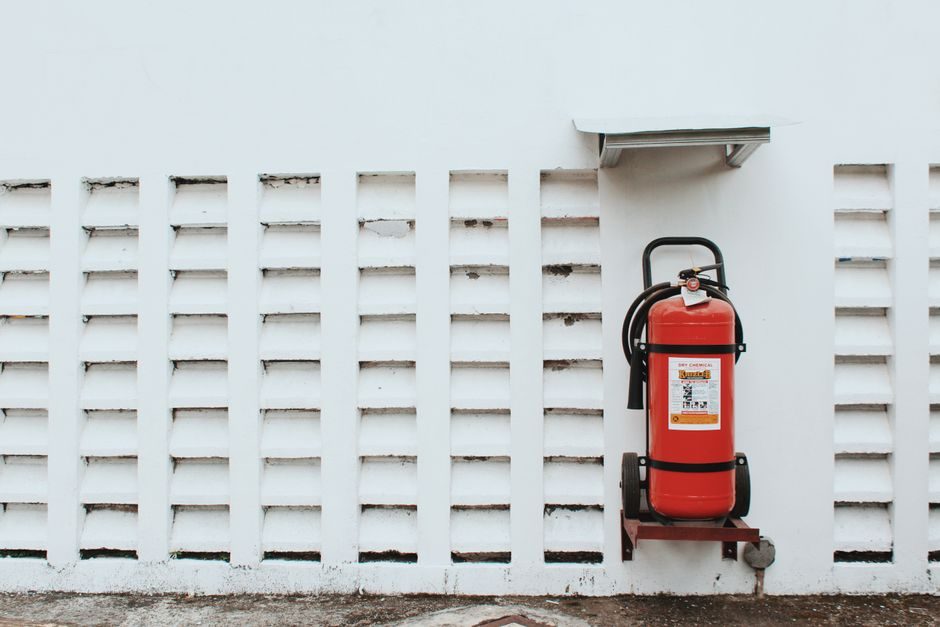
Fiber cement board at 1.2-1.5 g/cm³ density delivers 240 minutes of incombustibility (GB/T9978-1999) and ≥16 MPa bending strength, while a fire alarm control panel is an active 24 V DC detection-signaling appliance — the two are specified on different disciplines of the same building project and almost never compete as substitutes [S1].
This selection map sizes the materials, ratings, integration paths and price points of each, so a specifier, contractor or building-services engineer can tell in under five minutes whether a tender line calls for passive fire-rated cladding or an active addressable life-safety system [S1][S2].
Scope, Material Definition and Core Ratings
Fiber cement board is an autoclaved composite of cement, siliceous/calcareous fillers and cellulose fiber, produced in 4.5-30 mm thicknesses on 1200×2400 mm or 1220×2440 mm sheets, with a polished or 40#-120# sanded surface [S1]. Density sits at 1.2-1.5 g/cm³, water content is held at ≤30%, and swelling ratio is capped at 0.4% under GB/T7019-1997 freeze-thaw cycling [S1]. Fire performance is declared as A-class incombustible under GB8624-1997 and ≥240 minutes under GB/T9978-1999, with radioactivity meeting the GB6566-2001 A-class decoration materials limit [S1].
A fire alarm control panel is, by contrast, an electronic unit — typically a wall-mounted steel enclosure with a 24 V DC power supply, a loop driver for addressable detectors, and a relay/communication board to Notification Appliance Circuits (NACs) and a remote station. The panel supervises loop integrity, drives sounders and strobes, and logs events; the panel itself does not provide fire resistance to the structure it is mounted on. The two assets are joined only by the architect's fire-engineering narrative: the cladding buys time, the panel buys evacuation and dispatch.
Side-by-Side Comparison on the Criteria That Matter
On four concrete selection axes the two products are not in the same category, so any direct comparison is a discipline-mapping exercise rather than a head-to-head:
Fire behaviour: fiber cement board is a passive barrier, contributing 240 minutes of incombustibility (GB/T9978-1999) to a wall or ceiling assembly [S1]. A fire alarm control panel does not contribute fire resistance to the structure — it must be located in a protected area and supplied from a coded emergency-power source so it survives long enough to signal evacuation.
Integration: cladding is fixed to steel stud, purlin or concrete via self-tapping screws and 40-80 mm fastener pitch per partition-board installation guides [S1][S3]. A fire alarm control panel integrates over 2-wire addressable loops (commonly 159-point or 318-point per loop), with SLC current budgeting, NAC synchronization and UL 864 / EN 54-2 listings governing the actual BOM.
Unit cost: 8-12 mm recessed-edge fiber cement board ships at US$5.00-25.00 per 20-foot container lot from Ningbo, with a typical Chinese plant producing up to 100,000 pieces/day [S2]. A fire alarm control panel is priced as a per-loop system, not a per-piece commodity, and the enclosure, power supply and loop card dominate the BOM over the bare cabinet.
Discipline: the board belongs in partitions, exterior wall cladding, suspended ceilings, light-weight grouting panels and interior dry-wall decoration [S1]. The fire alarm control panel belongs in a fire command center, electrical riser or dedicated FACP room — physically adjacent to the gas alarm controller or perimeter alarm head-end in a multi-discipline life-safety rack.
Where Fiber Cement Board Fits and Where It Does Not
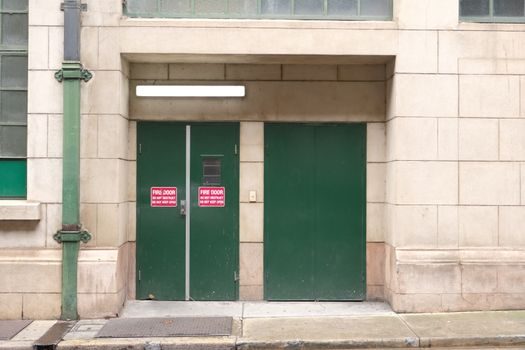
Fiber cement board is the right pick for high-density (1.2-1.5 g/cm³) fire-rated partition wall, exterior wall cladding, suspended ceiling, light-weight grouting panel and interior painted or coated dry-wall lining [S1]. It passes 25 freeze-thaw cycles without cracking or delamination under GB/T7019-1997, so it is also widely specified for cold-storage and external façade applications in temperate and cold climates [S1]. Per S4, calcium-silicate-reinforced fiber cement board plants in Tianjin run at 10,000 m²/day output at US$1.06-2.65 per m², which makes it competitive for commercial and light-industrial fit-outs where the alternative is gypsum + intumescent paint.
It is the wrong pick for: (a) any line that calls for active detection or alarm signalling — that is a fire alarm control panel, a gas alarm controller or an access control head-end; (b) load-bearing structural decks (use structural steel + concrete, not 4.5-30 mm panels); (c) cleanroom ceilings that demand non-shedding, semi-hermetic surfaces, where the surface-dust behavior of cellulose-reinforced cement needs additional sealing; (d) wet-zone walls without waterproofing, since water content is allowed to drift to ≤30% [S1].
Limitations, Failure Modes and Spec Pitfalls
Fiber cement board's failure mode is mechanical, not electrical: bending strength bottoms out at ≥16 MPa and swelling is held to ≤0.4% only if the product is properly autoclaved and surface-treated [S1]. Boards that skip the autoclave step (often sold as "non-pressure" fiber cement board in the Chinese market) show higher water uptake and lower frost resistance — a common pitfall when procurement buys on price alone [S5]. Specifiers should therefore demand autoclave certification and a GB8624-1997 A-class test report, not just a generic "fire-rated" marketing line.
A fire alarm control panel's failure modes are electrical and software-defined: detector fouling, loop short, NAC ground fault, ground fault on the SLC, battery aging (sealed lead-acid typically 4-5 years), and compatibility drift between panel firmware and a new detector model. It is also important to keep the panel out of the same enclosure as control cable and control valve wiring that may carry induced noise from VFDs, and to segregate it from fire-pump starters and HVAC control valve actuators.
Cross-discipline pitfall to flag: a fiber-cement-clad riser wall does not, by itself, satisfy a fire-rated shaft requirement for the FACP. The FACP must be on a fire-rated electrical riser independent of the cladding's fire-rating, and the access control cable penetrations through the wall must be fire-stopped to the same rating as the wall — not merely to the rating of the board.
Procurement, MOQ and Lead-Time Signal
Procurement signals from May and October 2025 onward: Chinese fiber cement board suppliers are quoting US$5.00-25.00 per 20-foot container for 6-12 mm recessed-edge board with a 100,000-piece-per-day ceiling at the largest plants [S2]. Calcium-silicate-reinforced high-density board from Tianjin runs at 10,000 m²/day capacity with MOQ 3,600 m² and a price band of US$1.06-2.65 per m² [S4]. Both bands confirm that board is a low-cost-per-area commodity with containerized shipping from Qingdao, Ningbo, Shanghai and Tianjin [S1][S2][S3][S4].
For a fire alarm control panel, the procurement signal runs the other way: 2-wire addressable loops typically support 159 devices, loop current is engineered to 0.5-1.0 A, and the bill of materials includes a 24 V DC supply, sealed lead-acid batteries sized for 24-hour standby + 5-minute alarm, and an enclosure rated to the same fire compartment as the surrounding wall. Chinese panel pricing in the public domain is per project, not per SKU, because the loop card, detector list and annunciator panel drive most of the variance.
Standards, Codes and Sourcing References
Public sourcing currently identifies these documents as the binding references for fiber cement board: GB8624-1997 (combustibility), GB/T9978-1999 (fire resistance, 240 minutes), GB/T7019-1997 (freeze-thaw) and GB6566-2001 (radioactivity, A-class decoration) [S1]. Plant-level compliance for fire-rated cladding in mainland China commonly pairs these with GB/T 9775 for wallboard general requirements, though the user should verify the exact revision in force on the project. For fire alarm control panels, the binding code is the relevant EN 54-2 / UL 864 listing for the actual market, not GB; the standards bodies and product markings differ by jurisdiction.
Comparable spec-first articles on adjacent material-vs-system comparisons are useful next reads: ALC wall panel vs fire alarm control panel: spec-first selection map for a sister passive-cladding comparison, Rock Wool Panel vs Fire Alarm Control Panel: Spec-First Selection Map for a competing insulation-cladding vs signaling system decision, and Concrete Batching Plant vs Ready-Mix Concrete: Spec-First Decision Map for a material-process pairing further down the construction supply chain.
Two trackable signals to watch on 2026-07-28: the first is whether any new fiber-cement plant in Tianjin or Ningbo publishes a third-party EN 13501-1 A1/A2-s1,d0 classification in addition to the legacy GB8624-1997 A-class — that would broaden export beyond the legacy GB-aligned markets [S1][S4]. The second is whether the next revision of GB8624 moves to the Euroclass-style A1/A2-s1,d0 vocabulary and disrupts the current "A-class" label on every Chinese fiber-cement datasheet [S1]. Until either happens, the line of demarkation between passive cladding and active alarm remains drawn at the partition-wall drawing sheet, not inside the procurement BOM.