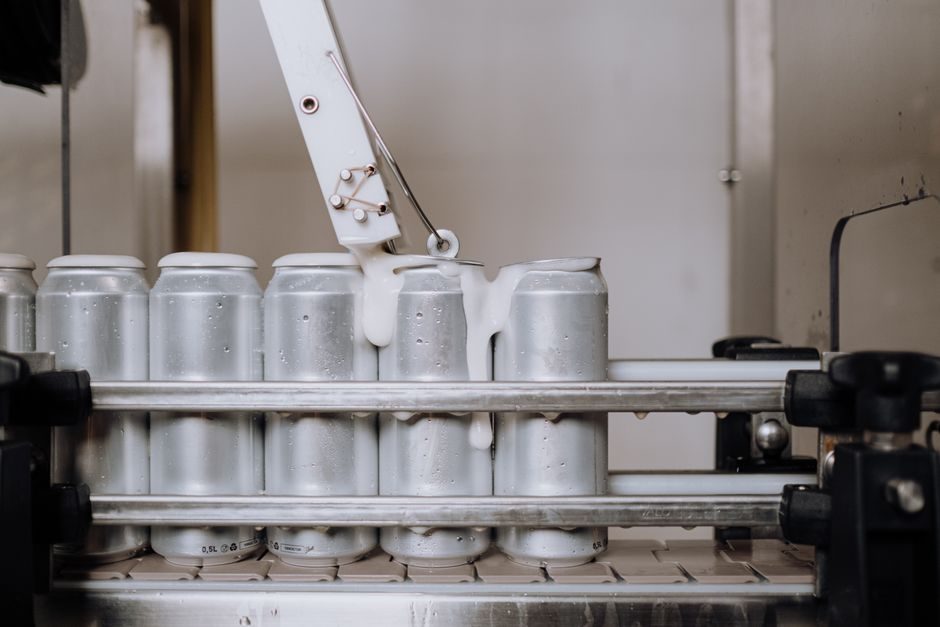
On 2026-05-15, Made-in-China.com listed 4,150+ juice filling machinery SKUs at US$20,000-200,000 per piece (1-piece MOQ) from Diamond Member suppliers such as Zhangjiagang Sunswell Machinery [S4]. The same marketplace on 2026-05-18 put a fully automatic rotary premade-pouch doypack liquid/sealing unit at US$52,000-67,000 and a high-speed automatic capping liquid beverage filler at the same factory tier [S5].
For container and drum filling, automatic liquid fillers from groups like Cachapuz Bilanciai remain the European benchmark for IBC/drum-format liquids [S1], while Chinese OEMs — Sharp Pharma Machinery (25+ years in liquid solutions) [S2] and MAKWELL (bottle-line specialist) [S3] — anchor the Asian supply side. The single biggest cost driver in 2026 is still the head-count of filling nozzles, not the brand badge on the cabinet.
Price bands by machine class, 2026
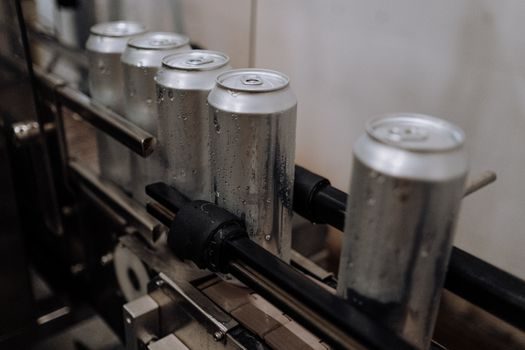
Entry-level semi-automatic piston fillers for viscous paste, cosmetic cream, or pharmaceutical ointment (tube-filling-and-sealing class, 50-100 tubes/min) typically clear customs in the US$3,000-8,000 range from mainland China suppliers [S7]. Mid-range monobloc rinser-filler-capper blocks for 500-3,000 bottles/hour PET lines cluster at US$18,000-45,000 [S4]. High-speed rotary rinser-filler-capper monoblocs at 6,000-24,000 bottles/hour for juice, water, or carbonated soft drinks sit in the US$80,000-200,000 band per Sunswell-class listings [S4].
Aseptic cold-fill ESL systems, bag-in-box fillers, and explosion-proof solvent lines sit above the US$200,000 line and are typically quoted project-by-project through the OEM's process engineer rather than via catalog SKU [S2]. Used or refurbished European monoblocs (Krones, Sidel, Tetra Pak class) typically trade at 35-55% of new list, but the buyer inherits validation documentation gaps — a recurring pain point called out by pharma process engineers in 2025 retrofits [S1][S2].
Selection criteria that move the price
Four specification gates dominate the delta between a US$25,000 and a US$180,000 liquid filler: (1) throughput in bottles/hour at rated container size, (2) contact-part material (304 SS vs 316L SS vs PTFE-sealed), (3) CIP/SIP capability and cleanroom rating, and (4) filling principle — gravimetric, volumetric piston, peristaltic, or mass flow meter [S2][S3]. Gravimetric fillers using load cells and the filling weighing scale principle command a 25-40% premium over volumetric piston fillers of the same throughput because they eliminate density drift and over-fill giveaway on dairy and edible-oil lines.
Container format is the second gate. Rotary monoblocs built for 200 ml-2 L PET sit at the lower end of the juice band; 5 L-25 L container/drum or IBC lines scale upward in frame mass, valve diameter, and explosion-proofing for solvents [S1]. A third gate is coding and serialization: pharmaceutical lines that must integrate a coding machine for 2D Data Matrix plus vision rejection add US$18,000-60,000 over a comparable food-grade line [S2].
Manual vs semi-auto vs fully automatic
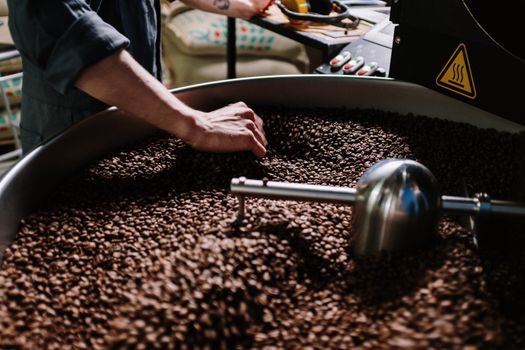
Manual and benchtop piston fillers (5-30 containers/min) are listed at US$300-2,500 by most China exporters and are only viable for batches under 5,000 units/week or for R&D/pilot runs [S7]. Semi-automatic volumetric fillers (30-60 containers/min, single operator) cluster at US$2,500-8,000 and dominate craft-beverage, cosmetic, and small pharma batch work [S2]. Fully automatic rotary monoblocs (1,500-24,000 bottles/hour) start at roughly US$15,000-25,000 for slow-turn rotary rinser-filler-cappers and exceed US$200,000 once CIP, servo-driven torque cappers, and aseptic isolation enter the spec [S3][S4].
The labor math is brutal: a semi-automatic filler needs 2-4 operators per shift and runs at roughly 8% of an equivalent rotary's throughput, which means an automatic rotary pays back inside 18-30 months on any Western labor market at 3-shift utilization. The same comparison on a Chinese shop floor stretches to 4-6 years — a key reason Chinese OEMs still ship large volumes of semi-autos domestically [S6].
Material, hygiene and certification cost multipliers
316L stainless on all product-contact surfaces adds 12-18% over 304 SS for the same machine, but is required for dairy UHT, pharma water-for-injection, and any acidic beverage above pH 4.0 where chloride pitting is a concern. PTFE/EPDM seal upgrades for hot-product filling above 85°C add another 5-8%. Sanitary tri-clamp ferrule connections (DIN 32676 / ISO 2852 vs SMS / Tri-Clover patterns) on the inlet/outlet manifold are a 2-4% adder but remove a recurring gasket-rebuild cost [S2][S3].
For lines shipping into the EU, ATEX 2014/34/EU Zone 1 rating on the motor panel and a CIP-rated servo-capper drive a 15-25% adder; for pharma lines, cGMP documentation, IQ/OQ/PQ protocols, and 21 CFR Part 11-compliant HMI audit trails are mandatory and typically quoted at 8-12% of the line price as a separate documentation package [S1][S2]. Buyers who fail to budget this line item are the same ones writing change-orders at FAT.
OEM vs trading-company sourcing
Made-in-China.com lists Diamond Member Audited Suppliers (factory-direct exporters such as Zhangjiagang Sunswell) alongside Trading Company representatives who re-sell the same OEM's machine at a 10-25% markup [S4][S5]. The verification lever is the Business License, the on-site audit video, and the audited-supplier badge that confirms a 3rd-party on-site inspection of the manufacturing floor. Without those three, the buyer is pricing against a brochure, not a factory [S4].
For a fill-finish line above US$100,000, the engineering review that protects the budget is a 2-day supplier audit plus a witnessed FAT at the OEM's floor before shipment — typical cost US$2,500-5,000 including flights, but it catches 80% of the late-stage change-orders that destroy project margin [S6]. The contact channel for mainland OEMs remains Alibaba Trade Manager, WhatsApp, and direct email, with most 2026 RFQs negotiated in English on EXW or FOB Ningbo/Shanghai terms [S6].
Cost-of-ownership beyond the invoice
Spare-parts kits for rotary monoblocs typically run 5-8% of the new-line price over a 5-year window, dominated by change-parts (format bottles to the next SKU), seal kits, servo capper torque heads, and CIP spray-ball replacements. Lead time on change-parts from European OEMs runs 8-14 weeks; from Chinese OEMs, 3-5 weeks at roughly 40-60% of European list — one of the few line items where the China supply side wins unambiguously on landed cost [S2][S3].
Energy and air consumption are routinely missed. A 12,000 bottles/hour rinser-filler-capper monobloc draws 25-40 kW and needs 800-1,200 L/min of oil-free compressed air at 6 bar, which forces a compressor upgrade on most existing factory utilities. Pneumatic indexing on older semi-autos wastes roughly 30% more air than modern servo-driven equivalents, and the linear guide or crossed-roller guide slide systems on the filling carriage are a recurring wear point that defines the 3-year vs 7-year service interval on the core machine frame [S2][S3].
Comparison of filling-principle choices
Four principles dominate 2026 liquid line specs, each with a different cost and accuracy profile: (a) Volumetric piston — lowest capex, ±0.5-1.0% accuracy, struggles with foamy or hot product. (b) Gravimetric load-cell — 25-40% capex premium, ±0.1-0.3% accuracy, best for high-value liquids (edible oil, pharma, specialty chemicals). (c) Mass flow meter (Coriolis) — highest capex, ±0.05-0.15% accuracy, mandated for many solvent and aggressive-acid lines. (d) Peristaltic — low capex on small fills, low shear for cell-culture media, but high tube-replacement OPEX [S2][S3].
For juice/water/CSD at 5,000-24,000 bottles/hour, volumetric piston plus flow-meter trim is the dominant 2026 retrofit spec, and the filling machine drum-filler variant from European OEMs is the reference architecture that the Chinese rotary monobloc has converged on since 2022 [S1][S4].
When NOT to spec a low-cost Chinese rotary
A US$25,000 rotary monobloc from a non-audited trading company is a false economy for any of these four cases: (1) pharmaceutical sterile or BFS lines requiring validated CIP/SIP and FAT documentation; (2) ATEX Zone 1 solvent lines where the electrical build must be certified, not just promised; (3) high-speed 24,000+ bottle/hour carbonated lines where the rinser-filler-capper timing chain has to hold ±0.2 s across a 24-month duty cycle; (4) any line shipping into the US/EU with 21 CFR Part 11 or EU GMP Annex 11 audit-trail obligations on the HMI [S1][S2].
In those four cases, the practical move is to buy European for the rinser-filler-capper monobloc (Krones, Sidel, GEA, ProMach) and source the coding machine shrink-sleeve applicator, conveyor, and palletizer from Chinese OEM partners — a hybrid sourcing pattern that has become the norm in 2025-2026 mid-cap pharma and beverage capex [S2]. For a broader lens on the cost-engineering framework applied to other capital lines, the gear coupling price and cost guide lays out the same bore-and-material lever logic that drives fill-line budgeting.
Track the next two signals through 2026 H2: (1) any Made-in-China.com SKU re-pricing of fully automatic juice lines above US$200,000, which would indicate the first wave of aseptic-PET retrofit demand landing on the OEM order book; (2) any new European OEM distribution announcement pairing a Sidel/Krones rinser-filler-capper with a Chinese conveyor/coder integrator, which would confirm the hybrid-sourcing pattern is moving from ad-hoc to standard procurement practice.