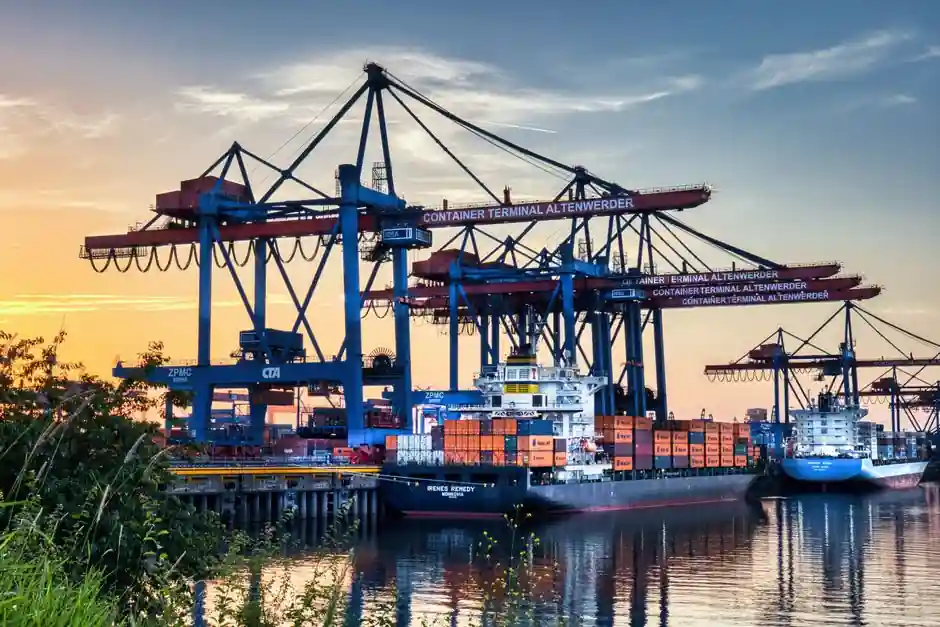
Port-side weighing pivots on the SOLAS verified gross mass rule: every packed container must carry a weight certificate issued by calibrated equipment before ship loading, with weighbridges, axle weighers, and rail scales listed as the compliant verification paths [S1].
Maritime transport carried 75% of global freight by modal share in 2020, and Chinese ports alone (Shanghai, Ningbo-Zhoushan, Shenzhen, Qingdao) handle annual throughput measured in billions of tons, which makes scale selection a tonnage-level decision rather than a per-pallet detail [S3].
SOLAS VGM is the binding constraint, not a footnote
The IMO SOLAS container weighing requirement, in force since 2016, splits weight verification into two methods: Method 1 weighs the packed container as a single unit on calibrated equipment such as a weighbridge, axle weigher, or rail scale; Method 2 sums package weights plus packing materials plus container tare [S1]. Method 1 is the dominant choice at high-throughput terminals because a single instrument reading replaces dozens of package weighings and removes summation error. Choosing between Method 1 and Method 2 is therefore a capacity-planning question: terminal gate throughput, available floor space at the weighing lane, and the operator's tolerance for paperwork-driven delays. Misdeclared container weights remain a documented cause of maritime casualties, which is why the rule is enforced at the gate rather than left to shippers' honour [S1].
Three scale families, three different jobs
Port logistics weighing decomposes into three hardware families, each with a distinct position in the cargo flow. Weighbridges and truck scales (inbound/outbound) handle full-vehicle verification at the gate, fulfilling SOLAS Method 1 when the trailer is the packed container [S1]. Forklift scales, often integrated onto the lift truck, allow weighing during the lift cycle without a separate weighing station, and are commonly specified for breakbulk, bagged fertilizer, steel coils, and palletized mixed cargo where moving the load to a floor scale is impractical [S1]. Floor platform scales and bench scales cover warehouse-side filling, batching, and checkweighing, typically with lower capacity (hundreds to a few thousand kilograms) and finer resolution than gate equipment [S1][S4]. Service providers in this space routinely package calibration, installation, scale rental, and load testing as a single contract, reflecting the certification-driven nature of port weighing [S8].
Selection criteria: capacity, accuracy class, environment, and flow
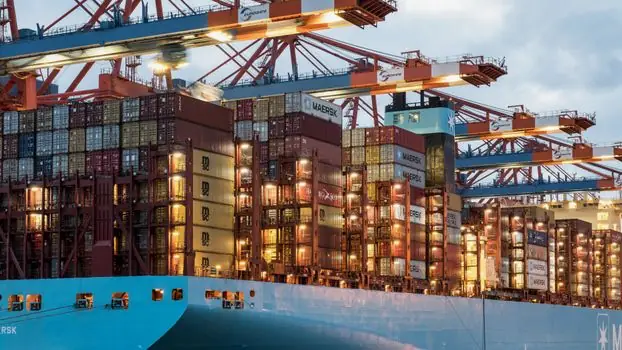
Four criteria separate an appropriate spec from an expensive mistake at a port. Capacity: gate weighbridges are typically rated for fully loaded road vehicles (often 60,000-80,000 kg combined gross vehicle weight depending on jurisdiction), while forklift scales match the lift truck's residual capacity (commonly 2,500-5,000 kg) and floor scales match the heaviest single unit load expected in the warehouse (commonly 1,000-3,000 kg) [S1][S4]. Accuracy class: trade-approved (OIML R76 or NTEP) instruments are mandatory for invoiced freight and SOLAS certificates, whereas internal logistics scales can use industrial-grade load cells with wider tolerance. Environment: coastal ports expose scales to salt spray, wash-down, and rapid temperature swing, so stainless-steel load cells, hermetically sealed indicators (IP65/IP66/IP69K), and corrosion-resistant platforms are common spec language from port-focused integrators [S7]. Flow: where containers move continuously, in-motion weighing and unmanned gate systems eliminate the bottleneck of a static stop-weigh-stop cycle, and a truck-scale unmanned system spec typically pairs an automated vehicle identification reader, camera, and indicator to produce a weight ticket without an operator in the loop [S1].
Comparison of the three scale types for port terminals
On four decision criteria, the three families line up as follows. Capacity headroom: weighbridge highest (full-trailer loads), forklift scale medium (lift-truck residual), floor scale lowest (unit-load). SOLAS Method 1 fit: weighbridge yes directly, forklift scale yes when the load equals the containerized cargo, floor scale only for unit-load Method 2 inputs. Footprint at the terminal: weighbridge largest (full-lane installation with approach ramps), forklift scale smallest (mounted on the truck), floor scale moderate (in-warehouse pad). Best deployment mode: weighbridge for high-volume container terminals, forklift scale for breakbulk and bagged goods, floor scale for warehouse-side filling-weighing-scale work and checkweighing, with electronic-scale indicators handling the data handoff into the terminal operating system. For container-handling and yard-truck weighing, crane-scale and bench-scale references on our encyclopedia page also apply when the lift mechanism itself is the load frame. [S1]
Where filling scales actually fit in port logistics
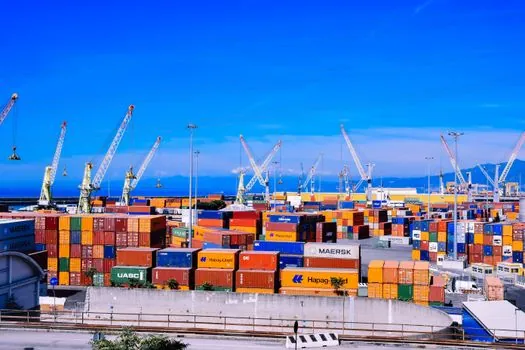
Filling scales in the strict sense (bulk-into-bag or bulk-into-drum fill-by-weight) are not the SOLAS-compliance device, but they sit immediately upstream and downstream of the port weighbridge. Bagged cement, fertilizer, resin pellets, and food-grade sugar arrive at port in containers that were filled inland; verifying the declared bag weight on a filling-machine line with a checkweigher catches under- and over-fills before the container is sealed, which in turn keeps the SOLAS VGM paperwork honest [S4]. On the outbound side, logistics-packaging operations that consolidate multiple small shipments into a single container benefit from accurate unit weights at the packing station, because Method 2 verification depends entirely on the sum of the parts [S1]. Recent academic work on port supply chains treats the weighing station as a node whose measurement quality propagates downstream into cost models: a two-stage robust optimization study (Feng et al., 2026) showed that demand uncertainty interacts with time constraints and customer decision uncertainty, so inaccurate weight data at the origin forces the optimizer into wider safety buffers and higher total cost [S2].
Calibration, traceability, and what fails first
Calibration is the unglamorous reason port scales drift out of service. Trade-approved weighbridges and forklift scales carry legal-for-trade certification, and most terminal operators run scheduled calibration with test weights traceable to national standards, plus load tests after any structural event [S8]. The most common failure mode in a marine environment is not electronics but mechanical: load-cell corrosion at cable entry, platform deflection on soft asphalt, and debris in pit foundations. Indicators are typically the easier swap, while load-cell replacement requires lifting the platform and re-zeroing, so specifying a higher ingress protection rating at purchase usually wins on lifecycle cost [S7]. Software-side, weighbridge data must reach the terminal operating system and customs declaration platforms without manual re-entry, and integrations to port community systems are now a standard line item in vendor proposals rather than an optional extra [S1][S5].
Signals to track: Montreal Smart Port and 2026 supply-chain research
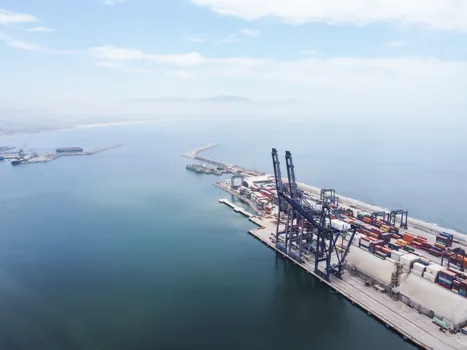
Two trackable signals will move the needle on port-weighing specification through 2026. First, the Scale AI-funded Port Logistics Optimization Tool at the Port of Montreal: a CAD 1.3 million Scale AI investment into a CAD 2.7 million total project, with the explicit goal of using AI and predictive analytics to synchronize rail and marine supply-chain visibility and reduce dwell time at a major logistics hub [S5]. The full AI visibility stack, including automated weight capture, is the next infrastructure layer port operators are queuing for, and benchmark results from Montreal will likely feed RFPs at other gateway ports. Second, the [Feng et al. 2026 supply-chain optimization paper] frames port logistics as a two-stage robust problem where weight-data quality directly affects the uncertainty budget the optimizer can tolerate, which makes the case for redundant in-line weighing at the gate rather than a single weighbridge as the bottleneck instrument [S2].
A practical next node is the SOLAS Method 1 versus Method 2 audit at your terminal: if a meaningful share of containers is still cleared by Method 2 paperwork, the business case for an additional weighbridge lane or a network of forklift scales is quantifiable from current dwell-time and reweigh costs, and the spec for [forklift scale] fleets and [floor scale] checkweighers on our product pages lines up with the OIML/NTEP accuracy classes port operators are now writing into tender documents. Related reading on adjacent port equipment is available in our guide to forklift selection for urban infrastructure work near terminals, which complements the lift-truck-mounted scale choice on the warehouse side.