
Food processing plants demand a different fire hydrant spec than a generic industrial yard: grease-laden washdowns, ammonia refrigeration, combustible dust from grain and cocoa, and aggressive sanitizer chemistries all push the selection away from a stock dry barrel unit [S3].
Specifying engineers should anchor the decision on three numerical anchors, the NFPA 291 minimum 20 psi residual pressure during fire flow, the 60% dry barrel market share that confirms dry barrel as the prevailing configuration, and the 36.2% industrial end-user share that reflects how procurement patterns favour the segment where most food plants sit [S3][S4].
Wet Barrel vs Dry Barrel: Which Config Fits the Process Floor
Wet barrel hydrants keep the barrel charged with water at all times, which suits ambient-temperature, non-freeze climates and plants with continuous supervisory pressure above 20 psi; the column is usable from every outlet simultaneously, and individual outlets can be opened or closed under pressure [S3].
Dry barrel hydrants hold the main valve below the frost line, drain the barrel when shut off, and dominate the 2026 product mix at 60% share, a structural preference driven by cold-climate regions and the need to keep stagnant water out of food zones where biofilm, Legionella, or sanitizer ingress would create a contamination pathway [S3]. For most food plants north of USDA Plant Hardiness Zone 7, dry barrel is the default; wet barrel stays in play in California, Florida, and the Gulf Coast processing belt where freeze risk is negligible and fast hose deployment matters more than drain-down hygiene.
Pressure, Flow, and NFPA 291 Anchors
NFPA 291 sets the residual pressure floor at 20 psi during fire flow testing, the threshold below which hose streams lose reach and effectiveness, and below which negative pressure in the main can pull contaminated water through pipe joints or even collapse thin-wall mains [S4].
Fire flow is the rate of available residual water supply a hydrant can sustain to support firefighting operations, not the static pressure at the hydrant base; a 1,500 gpm fire flow at 20 psi residual is the typical design target for a medium-sized food processing building, and hydrant colour coding under NFPA 291 communicates the available water supply class to arriving engine companies [S4]. Hydrants operating below 20 psi are technically possible, though some state AHJs disallow it, and prolonged sub-20 psi operation stresses system components [S4]. Annual flow testing is the verification loop: Memphis Fire Department began its 2026 city-wide flow test campaign in April, a routine that catches closed valves, tuberculation, and supply-side capacity drift before a fire event exposes the gap [S5].
Materials, Sanitation, and Corrosion in Washdown Zones
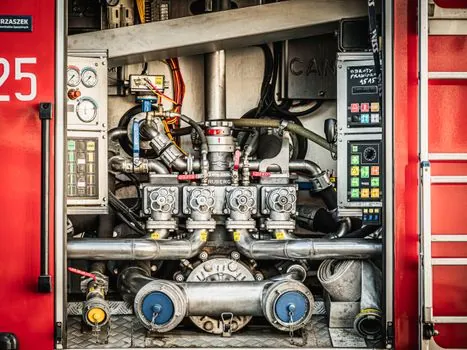
Food processing floors are hosed down with hot water, chlorinated cleaners, and acidic sanitizers, and the hydrant body, bonnet, hose nozzles, and chain hardware sit inside the contamination zone, so specifiers need corrosion-resistant trim even though the national dry barrel mix is dominated by standard ductile-iron bodies [S3].
Stainless steel or bronze trim, epoxy-lined barrels, and NSF/ANSI 61-certified coatings on wetted surfaces reduce the risk of rust bleed, flaking paint into product zones, and metal-ion contamination of low-moisture foods such as flour, sugar, and cocoa powder. Plants with ammonia refrigeration should also verify that the hydrant location is outside the refrigerant dispersion envelope, because ammonia release attacks copper alloys and degrades brass stems in a matter of months. Where ground water is high in chlorides, a cathodic protection budget belongs in the same line item as the hydrant itself, not buried in a later maintenance claim. General industrial fire safety practice pairs the hydrant spec with a fire door and fire-rated door review of processing room separations so that a single incident cannot take the whole line down.
Placement Geometry: Hose Lay, Access Roads, and Setbacks
Hydrant placement in a food plant is a geometry problem as much as a hydraulics one, and the working rule is to keep hose lay under 250 ft from any processing vessel, mezzanine, or loading dock so two attack lines and one supply line can be deployed without relay pumping [S4].
Set the hydrant at least 50 ft from the building face to keep the engine out of the thermal plume, and lock a clear 3 ft radius around each outlet so coupling wrenches can be swung without negotiating a bollard. Where the plant shares a fence line with a neighbouring property, a dry hydrant fed from an on-site cistern or pond is a defensible option, and the Virginia Dry Fire Hydrant Grant program funds 100% of new installations and repairs for eligible localities, a model that municipal and rural food processors can use as a procurement reference [S2]. Plants with on-site streams or lagoons should also evaluate drafting hydrants, which cut the shuttle distance to zero and remove the dependency on a pressurized municipal main during a supply-side failure.
Inspection Cadence, Color Coding, and Records
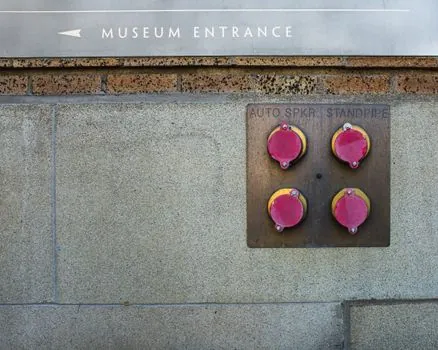
Annual flow testing, annual lubrication, and a 5-year internal inspection are the working cadences for dry barrel hydrants, and the data captured at each visit should include static pressure, residual pressure at design flow, flow rate in gpm, and a colour-code update per NFPA 291 [S4].
The NFPA 291 colour scheme (light blue for 1,500 gpm, green for 1,000-1,499 gpm, orange for 500-999 gpm, red for under 500 gpm) is the single fastest visual signal for an arriving engine officer, and a hydrant that drifts from green to orange after a five-year interval is telling the specifier that the supply main, not the hydrant, is the problem [S4]. Field engineers should keep the test record in the same CMMS module as the fire extinguisher inspection log so that an AHJ audit pulls one continuous record, and where the plant uses an electrical fire monitor on a switchgear room, the hydrant test record should cross-reference the monitor coverage zone to confirm overlapping protection.
Selection Criteria Comparison for Food Processing
Five criteria separate a workable hydrant spec from a problematic one in a food plant: configuration (wet vs dry barrel), residual pressure at fire flow, trim and coating compatibility with sanitizer chemistry, placement geometry relative to process vessels, and inspection cadence. On configuration, dry barrel wins in any climate with a frost line, wet barrel wins only in freeze-free zones where continuous pressure is acceptable [S3]. On residual pressure, the NFPA 291 floor of 20 psi is non-negotiable in most AHJs, and design at 1,500 gpm at 20 psi residual is a defensible target for a mid-sized plant [S4]. On trim, stainless or bronze plus NSF/ANSI 61 coating is the only credible answer in a washdown corridor, even though it adds 15-25% to the unit cost versus a stock ductile-iron body. On geometry, 250 ft hose lay and 50 ft building setback are the two numbers to defend in a plan review. On cadence, annual flow test plus 5-year internal inspection is the minimum; fire hydrant selection for a food plant is, in practice, a 30-year inspection contract, not a one-time purchase.
Trackable signals for the next planning cycle: any 2026 AHJ adoption of NFPA 291 updates that tighten the 20 psi floor, FM Global or UL listing changes on hydrant trim coatings, and grant-program expansions beyond the Virginia Dry Fire Hydrant Grant model that other states may replicate for rural processors [S2].
This topic is covered further in Rock Wool Selection for High-Rise Buildings: 2026 Spec Map.