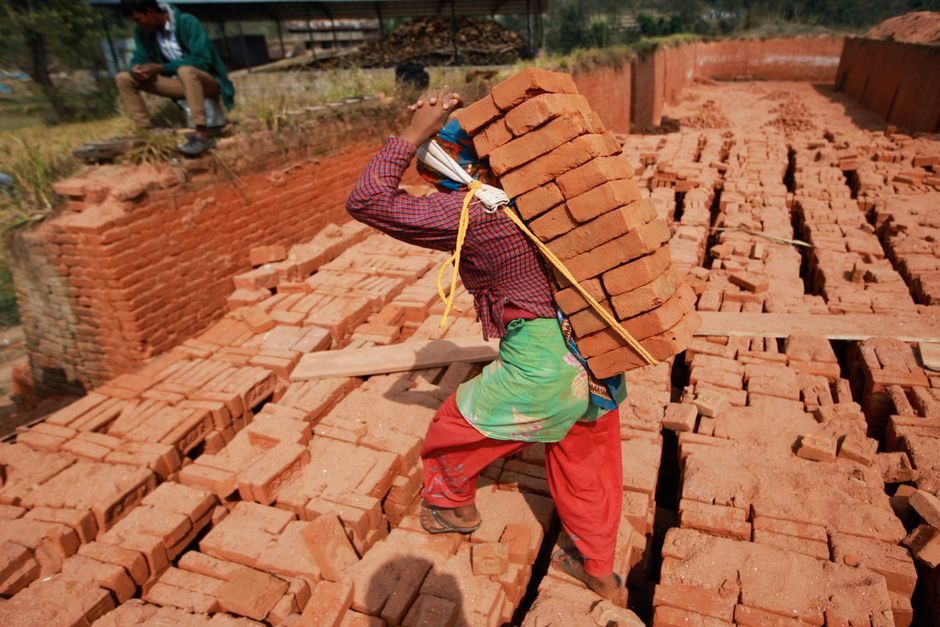
Refractory fired clay brick is a sintered alumino-silicate unit graded primarily by aluminium-oxide content and service temperature, with 2026 China-origin FOB price bands spanning US$185–$715 per metric ton on a 1–5 ton MOQ [S4][S5].
Buyers in 2026 are typically refractory contractors, kiln builders, boiler shops, and industrial furnace OEMs sourcing the standard SK/GN/NBN series, with manufacturing concentrated in Henan, Shandong, and Shanxi [S4][S2].
Al2O3 and Fe2O3 Bands Set the Grade
The dominant grading axis for fireclay units is aluminium-oxide content, with clay-grade bricks running 35–45% Al2O3 and high-alumina bricks spanning roughly 45–70% Al2O3; above 70% the product transitions into bauxite-corundum territory and is sold as a separate premium line [S2][S4].
Bulk density is the third tie-breaker — light-weight insulating fireclay units use an organic burnout additive to push porosity up and density down, trading thermal mass for a lower thermal conductivity, while dense SK/GN grades target refractoriness under load (RUL) of 1300–1500 °C [S2][S5].
Service Temperature, RUL and Porosity Are the Real Selection Criteria
For furnace and kiln lining service, refractoriness under load (RUL, 0.2 MPa, Ta) is the most defensible selection number; common SK32/SK34 fireclay bricks are rated at RUL of 1300–1400 °C, while SK36/SK38 high-alumina units push 1450–1500 °C [S2][S5].
Porosity is the second gate: an insulating fireclay brick with 55–65% apparent porosity trades hot-face strength for thermal conductivity in the 0.25–0.45 W/(m·K) band, which is why it is paired with a dense hot-face lining rather than used alone in load-bearing hot zones [S2].
Cold crushing strength (CCS) is the third gate and a frequent source of disputes: 25–40 MPa is typical for dense fireclay, 50–70 MPa for high-alumina; a quote that cannot produce a CCS certificate should be flagged during pre-shipment inspection [S5].
Material Comparison: Fireclay vs High-Alumina vs Insulating vs Silica
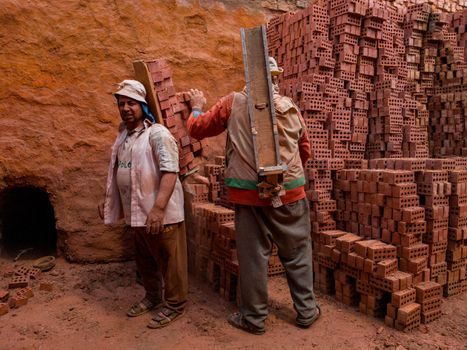
Against four common decision criteria, fireclay (SK32–SK34) wins on cost at roughly US$185–$260 per ton FOB, high-alumina (SK36–SK38) wins on temperature ceiling near 1500 °C, insulating fireclay wins on thermal conductivity below 0.45 W/(m·K), and silica bricks win on thermal-shock resistance above 1200 °C in coke-oven service [S2][S4][S5].
For back-up layers behind a dense hot-face, the insulating fireclay unit quoted at US$185–$210 per ton on a 5-ton MOQ is the budget choice, while a bonded fire brick hot-face gives the mechanical strength the back-up lacks [S2][S4].
Where Fired Clay Brick Is — and Is Not — the Right Answer
Fired clay brick is the right specification for steel-mill ladle back-up, boiler combustion chambers, cement kiln coolers, and glass-tank regenerators, where the working lining sees 1100–1450 °C in a chemically mild atmosphere [S2][S5].
It is the wrong specification for primary blast-furnace stacks, vacuum degassers, and aggressive alkali or acid vapour service, where magnesia-chrome, alumina-chrome, or silicon-carbide refractories dominate the lining because clay-based grades corrode or hydrate [S2].
For non-refractory building envelopes — the structural wall market covered by the UK Brick Development Association — the same SK-series nomenclature does not apply; load-bearing clay facing units are graded under a different EN 771-1 envelope and are not interchangeable with furnace lining bricks [S1].
Real Use Cases and Sourcing Levers in 2026
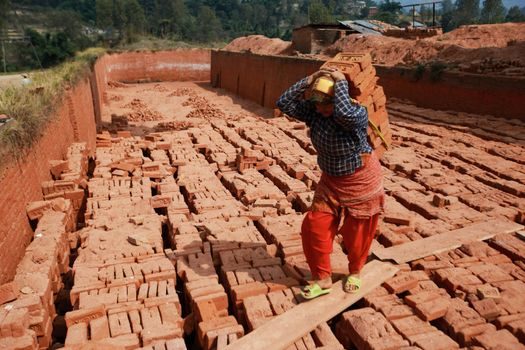
A 2026 China-origin industrial buyer tender for a 10,000 t/yr refractory-grade fireclay programme will typically pull three live quotes: a Zibo-based Jucos at US$185–$210/ton (5-ton MOQ), a Gongyi Yuying high-alumina line at US$320–$715/ton (1-ton MOQ), and a CNBM export consolidator offering blended lots at a mid-band rate with an unspecified MOQ [S4][S6].
Production capacity is not a constraint at this volume: suppliers list supply capability at 10,000 metric tons per month for ZGN-42 type fireclay lining bricks, with loading port Shanghai and payment terms T/T or L/C [S5].
The dominant cost lever in 2026 is still Al2O3 grade and Fe2O3 ceiling, not logistics; sea-freight from Tianjin or Shanghai to North Europe is a comparatively small share of the landed price on a 1–5 ton MOQ sample order [S4][S5].
Limitations, Failure Modes and Standards Watch
Three failure modes drive most refractory service claims on fired clay brick: (1) thermal-shock spalling on rapid heating ramps above 200 °C/min, (2) load collapse when RUL is exceeded in a load-bearing hot-face, and (3) chemical attack from alkali vapours on the back-up lining [S2].
Mitigation is mechanical rather than material: keep the first heat-up ramp under 100 °C/hr, keep hot-face RUL at least 100 °C above peak service temperature, and isolate any alkali-exposed back-up with a stainless or carbon barrier — none of these is solved by buying a more expensive brick [S2][S5].
On the standards side, refractory-grade units are tested under ISO 10060 (density, porosity) and ISO 1893 (RUL), with YB/T 4569 covering Chinese domestic high-alumina grades; structural clay masonry sits under a separate EN 771-1 / ASTM C62 track and the two product lines are not cross-graded [S1].
Where to Verify Before Wiring the Deposit
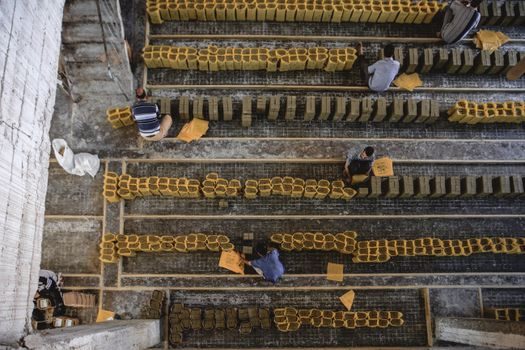
Cross-check the selection criteria for fired clay brick against the supplier's published ISO test reports, and confirm Apparent Porosity, CCS, RUL, and refractoriness certificates match the heat number on the shipping documents before releasing the L/C [S5].
Trackable signals for the next sourcing cycle: 2026 H2 Chinese refractory export price updates from the CNBM consolidator, any revision to the YB/T 4569 high-alumina grade envelope, and Gongyi and Zibo capacity announcements through the second half of 2026 [S4][S5][S6].
For component-level specifications, see linear guide, and crossed roller guide.