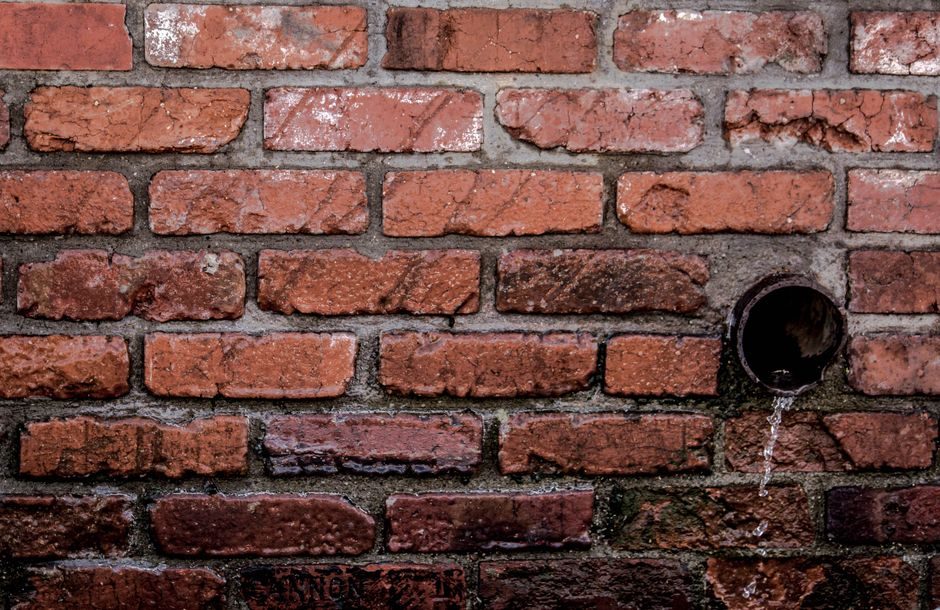
Fired clay brick and autoclaved aerated lightweight concrete (ALC / AAC) panel are not direct substitutes on a one-to-one volume basis: clay brick lands at roughly 1700-2000 kg/m³ bulk density and 10-30 MPa compressive strength, while ALC panels typically test at 400-650 kg/m³ and 4-6 MPa (panel grade B04-B06) per manufacturer data captured June 2026 [S1][S2][S5].
Both are autoclave- or kiln-cured cementitious products, but the processing window differs sharply: clay brick fires at ~900-1200 °C, while ALC is steam-cured at ~180-200 °C and 10-13 bar, which is why the AAC/ALC family carries lower embodied energy per cubic metre but lower compressive capacity. For a deeper dive into the fired-clay selection gates used in 2026 builds, see Fired Clay Brick Selection Criteria: Six Gates That Decide the Build in 2026.
Material classification, density and compressive bands
[S2][S3][S5]. The Brick Development Association lists clay brick grades under the "Why Clay Brick?" technical section, separating facing, engineering and refractory duty [S4].
ALC / AAC panels are classified by dry density: B04 ≈ 400 kg/m³, B05 ≈ 500 kg/m³, B06 ≈ 600 kg/m³, with characteristic compressive strength f<sub>ck</sub> of roughly 4, 5 and 6 MPa respectively. The B-grade nomenclature tracks the EN 771-4 family referenced on the AAC entry fired-brick and the ALC panel encyclopedia pages. A 100 mm AAC B05 panel typically lands at ~55-65 kg/m² dead load, versus ~180-200 kg/m² for a 100 mm solid clay brick wall.
Thermal conductivity, fire rating and acoustic mass
Clay brick's λ sits at roughly 0.45-0.80 W/(m·K) depending on density and web geometry; AAC's λ runs 0.10-0.18 W/(m·K) at B04-B06, which is the single biggest reason AAC wins on wall U-value per unit thickness. A 200 mm solid clay brick wall without insulation typically lands near 1.5-1.8 W/(m²·K); a 200 mm AAC B05 wall lands near 0.55-0.70 W/(m²·K) at the panel data sheet [S1][S5].
Fire rating separates the products by raw mass: a 100 mm solid clay brick wall achieves 120 minutes (F120) on standard furnace curves due to thermal capacity, while a 100 mm AAC B05 panel typically achieves F120-F180 per panel EN 1364-1 / 1366-1 tests logged by manufacturers [S4][S5]. AAC's cellular structure releases bound water above ~300 °C and keeps the cold-face temperature under 140 °C for the rated window, which is why tunnel and shaft linings often default to ALC.
Acoustic mass favours clay brick: at 200 mm, Rw sits near 50-55 dB for solid dense brick versus 42-46 dB for AAC of the same thickness. For partition-wall acoustic targets above Rw 50 dB, AAC usually needs a dual-leaf build or added plasterboard, while a single-leaf dense clay wall clears the bar.
Load-bearing role, wall geometry and reinforcement limits
Clay brick supports multi-storey load-bearing masonry up to ~8-12 storeys in unreinforced form where local codes allow, and unlimited storeys when reinforced and grouted. The structural envelope is the BDA technical section's primary "design consideration" cluster [S4]. AAC's role is largely non-load-bearing panel, partition and infill: B05 panels are rated for 5 MPa characteristic, which is sufficient for 3-5 storey residential when used as bearing wall with ring-beam detailing, but the bulk of AAC volume on site is cladding, party wall and shaft lining.
Geometry constraints diverge: fired clay units ship as 215×102.5×65 mm (UK) or 240×115×71 mm (metric) modular sizes with mortar joints, while ALC panels ship as 600 mm wide × 2400-3000 mm long × 75-200 mm thick units, lifted by small crane or panel jack. That changes the labour model: clay brick is hand-laid at ~250-400 bricks per mason-day, AAC panels are craned into place at 30-60 m² per crew-day per typical Chinese site practice referenced on manufacturer pages [S5].
Moisture, freeze-thaw and chemical exposure
Clay brick tolerates wet-dry cycling and freeze-thaw with low mass loss; the EN 771-1 frost-resistant designation (F2, ≥50 freeze-thaw cycles at ≤1% mass loss) is the standard buy-line for exterior UK and northern European use [S4]. AAC is more moisture-sensitive because of the open cellular structure: equilibrium moisture sits at 4-6% by mass in service, and unprotected AAC in saturated freeze-thaw cycles loses surface cohesion. Below-grade or parapet exposure typically calls for a render or cladding over AAC, whereas clay brick can be left self-faced.
AAC has no refractory role; its working ceiling is ~400 °C sustained, above which the binder degrades.
Selection decision matrix (criteria-based comparison)
Across four engineering gates the two products line up as follows, drawn from manufacturer data [S1][S2][S4][S5] and the encyclopaedia block-brick entry:
1) Compressive load: clay brick 10-30 MPa (engineering/facing); ALC B04-B06 panel 4-6 MPa — clay brick wins where the wall carries vertical structure.<br/>2) Thermal λ: clay brick 0.45-0.80 W/(m·K); ALC 0.10-0.18 W/(m·K) — ALC wins per millimetre of wall thickness.<br/>3) Dry density: clay brick 1700-2000 kg/m³; ALC 400-650 kg/m³ — ALC wins on dead load, foundation sizing and crane lift.<br/>4) Fire rating at 100 mm: clay brick F120; ALC B05 F120-F180 — roughly comparable; ALC edges ahead in shaft and tunnel lining.
Pick clay brick when the wall is structural, exposed to weather without cladding, or required to be self-finished in facing grade. Pick ALC panel when the wall is non-structural, the project needs light dead load, fast dry envelope and tight U-value, and a finish system (plaster / cladding) is already specified.
Cost, lead-time and sourcing signals (June 2026)
Sourcing channels split: AAC is dominated by Chinese and eastern-European autoclave plants with bulk lead-times of 14-30 days; clay brick has denser regional plant coverage in the US south, UK, India and northern China, with lead-times 7-21 days for common grades and 30-60 days for bespoke facing [S1][S2][S4].
A complementary read on lightweight partition choices is the article on AAC Block vs Lightweight Partition Panel: 2026 Spec Cut for Interior Wall Specifiers, which lines AAC against non-autoclaved partition systems on the same four gates. The broader fired-brick procurement picture is in Fired Clay Brick 2026: Spec Bands, Price Levers and Sourcing.
Limits, failure modes and what each is NOT for
Fired clay brick is the wrong pick where the design wants a 50 mm thin non-structural skin, a 200 mm U-value below 0.30 W/(m²·K) without a cavity build, or a sub-80 kg/m² cladding-leaf dead load. AAC is the wrong pick where the wall must carry multi-storey vertical load without reinforced-concrete ring beams, where chloride/sulphate-bearing water contacts the panel unprotected, or where the design requires a self-finished exposed masonry appearance on a facing-grade facade. [S1]
Hybrid builds dominate 2026 mid- and high-rise housing: load-bearing AAC panel on a reinforced concrete frame, with a clay-brick facing leaf on the exterior tied back with wall ties. That build gives AAC's thermal and weight edge with clay's weathering and aesthetics. Two trackable signals to watch: autoclave capacity additions in central and eastern Europe (currently expanding for residential demand per manufacturer activity logged 2026-06-26 [S2][S5]), and any tightening of EN 771-1 / EN 771-4 declared-value tolerance bands, which would shift the buy-line on both products.