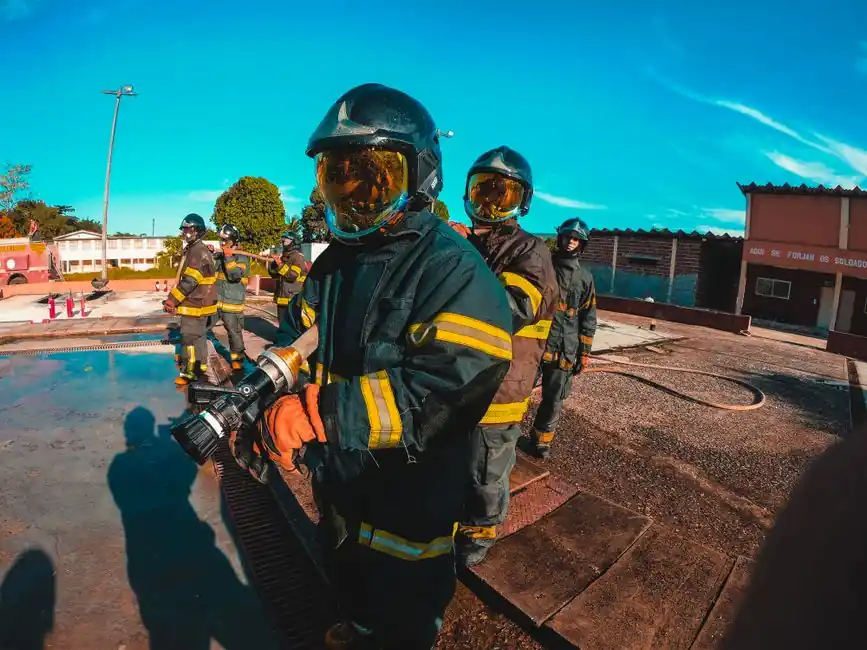
Firefighter footwear is not a single category: full-height structural boots and low-cut station safety shoes serve different missions, with shared must-haves in puncture resistance, slip-rated outsoles, and toe protection meeting ASTM/ANSI impact and compression thresholds [S1][S3].
The product set covers three missions, structural fire attack, wildland response, and EMS/vehicle rescue, with full-height pull-on station boots dominant on the structural side and six-inch or low-cut safety shoes taking the vehicle-extrication and medical-call side [S1][S2][S3].
Structural Boots: What the Full-Height Build Actually Delivers
Full-height firefighter station boots pair a steel or composite safety toe with a puncture-resistant midsole, a heat-resistant outsole rated for contact surfaces up to 300 degrees C, and a moisture-wicking lining, the four-element baseline that appears consistently across structural lines [S3].
Direct-attach construction, bonding the outsole directly to the leather upper, removes the side-seam weak point where water and fuel migrate in, and the same construction accepts reinforced stitching at the ankle shaft for ladder-climb loads [S3]. A typical station boot also integrates reflective trim for low-light visibility and a quick-release lacing or pull-on system for emergency doffing after a steam burn or chemical splash [S1][S3]. Standards cited by the channel include NFPA 1971 for structural, NFPA 1977 for wildland, and the underlying ASTM/ANSI toe and metatarsal ratings plus SATRA slip ratings for the outsole compound [S1].
Low-Cut Safety Shoes: Where They Fit, Where They Do Not
Low-cut safety shoes and six-inch boots are intended for vehicle rescue, EMS calls, and station duty where ankle articulation and a lower profile matter more than full calf coverage, and they ship with the same steel/composite toe and puncture-resistant midsole as a structural boot, just in a shorter upper [S3].
For interior structural attack they are the wrong tool: the height does not stop molten debris or heated water from running into the boot, and a six-inch shaft will not anchor a heavy bunker pant leg the way a pull-on station boot does [S3]. The sweet spot is a medical or vehicle-extrication call where the responder needs to kneel, crawl under a dash, and pivot fast, all of which a low-cut allows and a full-height boot fights [S3]. Composite toe options are common in this segment because the weight delta matters more over a 12-hour shift than over a single entry [S3]. For the broader safety-toe selection logic that applies across industries, the warehouse selection walkthrough covers toe rating, slip rating, and weight trade-offs in comparable depth warehouse safety shoe selection: toe, slip, weight, and standard fit.
Steel Toe vs Composite Toe, and the Puncture Midsole Question
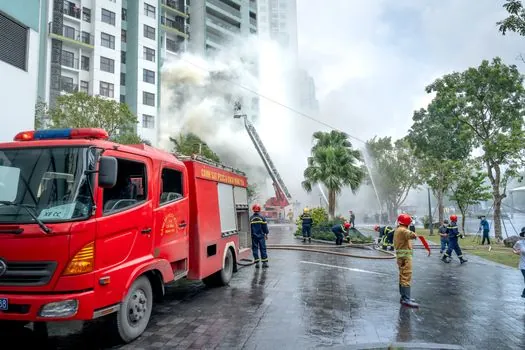
Steel toe caps remain the default for structural station boots because they tolerate higher contact-heat soak without losing their impact rating, while composite toes (typically a layered fibreglass or carbon-fibre cap) cut roughly 0.5 kg per pair and ship on most six-inch and low-cut safety-shoe models for EMS and rescue [S3].
The puncture-resistant midsole, the steel or textile plate that sits between the outsole and the footbed, is a separate spec from the toe and is non-negotiable on a fire ground: a single nail through a hose bed or a sharp aluminium edge in a wrecked vehicle will defeat a non-rated sole in seconds [S3]. The trade-off is weight and cold-conductivity, which is why some wildland and triple-certified lines drop the steel midsole in favour of a textile woven plate when the call profile is brush and light structure only [S2]. Readers cross-shopping welder footwear, where heat and spall performance move the goalposts again, can follow the standards and class logic in Welding Safety Shoes: Standards, Materials, and Class Selection.
Heat, Slip, and Chemical Resistance: Reading the Outsole Spec
The headline outsole number on a structural firefighter boot is contact-heat resistance, and the published ceiling sits at 300 degrees C for the premium-leather/synthetic builds on the market today, with slip resistance tested to SATRA methods on wet tile and wet steel [S1][S3].
Chemical resistance is a separate axis: nitrile rubber outsoles handle fuel and hydraulic fluid well, while a standard polyurethane outsole will swell and lose traction after repeated hydrocarbon exposure, which is one reason station boots default to nitrile or a nitrile-blend outsole compound [S3]. A moisture-wicking lining plus a sealed direct-attach sole is what keeps water out during hose operations or flooded-basement work, since a side-stitched and glue-constructed boot will eventually wick through the inseam [S3]. Triple-certified pants and boots that meet structural, wildland, and EMS specs on a single garment line are now common inventory, because departments want one PPE set that crosses incident types without a swap [S2].
Sizing, Fit, and the 12-Hour-Shift Reality
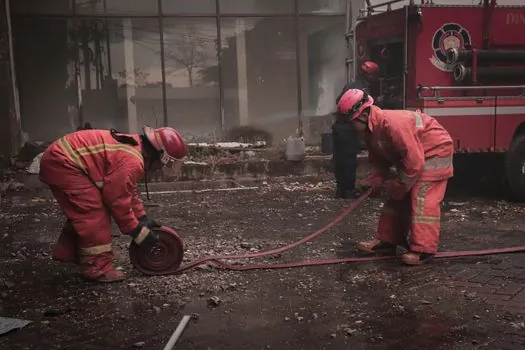
Wide-fit lasts and orthotic-friendly footbeds are standard options on structural station boots, and the reasoning is straightforward: a responder who spends 12 to 24 hours in a boot that binds across the metatarsals will lose dexterity in the hand tools within the first hour [S3].
Cushioned insoles reduce fatigue, but they do not fix a wrong last, and most return reasons on firefighter footwear trace to a too-narrow forefoot or a heel that slips under ladder load [S3]. The corrective action is to fit the boot with the intended bunker sock (a thick wool/nylon blend, not a cotton athletic sock) and to lace-test it on an incline before approving a station-wide order. A composite-toe low-cut can shave enough mass to matter on a long EMS shift, but the structural boot is the right tool on the fire ground, and a department that issues low-cuts as primary PPE has mis-mapped the call profile. The trade-off grid for chemical-plant footwear, which adds S3/S3S/S3L class logic on top of toe and midsole, runs in Chemical Plant Safety Footwear: S3/S3S/S3L Specs and Selection Logic, and the permit-required confined-space case, where the boot doubles as part of the retrieval harness anchor, is in Confined Space Safety Shoes: Spec-Driven Selection for Permit-Required Entries.
Selection Checklist: Matching Footwear to Mission
Selection comes down to four questions: mission (structural attack vs EMS/rescue vs wildland), toe material (steel for heat soak, composite for weight), midsole (steel for puncture priority, textile for weight), and outsole compound (nitrile for fuel exposure, PU for cost on light duty) [S1][S2][S3].
A structural line firefighter takes a full-height station boot, steel or composite toe, steel puncture midsole, nitrile outsole rated to 300 degrees C contact, with reflective trim and a quick-release lacing system [S1][S3]. A wildland line firefighter steps down to a lighter, lower-profile boot that meets NFPA 1977, with a Vibram-type outsole and a textile midsole where weight and heat-load drive the spec [S2]. A vehicle-rescue or EMS responder takes a six-inch or low-cut safety shoe with composite toe, steel or textile midsole, and the same slip-rated outsole, because ankle articulation and dash-crawl geometry matter more than calf coverage [S3]. Two trackable signals to watch on the next refresh cycle: departments consolidating to a single triple-certified boot to cover structural, wildland, and EMS in one SKU, and a wider shift toward composite-toe structural boots as weight-saving compounds earn NFPA 1971 certification [S2].
Spec-level background on the components involved: safety shoes, fire safety, and machine safety.