
Combustible-gas detection in food processing is dominated by two fuel streams — ammonia (NH3, LEL 15% vol.) released from industrial refrigeration and LPG/propane (LEL 2.1% vol.) used in baking ovens, fryers and flame-cook lines [S3].
The right sensor package is catalytic-bead (pellistor) for vapours below 100% LEL and NDIR (non-dispersive infrared) for hot, humid, high-CO2 baking environments where catalytic beads are poisoned; both are now shipping in IP66/IP67 stainless or PC-ABS housings with 4-20 mA + relay outputs [S1]. Selection for food-grade lines is governed less by gas chemistry than by washdown, sanitation chemistry and the ATEX/IECEx zone of the installation [S1].
Food-Plant Hazard Map: Where Combustible Gas Accumulates
Refrigeration compressor rooms are the single highest-density LEL hazard in a food plant: NH3 from a 0.5–5 t charge system is detectable well below LEL with a calibrated pellistor or NDIR cell, and the ATEX zone around valves and compressors is typically 2G (zone 2, gas) [S1][S3].
Baking and frying lines carry a different profile: LPG (commercial butane/propane, LEL ~1.8–2.1% vol.) leaks at flexible connectors, solenoid banks, and pilot-burner assemblies, often in a zone 1 + zone 2 envelope, so detectors must be ATEX/IECEx-certified for the stricter zone [S1]. For the broader detector taxonomy a process engineer needs to anchor to, the combustible gas detector reference page lays out the sensing technologies and the explosive-range physics. CO2 used in Modified Atmosphere Packaging (MAP ~20–80% vol.) displaces oxygen rather than burning, but enriched O2 lines in aseptic filling create an oxidiser hazard that demands a separate fixed gas detector on the same loop.
Sensor Tech: Catalytic Bead vs NDIR vs MOS vs Electrochemical
Catalytic-bead (pellistor) sensors measure flammables by catalysing oxidation on a heated bead, with the wheatstone-bridge output scaled 0–100% LEL; they are cheap, sensitive to most hydrocarbons, but are poisoned by silicone, H2S, and lead — all of which are common in food plants (silicone lubricants, H2S from spoilage, lead-free solder fumes) [S1].
NDIR (non-dispersive infrared) detectors measure hydrocarbons and CO2 by absorption at 3.3 µm (CH) or 4.3 µm (CO2), are immune to catalytic poisons, and are now the default for bakery/LPG lines where silicone release agents and humidity would kill a pellistor in weeks [S1]. MOS (metal-oxide semiconductor) sensors respond to a wide range of reducing gases but drift heavily in condensing humidity, so they are restricted to qualitative leak-sniffing, not LEL metering. Electrochemical cells (e.g. for H2, NH3, H2S) overlap this domain — see the toxic gas detector reference for the NH3/H2S-specific cells used in refrigeration and biogas adjacent areas. For multi-gas handhelds carried by sanitation crews, a 4-in-1 CH4/H2S/O2/CO package with IP67 and ATEX certification is the typical spec, weighing ~1 kg [S1].
Selection Criteria for Food-Grade Installations
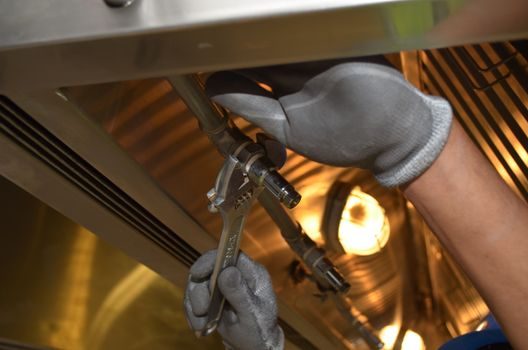
Five criteria drive the food-plant buy: (1) ATEX/IECEx zone — cat. 2G or 3G for zone 2 gas, cat. 1G for zone 1, with the marking etched on the nameplate; (2) IP rating — IP66 minimum for hose-down areas, IP67 where temporary immersion is possible during CIP (clean-in-place); (3) sensor type — NDIR for LPG/baking, catalytic-bead for general hydrocarbons, electrochemical for NH3 in refrigeration; (4) output — 4-20 mA analogue for SCADA/PLC integration plus 2× SPDT alarm relays at 20% LEL and 40% LEL thresholds; (5) housing — 316L stainless or food-grade PC-ABS, no exposed brass or aluminium that can corrode under peracetic-acid sanitiser [S1].
Detectors without an explicit food-plant certification (e.g. NSF/ANSI 169 or EHEDG Doc. 8 for hygienic design) can still be installed outside the product zone, but the cable entry, conduit, and mounting bracket must avoid horizontal food-contact surfaces — a typical 25 mm conduit drop with a sealed IP67 gland keeps wash water off the terminal block [S1]. For ammonia refrigeration rooms the portable gas detector carried by the service technician should be a 4-gas LEL/O2/H2S/CO unit, not a single-gas ammonia clip, because a refrigeration leak often co-releases R-404A breakdown products.
Comparison: Detector Type vs Food-Plant Use Case
Across the main food-plant use cases, four detector types line up against decision criteria as follows: (a) Fixed NDIR LPG detector for bakery — best for hot/humid/changing-CO2 backgrounds, lifetime 5+ years, higher unit cost; (b) Fixed catalytic-bead LEL detector for solvent/cleaning-vapour rooms — best for general hydrocarbons, vulnerable to silicone poisoning, lifetime 2–3 years; (c) Fixed electrochemical NH3 detector for refrigeration — best for ppm-level leak detection below LEL, narrow gas range; (d) Portable 4-gas LEL/O2/H2S/CO unit for confined-space entry — best for sanitation and maintenance crews, 1 kg, IP67, ATEX [S1].
The trade-off in plain terms: NDIR wins anywhere silicone or humidity is present, catalytic-bead wins on price and broad-spectrum response, electrochemical wins for sub-LEL ppm toxic monitoring, and portable multi-gas wins for the human-entry side of the safety program. A complete fixed-installation loop, including a multi gas detector at the control panel and a wall-mounted unit per bakery zone, lets the plant read LEL, O2, NH3 and CO from one HMI.
Installation, Calibration, and Compliance in 2026
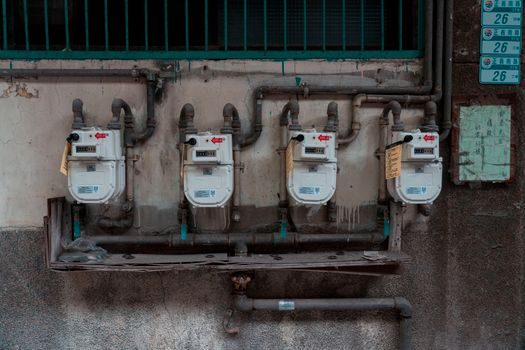
For 2026 builds the dominant spec pattern on food lines is a 24 VDC, 4-wire detector head (power + 4-20 mA signal) daisy-chained to a gas-alarm controller that handles relay logic and Modbus RTU to the plant SCADA, with calibration gas (typically 50% LEL propane in N2, or 50 ppm NH3 in N2) bumped every 90 days for catalytic beads and every 180 days for NDIR [S1].
Compliance falls under IEC 60079-29-1 for flammable-gas detector performance, ATEX 2014/34/EU for EU installations, NFPA 72 for US fire-alarm integration of gas alarms, and the local food-safety regime (FSMA in the US, EU Reg. 852/2004 for hygiene) which does not specify detection but indirectly requires it by mandating hazard analysis of refrigerant leaks. For the broader detector taxonomy, the gas detector page is the starting point. Engineers specifying new lines should anchor on the ATEX zone map before picking a housing, validate sensor compatibility with site-specific silicone/H2S exposure, and confirm 4-20 mA + Modbus output for SCADA tie-in [S1].
This topic is covered further in Screw Conveyor Selection for Warehouse Automation: 2026 Spec Map.