
For a chemical-plant flammable-gas detection package in 2026, the engineering decision is driven by four filters: target gas, IEC 60079-29-2 area coverage, sensor technology, and output protocol [S1].
Catalogues from industrial suppliers list combustible detectors under the "Gas and Combustion" specialty and segregate them from general gas detectors, and the product family explicitly targets vapours such as butane, methane, ammonia and carbon monoxide in ambient air [S1]. A combustible gas detector is therefore a sub-class of fixed gas monitoring with a flammable-gas focus, distinct from a multi-gas detector used for personal Confined Space Entry.
Match sensor technology to the gas being measured
Catalytic-bead (pellistor) sensors are specified for combustible gases in the 0-100 % LEL range and respond to most hydrocarbon vapours, but they require at least ~10 % oxygen at the sensor face and are poisoned by silicone, lead, halogenated compounds and high H2S concentrations. [S1]
Non-dispersive infrared (NDIR) point detectors are specified where the target gas has a strong IR signature (methane, propane, ethylene, butane) and where the atmosphere may be oxygen-deficient; IR does not catalytically poison and shows lower drift on long-term installations, making it the default for solvent- and refrigerant-rich chemical service [S1].
For toxic species that overlap with flammability (NH3, H2S, CO), electrochemical cells are paired into a multi-gas detector stack; the NH3 detection range commonly overlaps both the TLV (e.g. 25 ppm) and the LEL of concentrated releases, so engineers specify dual-range monitoring rather than swapping sensors in the field. Semiconductor / MOS sensors remain a low-cost option for ppm-level leaks of solvents, but selectivity and humidity dependence disqualify them for life-safety LEL duty.
Area classification drives housing, certification and wiring
European and Middle-East chemical plants run on ATEX 2014/34/EU equipment categories: Category 1 (Zone 0, continuous hazard), Category 2 (Zone 1, likely in normal operation) and Category 3 (Zone 2, not likely), and each detector head must carry the Ex marking matching its installed zone. North American facilities use the NEC/CSA Class/Division system with Class I Div 1 / Div 2 for flammable vapours. [S1]
IECEx (IEC 60079-0 / 60079-1 / 60079-11) governs the international scheme and is the typical marking seen on OEM datasheets when the same head is sold into both ATEX and non-ATEX regions. A practical rule: flammable-gas detector heads in Zone 1 are almost always fixed gas detectors with flameproof or increased-safety enclosures, while personal / portable units are restricted to Zone 2 unless explicitly IECEx Ex ia [S1].
Gas grouping is the second wiring decision: ethylene (Group C / IIA equivalent) is the baseline; hydrogen (Group B / IIC) and acetylene require IIC-rated heads and conduit seals. Mistake the group and the detector will pass commissioning but fail dielectric and surface-temperature tests, so write the gas family into the P&ID tag, not just the model code.
Coverage and sampling: IEC 60079-29-2 logic
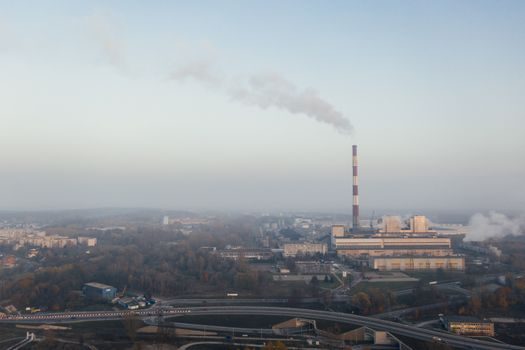
Detector siting follows IEC 60079-29-2, which sets a maximum floor-area coverage per sensor (typically ~50-200 m² for a single point detector, depending on ceiling height and gas density) and requires that the most likely release point be within a defined radius. For a typical chemical reactor bay, engineers lay out catalytic-bead or NDIR heads on a 6-10 m grid for methane-like gases and tighten to 3-5 m for hydrogen, because hydrogen rises and disperses quickly before reaching a ceiling-mounted LEL head. [S1]
Heavier-than-air vapours (LPG, hexane, MEA) demand floor-level or low-duct mounting, ideally inside a flow hood or with a remote aspirator pulling sample through tubing of defined transport time; tubing length above ~30 m introduces measurement lag and sample loss. Diffusion-mode heads are acceptable for ambient monitoring, but any sample-draw architecture must declare the transport time on the loop, because the safety instrumented function (SIF) response time budget includes it.
Open-path line-of-sight IR detectors (typically 5-120 m beam length) supplement point detectors for perimeter monitoring around bulk-storage farms and tank dikes, where a single release can drift tens of metres before any point sensor sees it. Beam detectors do not give a localised LEL reading — they report an integrated LEL·metre value across the path — so they are paired with point heads at the expected release source.
Output protocol and integration with the DCS / SIS
The dominant plant protocol stack in 2026 is still 4-20 mA analog with HART 7 overlay, and most new chemical-plant builds retain this on detector loops because it survives partial PLC / DCS failure and gives a calibrated reading on a single wire pair.
Each detector should expose at least: a primary 4-20 mA process variable (%LEL or ppm), a second channel for the same gas on a different range, HART variables for sensor life and calibration date, and a fault relay (typically a single-pole dry contact). The safety PLC or SIS reads the 4-20 mA into a safety-rated AI module (IEC 61508 SIL 1 or 2 is common for perimeter LEL detection, SIL 2 for life-safety in occupied enclosures).
Modbus RTU over RS-485 is acceptable for non-SIS asset monitoring (sensor health, last calibration, end-of-life flag), and most modern heads dual-port Modbus plus HART, allowing the maintenance terminal to interrogate without breaking the analog loop.
Calibration, bump-testing and life-cycle cost
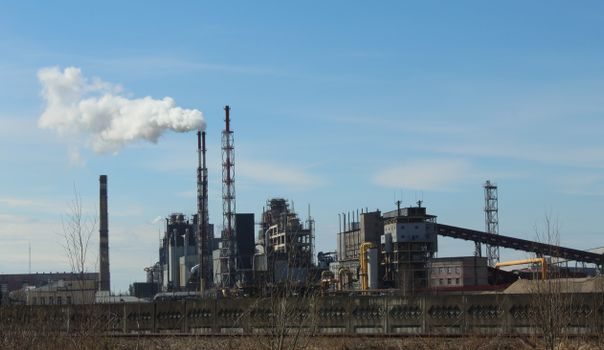
Sensor life is the dominant OPEX item: catalytic-bead elements typically need replacement every 3-5 years, NDIR sources and detectors 5-10 years, electrochemical toxic cells 2-3 years (often less in high-temperature, low-humidity service). [S1]
Bump-testing frequency is set by plant HSE rather than the manufacturer; 30-day or 90-day bump intervals are common in continuous chemical service, with full span calibration every 6-12 months. A detector that fails bump is a written near-miss, not a deferred ticket: the SIF logic assumes the sensor is in spec, and an out-of-spec detector is functionally a disabled trip.
For vendor-neutral procurement, write the spec in terms of (a) target gas and range, (b) ATEX/IECEx zone and gas group, (c) IEC 60079-29-2 coverage compliance, (d) 4-20 mA + HART output, and (e) expected sensor life in stated service. Brand is the last filter; this keeps the bid open to any manufacturer whose head meets the engineering envelope, including the Inficon-class portfolio carried by industrial MRO distributors [S1].
Selection criteria compared across detector types
Across the four mainstream detector technologies used in chemical-plant flammable-gas service, the practical trade-off in 2026 sits between coverage cost, failure mode and poison resistance: catalytic-bead is the lowest unit cost but the highest poison exposure, NDIR point is the workhorse for hydrocarbon service, electrochemical is mandatory once toxicity drives the alarm threshold, and open-path IR is the only cost-effective option for perimeter coverage of large tank farms.
For confined-space or reactor-interior work where the same operator needs LEL, O2, CO and H2S, the practical instrument is a portable multi-gas detector with at least four sensors and an audible / vibrating alarm — explicitly different from the fixed, loop-powered detector on the wall. Select a fixed gas detector when the requirement is continuous, loop-monitored coverage of a process area; select the portable only for personal protection and pre-entry testing [S1].
Failure modes and constraints the datasheet does not list

Catalytic-bead sensors fail in three ways: element poisoning (silicone, lead, H2S), loss of activity in oxygen-deficient atmospheres, and zero drift at high temperature; any of these can produce a steady, in-range reading on a gas-free atmosphere, which is why bump-testing matters more than span calibration. NDIR point detectors fail mainly through optics contamination (dust, oil mist, polymer outgassing) — symptom is a slow zero drift and a noisy reading, not a hard fault. [S1]
Electrochemical cells suffer from cold-weather derating (output drops below 0 °C and the cell may need a heater membrane in arctic service) and from pressure / altitude sensitivity if the cell is not pressure-compensated. Open-path IR fails on beam blockage (fog, snow, bird perches, condensation on the optics) — the detector must be specified with a self-heated window and a beam-block diagnostic that does not latch the SIF into a safe-but-wrong state.
For further context on flammable-gas monitoring in upstream and midstream service, see the related selection map for oil and gas facilities, and for personal-protection stacks on a chemical site see the multi-gas detector selection for firefighting write-up; warehouse storage rooms sit closer to the multi-gas stack and the spec map at multi-gas detector selection for warehouses lines up the same sensors in a different zone layout.
Two trackable signals confirm a detector is functioning in service: the HART variable for sensor age and the 30/90-day bump-test record in the plant CMMS; a third — a baseline span factor compared at quarterly calibration — will catch a poisoned catalytic bead before it fails a bump. If any of these signals is missing, the loop is not really SIL-rated, regardless of what the certificate says.