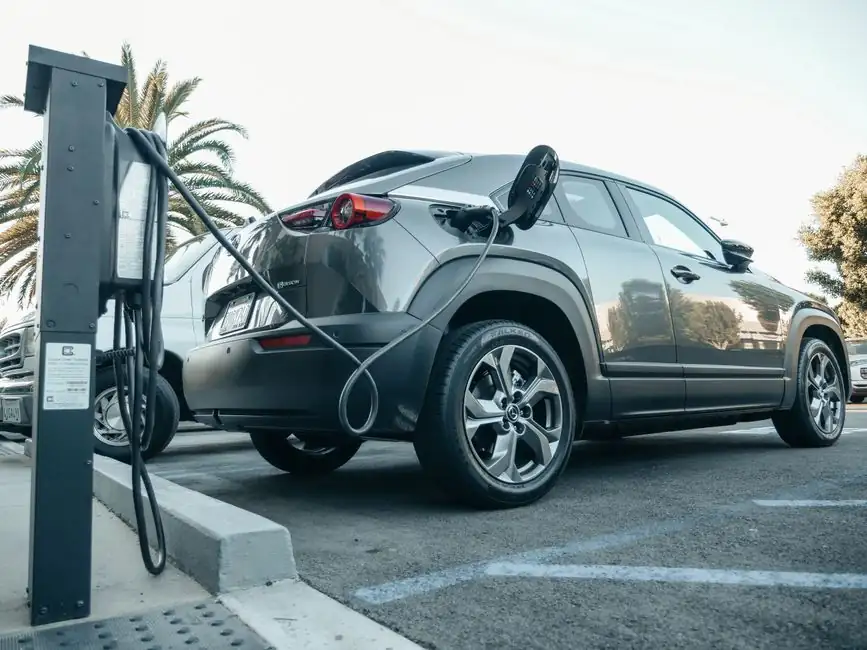
Procurement teams specifying battery-electric vehicles in 2026 are converging on a duty-cycle-led evaluation: kWh per 100 km first, then 3-in-1 integrated drive unit power class, then AC/DC charging interoperability, with Chinese suppliers dominating 80-210 kW drive units and 12.4 kWh-class battery packs.
Reference product lines on the market in August 2026 include 3-in-1 OEM drive units rated 83 kW, 130 kW, and 210 kW, alongside 304 V / 12.4 kWh (41 Ah) modular battery packs, and grid-side dispatch models that reward valley-price charging windows [S2][S3]. NSW's legacy EV rebate cut-off remains a useful regional reference for jurisdiction-specific subsidy timing [S6].
Duty-Cycle kWh/100 km: The First Filter
Duty-cycle kWh consumption per 100 km is the single number that ties drive-unit sizing, battery pack capacity, and charger selection into one procurement decision, and an improved ant-colony scheduling model published in 2023 demonstrated that shifting charging into valley-price windows measurably reduces peak-period grid load while protecting battery state-of-charge limits [S3]. For a typical urban delivery van doing 44,247 annual km (the 2015 Shanghai baseline cited in industry teaching material), the operational case for electrification depends on whether the spec'd pack supports a single-shift duty cycle without mid-route DC fast-charge events [S5].
Buyers should request manufacturer kWh/100 km data at three reference points: WLTP combined, 90 km/h highway cruise, and -7°C cold-crank, because cold-weather derating can pull real-world consumption well above the WLTP label and invalidate range assumptions. Pair that with a published State-of-Health (SoH) warranty curve, since pack degradation past 70-80% SoH is the threshold that drives mid-life replacement budgets. The kWh metric also dictates home or depot AC charging: a 12.4 kWh pack with 41 Ah capacity at 304 V nominal recharges in roughly 4-5 hours on a 3 kW AC supply, which is the realistic ceiling for many existing depot circuits [S2].
3-in-1 Drive Unit Power Classes: 83 kW vs 130 kW vs 210 kW
3-in-1 integrated drive units, which combine motor, inverter, and transmission in a single housing, have become the default OEM electric drive architecture for commercial EV builds, with published product lines spanning 83 kW (EFM2), 130 kW (EFM3), and 210 kW (EFM4) continuous ratings, each targeting a different vehicle class from light commercial to mid-duty truck [S2]. The 210 kW class delivers the highest power density and torque output, while the 83 kW EFM2 emphasises efficiency and packaging for smaller platforms; the 130 kW EFM3 sits in the middle as the most common specification for 3.5-7.5 t GVW light commercial vehicles.
Spec-for-spec comparison for a fleet buyer evaluating 3-in-1 drive units across the 80-210 kW range, against four decision criteria:
Power class / Typical GVW: 83 kW (EFM2) targets light urban duty up to ~3.5 t; 130 kW (EFM3) suits 3.5-7.5 t delivery and van platforms; 210 kW (EFM4) targets mid-duty truck and high-performance passenger. Efficiency emphasis: 83 kW class is engineered for highest efficiency at the cost of peak torque; 130 kW class balances both; 210 kW class prioritises power density and torque. Integration complexity: all three use the same 3-in-1 packaging, simplifying OEM integration; higher-power units require heavier cooling circuits. Procurement lead time: lower-power classes have wider second-source options; 210 kW class is the most constrained tier and should be dual-sourced where fleet deployment is critical [S2].
Battery Pack Sourcing: 12.4 kWh Modules and Tier Mapping
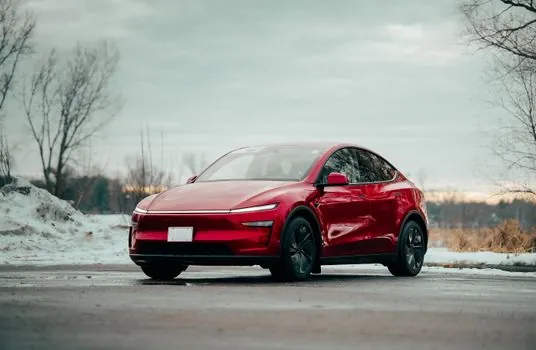
Modular battery packs in the 12.4 kWh / 41 Ah class at 304 V nominal have become a common building block for custom EV builds and conversions, with at least one UK-based component supplier (Electrofit, a division of Advanced Electronics & Logistics Ltd.) offering bespoke repackaging of OEM cells into vehicle-specific enclosures plus off-the-shelf reference designs [S2]. The procurement playbook here mirrors broader EV battery sourcing from China practice: map suppliers by tier (Tier 1 cell makers, Tier 2 pack assemblers, Tier 3 integration shops), validate cycle-life certifications, and require UN 38.3 transport test reports before issuing a PO.
For fleet operators, the build-or-buy decision on battery packs often hinges on three concrete numbers: cycle life to 80% SoH (target 4,000+ cycles for daily-duty fleets), peak C-rate (1C continuous, 2C peak is a common commercial spec), and operating temperature window (typically -20°C to 60°C for air-cooled packs, -30°C to 60°C for liquid-cooled). Buyers should also confirm cell chemistry (NMC vs LFP), since LFP trades energy density for cycle life and thermal stability, a relevant trade-off for high-utilisation depot-charged fleets [S2].
AC/DC Charging Compatibility and Connector Selection
Charging infrastructure compatibility is the procurement dimension most often under-specified, and it splits into AC Level 2 (Type 2 in EU, J1772 in NA) for depot overnight charging and DC fast charging (CCS2, NACS, or GB/T depending on market) for opportunity charging on route. Industry guidance now organises this into seven key categories including charging standards, public vs home, station etiquette, and networks, with the explicit note that the public charging pile base in major Chinese metros reached 21,700 units in Shanghai by 2015 against 44,247 EVs sold that same year, a ratio of roughly 0.49 piles per EV that has since been targeted to scale to 210,000 public piles by 2020 in the same city [S1][S5].
For a procurement spec, the actionable items are: confirm on-board charger (OBC) power (11 kW three-phase AC is the EU commercial benchmark, 7.4 kW single-phase is the NA residential benchmark), confirm DC fast-charge peak acceptance rate (50-150 kW is common for light commercial, 350 kW for heavy-duty), and confirm connector standard for the operating region. The same improved-ant-colony charging-scheduling research showed that valley-price charging windows of 6-8 hours are sufficient to handle a daily commute-class duty cycle while delivering peak-clipping benefits to the grid [S3].
Grid Flexibility and Aggregator Revenue Stacking
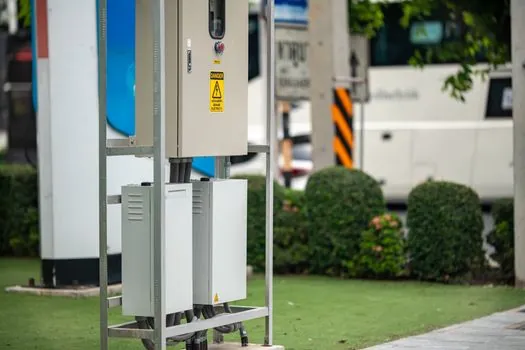
Vehicle-to-grid (V2G) and aggregator participation are no longer optional footnotes in 2026 fleet procurement specs, and a 2024 multi-objective optimisation study on AC/DC hybrid distribution networks demonstrated that aggregator profit maximisation and grid flexibility deficit minimisation can be solved jointly using multi-objective particle swarm optimisation on an IEEE 33-node test system [S4]. The practical procurement implication: any new depot-charged fleet should be specified with bidirectional-capable charging hardware and an EMS API that exposes state-of-charge, connection time, and departure time to the aggregator.
For operators in the NSW market, the legacy EV rebate framework (closed to new applications after 31 December 2023, with a deposit-prior carve-out for vehicles ordered before that date) illustrates how jurisdiction-specific incentive timing can swing a TCO calculation by thousands of dollars per unit, and similar stackable incentives (fringe benefits tax exemptions, stamp duty relief, road-user charge exemptions) are common in other Australian states and several EU markets [S6]. Procurement teams should treat subsidy eligibility as a hard constraint with a documented application deadline, not a soft benefit to be confirmed post-purchase.
Who EV Procurement Is For, and Who It Is Not For
Battery-electric procurement is a strong fit for urban delivery fleets with predictable routes under 200 km/day, depot-return overnight schedules, and high utilisation (more than 5 days/week, more than 30,000 km/year) where diesel maintenance costs dominate, but it is a poor fit for long-haul heavy-duty routes above 400 km/day without en-route DC fast-charge infrastructure, for operations in extreme cold below -20°C without battery pre-conditioning, and for low-utilisation assets under 10,000 km/year where the TCO payback period stretches past 7-8 years [S1].
The clearest signal to defer an EV purchase is duty-cycle mismatch: if the operational route requires sustained high-speed highway driving with no charging opportunity and the kWh/100 km consumption exceeds the pack's usable capacity times the round-trip distance, no amount of supplier negotiation will fix the spec. The same logic applies to weight-sensitive applications where the battery mass reduces payload below a contractual minimum, and to operations requiring bidirectional V2G revenue where the OEM does not yet support ISO 15118-20 bidirectional power transfer [S1][S4].
Procurement Checklist and Sourcing Strategy

A defensible 2026 EV procurement package bundles five artefacts: a duty-cycle kWh/100 km worksheet populated with at least three reference operating points; a drive-unit specification (3-in-1 class, kW rating, peak torque, cooling type) cross-referenced against vehicle GVW; a battery pack specification (chemistry, kWh, C-rate, cycle life to 80% SoH, UN 38.3 certification); a charging infrastructure specification (AC OBC kW, DC peak kW, connector standard, V2G readiness); and a grid-aggregator agreement template with API integration scope. The supplier-evaluation layer should tier vendors by component category and dual-source any 210 kW-class drive unit, since that power tier is the most capacity-constrained in the current market [S2].
Trackable signals to monitor over the next two quarters: Chinese cell-maker capacity expansion announcements for LFP prismatic cells in the 280-300 Wh/kg energy density band, GB/T vs CCS2 vs NACS harmonisation decisions in major export markets, and the rollout timeline for ISO 15118-20 plug-and-charge plus bidirectional power transfer certification at major OEM brands. For fleet operators already running pilot deployments, the practical next step is to lock in a 6-12 month demand forecast with two pre-qualified suppliers per critical component, since drive-unit allocation in the 130-210 kW class is now the binding constraint, not battery cells [S2][S3][S4].
Spec-level background on the components involved: linear guide, crossed roller guide, and electric actuator.